Trump’s World Cup Warning: Politics and Sport Collide as Iran’s Participation Questioned
In a move that has ignited a firestorm at the volatile intersection of global politics and international sport, former U.S. President Donald Trump has declared it inappropriate for Iran’s men’s national football team to participate in the upcoming FIFA World Cup. Citing concerns for the players’ “own lives and safety,” Trump’s intervention, delivered via his Truth Social platform, has been met with fierce rebuttal from Tehran and has thrust the tournament into a geopolitical spotlight it desperately seeks to avoid. This controversy transcends a simple sporting dispute, probing deep questions about the autonomy of international athletic bodies, the role of host nations, and the ever-present specter of political tensions on the world’s most-watched stage.
A Presidential Warning and a Nation’s Defiant Response
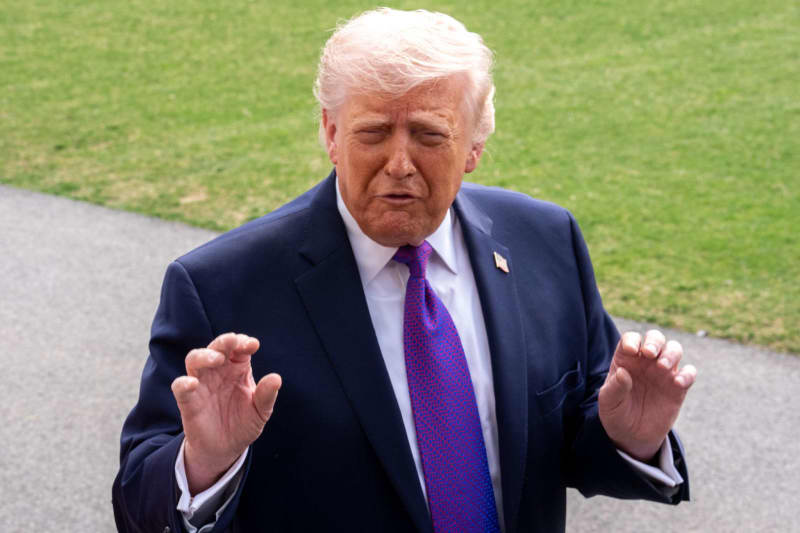
The fuse was lit with a succinct digital missive. “The Iranian national football team is welcome at the World Cup, but I really don’t think it’s appropriate for them to be there – for their own lives and safety,” Trump stated. While not specifying the exact nature of the perceived threat, the implication cast a shadow over the host nations’ ability to provide security and hinted at potential political animosity that could spill over into the tournament. The statement, coming from a figure who remains profoundly influential in American politics and whose administration pursued a “maximum pressure” campaign against Iran, was immediately interpreted as more than a casual opinion.
Iran’s response was swift and unyielding. In a statement laden with defiance, the Iranian football federation framed Trump’s comments as an illegitimate intrusion. They emphasized that the World Cup is governed by FIFA, not by any individual or country, a fundamental principle of international sport. The statement pointedly noted that Iran earned its place on the pitch, being “among the first teams to qualify for this major tournament.” The retort culminated in a stinging rebuke of the hosts, suggesting “the only country that could be excluded is one that merely carries the title of ‘host’ yet lacks the ability to provide security.” This direct challenge to the operational credibility of the United States, Mexico, and Canada as joint hosts escalates the dispute from a war of words to a pointed accusation of incompetence.
Expert Analysis: The Unstable Chemistry of Geopolitics and FIFA
Sports diplomats and political analysts view this clash as a textbook case of modern “sportswashing” in reverse. While nations often use mega-events to launder their international image, here, the tournament itself risks being stained by pre-existing geopolitical fissures. “FIFA’s central doctrine is that football exists in a realm separate from politics, but that is a convenient fiction,” explains Dr. Anya Petrova, a senior fellow at the Institute for Global Sport and Politics. “When a figure of Trump’s stature injects a security warning into the narrative, it forces FIFA, the host nations, and the Iranian team into a crisis management posture they never wanted. The autonomy of FIFA is being directly challenged by political discourse from a major global power.”
The security concerns, while vague, are not entirely without precedent in the complex history of U.S.-Iran relations. The analysis hinges on several potential flashpoints:
- Protester Interactions: Large diasporas from both nations will be present. Encounters between players and politically active fans could become flashpoints.
- Symbolic Gestures: Any perceived political gesture by Iranian players on field could trigger unpredictable reactions.
- Diplomatic Incidents: The logistical and diplomatic protocols surrounding the team’s travel and protection in the U.S. are fraught with complexity given the absence of formal relations.
Ultimately, the experts agree: Trump’s statement, regardless of intent, has successfully weaponized the narrative of safety, putting immense pressure on tournament organizers. Any minor incident involving the Iranian team will now be magnified through the lens of his warning.
Predictions: How the World Cup Drama Will Unfold
Given the entrenched positions and the high stakes, the trajectory of this controversy is likely to follow a tense but predictable script. FIFA will cling to its apolitical stance with renewed fervor, issuing strong statements about the inclusivity of football and the integrity of the qualification process. Behind the scenes, however, security details for the Iranian team will be upgraded to an unprecedented level, involving intense coordination between federal agencies and FIFA’s own security apparatus.
The most volatile moments may not occur on the pitch, but around it. We can anticipate:
- Media Frenzy: Every press conference featuring Iranian players or coaches will be dominated by questions about Trump’s comments and political tensions, distracting from football.
- Fan Atmosphere: Matches involving Iran, particularly in U.S. host cities, will be charged with political undertones, testing stadium security and fan conduct policies.
- Symbolic Solidarity: Other nations or players may make statements or gestures in support of Iran’s right to compete, further politicizing the tournament environment.
The greatest risk to FIFA and the hosts is not an act of violence, but the perception of insecurity. If players, fans, or other delegations begin to publicly question safety protocols, the damage to the tournament’s reputation could be lasting. Iran’s participation is guaranteed, but the atmosphere in which they compete has been irrevocably altered.
Conclusion: A Tournament Tested Before a Ball is Kicked
Donald Trump’s intervention regarding Iran’s World Cup participation has achieved a singular outcome: it has already scored a geopolitical goal before the tournament’s opening whistle. By publicly questioning the safety and appropriateness of Iran’s presence, he has successfully shifted a portion of the narrative away from sport and onto the world stage’s most intractable conflicts. The Iranian response, invoking the sovereignty of FIFA and turning the security question back on the hosts, ensures this will be a lingering subplot throughout the event.
This episode serves as a stark reminder that the notion of a politics-free World Cup is an illusion. In an era of fragmented global relations and powerful social media platforms, sport cannot insulate itself from the world’s divisions. The coming tournament will now be a live-fire exercise in navigating those divisions. The hope for fans worldwide is that the beautiful game itself—the skill, drama, and unity it can inspire—will ultimately dominate the headlines. But as the statements from Mar-a-Lago and Tehran make clear, the beautiful game will be played this summer against a backdrop of profoundly ugly politics. The world will be watching, both the football and the fraught diplomacy unfolding alongside it.
Source: Based on news from Yahoo Sports.