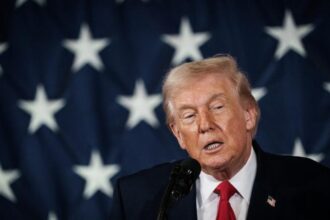
Trump’s Gridiron Clemency: A Political Punt or a Play for Legacy? Five Ex-NFL Stars Pardoned
In a move that blurs the lines between sports, justice, and political theater, former President Donald Trump granted full pardons to five former NFL players late Thursday. The announcement, made via social media by White House pardon advisor Alice Marie Johnson, sent shockwaves through both political and sports circles, offering a controversial form of redemption for figures whose post-gridiron lives were marred by legal turmoil. The clemency for Joe Klecko, Nate Newton, Jamal Lewis, Travis Henry, and the late Billy Cannon is more than a series of legal reprieves; it is a statement laden with cultural and political symbolism, reflecting a longstanding narrative of second chances for a specific brand of American celebrity.
The Pardon Roster: From Hall of Fame to Infamy
The quintet of pardoned players represents a wide spectrum of NFL fame and notoriety, united by felony convictions that defined their lives after football. Their stories are cautionary tales of struggle, poor decisions, and, now, unprecedented political intervention.
Joe Klecko, the legendary New York Jets defensive lineman and recent Pro Football Hall of Fame inductee, was convicted in 2000 for failing to collect and pay employment taxes for a trucking company he owned. While his football legacy is secure, the pardon wipes away a legal stain from his business endeavors.
Nate Newton, the six-time Pro Bowl offensive lineman for the Dallas Cowboys dynasty of the 1990s, served over two years in federal prison after two separate arrests in 2001 and 2002 for transporting hundreds of pounds of marijuana. His fall from America’s Team to federal inmate was one of the era’s most dramatic.
Jamal Lewis, the 2003 NFL Offensive Player of the Year and Baltimore Ravens star, served four months in a federal prison camp in 2005 after a guilty plea for using a cell phone to set up a cocaine deal. The conviction came just a year after he rushed for over 2,000 yards.
Travis Henry, a former 1,000-yard rusher for the Buffalo Bills and Denver Broncos, was sentenced to three years in prison in 2008 for financing a cocaine trafficking ring. Prosecutors said he used a portion of his multi-million dollar NFL earnings to bankroll the operation.
Billy Cannon, the late LSU Heisman Trophy winner and AFL star, served two and a half years in prison for his role in a massive counterfeiting operation in the 1980s. Already deceased, his pardon is a posthumous cleansing of his record, a symbolic gesture for a college football icon.
Expert Analysis: The Political Playbook Behind the Pardons
To view these pardons solely through a legal lens is to miss the broader game being played. Sports journalists and political analysts alike see this as a calculated maneuver with multiple layers.
“This is classic Trumpian politics,” says Dr. Elena Martinez, a political sociologist specializing in sports and culture. “It leverages the cultural capital of the NFL—a league with a massive, politically diverse fanbase—to reinforce narratives about criminal justice reform, but in a very selective way. These are not anonymous cases; they are men who were household names, whose stories resonate with a certain demographic. It’s about redemption, but it’s also about spectacle.”
The action continues a pattern from Trump’s presidency, where high-profile pardons were often granted to celebrities, political allies, and those championed by his media ecosystem. The involvement of Alice Marie Johnson, whose own life sentence was commuted by Trump after advocacy from Kim Kardashian West, adds a layer of legitimacy to his criminal justice agenda, even as the choices remain idiosyncratic.
Key political and cultural takeaways include:
- Appealing to the Base: The NFL, despite recent controversies, remains a powerful touchstone in American life, particularly in heartland states. Pardoning sports figures can resonate more viscerally than abstract policy debates.
- Narrative of Unfair Prosecution: The pardons implicitly suggest these athletes were unfairly targeted or punished too harshly, a theme that aligns with broader “tough on crime” rhetoric that also allows for sympathetic exceptions.
- Legacy Building: This action allows Trump to continue shaping his post-presidential legacy as a disruptor of the establishment, willing to wield executive power in unconventional, headline-grabbing ways.
Predictions: Ripple Effects on Sports, Politics, and Justice
The ramifications of this clemency wave will extend far beyond the five individuals involved. We can anticipate several immediate and long-term consequences.
First, the floodgates for celebrity clemency appeals may open wider. With this precedent, the legal teams for other convicted athletes and high-profile figures will undoubtedly ramp up their lobbying efforts, framing their clients’ cases in a similar light. The pardon power, always potent, may become an even more sought-after political trophy.
Second, the NFL’s delicate relationship with law enforcement and social justice will face new scrutiny. The league has walked a tightrope between supporting player activism and maintaining its “law and order” image. Having multiple pardoned felons—albeit former players—associated with its brand creates a complex public relations challenge. Will the league embrace these men as redeemed, or keep them at arm’s length?
Finally, this move will intensify the debate over equitable justice. Critics will rightly ask why these five men received such grace when thousands of non-famous individuals languish under harsh drug sentences. “This highlights the arbitrariness and celebrity-driven nature of the pardon process,” argues legal analyst Michael Chen. “It forces a national conversation we often avoid: who deserves a second chance, and who gets to decide?”
The Final Whistle: A Complicated Legacy of Redemption
The pardons of Klecko, Newton, Lewis, Henry, and Cannon do not rewrite their histories. The facts of their convictions remain. What changes is their legal standing and the official story of their lives. For some, like the family of Billy Cannon, it is a poignant closing chapter. For others, like Travis Henry, it is a chance to fully rebuild.
Ultimately, this event is a powerful Rorschach test. Supporters will see a righteous act of mercy for men who paid their debts and represented American athletic excellence. Detractors will see a politicized stunt that privileges fame over fairness. The truth, as in most plays in football and politics, is found in the messy middle.
One thing is certain: by inserting the power of the presidency into the post-career narratives of these football stars, Donald Trump has ensured that their stories—of triumph, failure, crime, and now, clemency—will be forever linked to his own political saga. In the game of legacy building, this was a strategic, if controversial, deep pass. The nation is left to watch where it lands.
Source: Based on news from Fox Sports.