Trump’s College Sports Roundtable: A Marathon of Talk, a Sprint to an Executive Order?
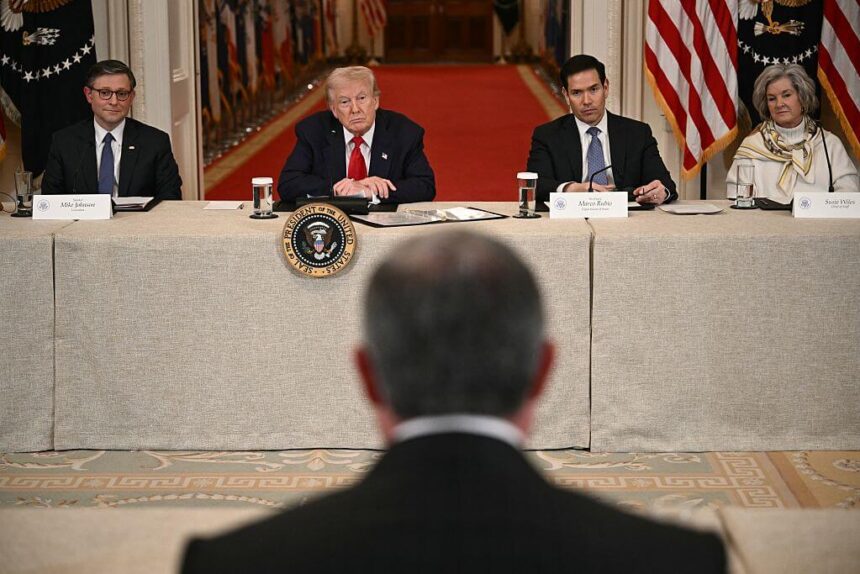
The opulent East Room of the White House, a stage for historic treaties and ceremonial gatherings, played host to a different kind of high-stakes negotiation on Friday. For nearly two hours, a who’s who of American sports, politics, and academia gathered at the invitation of President Donald Trump to confront the existential crisis gripping college athletics. The roundtable promised a path forward but concluded with a familiar refrain: political discord, presidential frustration, and the looming threat of a unilateral executive order to solve a problem decades in the making.
A Gathering of Titans, Acknowledgment of Turmoil
The guest list alone signaled the magnitude of the moment. Flanking President Trump were political heavyweights like Speaker Mike Johnson, Senator Ted Cruz, and Florida Governor Ron DeSantis. The college sports establishment was represented by NCAA President Charlie Baker, conference commissioners, and iconic coaches like Nick Saban and Urban Meyer. The professional leagues sent a signal of concern with NBA Commissioner Adam Silver in attendance. Yet, as participants noted, the meeting began with a sobering consensus—the current model is broken.
The challenges are no secret: the chaotic patchwork of state Name, Image, and Likeness (NIL) laws, the looming specter of athletes being deemed employees, the threat of antitrust lawsuits that could bankrupt athletic departments, and the fundamental inequity of a multi-billion dollar industry where the stars generate revenue but see limited direct compensation. For all the power in the room, the opening act was a collective admission of a system in freefall, a “disaster,” as Trump later put it, “for colleges, for the players, for the families.”
The SCORE Act: A Bipartisan Lifeline Left on the Table?
Amid the dire warnings, one tangible solution was discussed: the SCORE Act (Student Compensation and Opportunity through Rights and Endorsements). This bipartisan-drafted legislation represents perhaps the most viable Congressional path forward. Its key provisions aim to:
- Establish a national NIL standard, preempting the confusing and uneven state-by-state laws that currently give some schools a major recruiting advantage.
- Grant the NCAA limited antitrust protection, shielding it from certain lawsuits as it attempts to govern and set rules in this new era.
- Create guardrails and transparency for NIL deals, potentially involving a registry for agents and collectives.
However, the bill is currently stalled in the House of Representatives. Its mention at the roundtable highlighted the central paradox of college sports reform: a conceptual agreement on the goals, but a political inability to move legislation. The presence of only one elected Democrat, Representative Lori Trahan, underscored the partisan divide that has consistently thwarted federal action, leaving the NCAA and universities begging for a congressional bailout that never arrives.
Trump’s Pivot: From Forum to Frustration and a Promise of Action
As the discussion wound down, the tone shifted from collaborative problem-solving to presidential impatience. Expressing clear frustration with Senate Democrats and the judicial system, Trump declared the legislative process untenable. “That’s the only way this is going to be solved,” he stated, referring to an executive order he promised to draft within a week based on the day’s sentiments.
This pledge immediately raises complex legal and practical questions. The scope of presidential authority over interstate commerce and antitrust law as it applies to the NCAA is untested and likely to face immediate challenges. Could an executive order create a national NIL framework? Could it grant the NCAA antitrust exemption—a power traditionally reserved for Congress? Legal experts suggest such an order would be a magnet for litigation, potentially creating more uncertainty, not less.
Furthermore, the move politicizes an issue that, while fraught, had seen genuine bipartisan negotiation. By framing the obstacle as “Senate Democrats,” the path to a durable legislative solution like the SCORE Act may have grown narrower, casting the future of college sports into the volatile arena of presidential action and subsequent court battles.
Analysis & Predictions: What Comes After the Talk?
The White House roundtable was a potent symbol of the crisis but a failure as a solution-generating event. It demonstrated that the pressure point has moved from campus athletic departments to the highest levels of government. The analysis from this gathering points to several likely outcomes:
1. The Executive Order Will Be Symbolic, Not Transformative: Expect any order to focus on principles—support for a national NIL standard, encouragement for Congress to act, perhaps directives to federal agencies to review policies. Its direct impact will be limited, but it will keep the issue in the national spotlight and apply pressure on legislators.
2. The SCORE Act Gains Urgency, But Faces a Rocky Path: The threat of an executive order may spur some legislative movement, but in an election year with a divided Congress, passage remains a long shot. It becomes a key issue for the next Congress, regardless of who controls it.
3. The Real Power Still Lies With the Courts: Multiple pending cases, including those addressing athlete employment status and the NCAA’s business model, will do more to shape the future than any political meeting. Judges, not politicians or presidents, are currently holding the whistle.
4. Universities and Conferences Will Continue to Act Alone: In the absence of clear federal law, the SEC, Big Ten, and other major conferences will accelerate their move toward a de facto professional model, crafting their own rules and potentially breaking further away from the NCAA’s governance.
Conclusion: A Defining Moment, But No Defining Solution
Friday’s White House roundtable will be remembered not for the solutions it produced, but for the stark portrait it painted. It revealed an industry at a crossroads, with consensus on the disease but no agreement on the cure. The gathering of such formidable figures underscored that the era of the NCAA managing its affairs autonomously is conclusively over. The future of college sports is now a political and legal battlefield.
President Trump’s pivot to an executive order is a dramatic escalation, yet it risks being an act of political theater that further entangles college athletics in partisan warfare. The true takeaway is that after two hours of high-level talk, the most powerful people in the room could only agree on one thing: the system is failing. The athletes, coaches, and families awaiting clarity are left with a promise of presidential action that may prove illusory, and a stalled bill in Congress that remains their best hope for a stable, national solution. The roundtable is over, but the game of political and legal brinksmanship that will define the next era of college sports has just kicked off.
Source: Based on news from Yahoo Sports.