Two Record Signings, One Lingering Question: Are Crystal Palace Papering Over the Cracks?
The mood around Selhurst Park is supposed to be one of cautious optimism. The club has flexed its financial muscle, not once, but twice, shattering its transfer record in a single window. Yet, as the dust settles on a frantic and ultimately fraught January, a palpable sense of unease remains. Crystal Palace, winless in nine Premier League matches and drifting perilously, have made headline-grabbing moves for Brennan Johnson and Jorgen Strand Larsen. But with a chaotic deadline day exposing gaping holes in the squad, a critical question hangs in the South London air: have the Eagles addressed their deep-seated issues, or merely applied expensive glitter to a crumbling foundation?
A Window of Contrasts: Record Breaks and Deadline-Day Heartbreak
On the surface, Palace’s January business signals ambition. The early-month acquisition of Brennan Johnson from Tottenham for £35 million was a statement of intent—a dynamic, homegrown attacker with proven Premier League pedigree. Weeks later, they went bigger, securing Norwegian striker Jorgen Strand Larsen from Wolves in a deal that could reach £48 million. Two significant investments in the final third, targeting a chronic lack of consistent goals.
However, the final day of the window laid bare the chaos simmering beneath. The attempted loan-with-obligation deal for Everton’s Dwight McNeil collapsed in the eleventh hour due to late paperwork, a farcical end to a horrendous month. This failure compounded other critical losses: captain and defensive linchpin Marc Guehi departed without a direct replacement being sourced, and striker Jean-Philippe Mateta, who had expressed a desire to leave, saw a deadline-day move scuppered by a failed medical. All this unfolds with manager Oliver Glasner already confirmed to be departing at season’s end, creating a lame-duck leadership scenario. The contrast between early-window decisiveness and deadline-day disarray could not be more stark.
Analyzing the Spine: Strengthened Attack, Fractured Foundation
To understand if Palace are papering over cracks, we must examine the spine of the team. The signings of Johnson and Strand Larsen undoubtedly bolster the attack. Johnson offers blistering pace and versatility across the frontline, while Strand Larsen provides a physical, aerial presence previously lacking. This addresses a key weakness: Palace’s over-reliance on Eberechi Eze and Michael Olise for creativity and goals.
Yet, the rest of the spine tells a worrying story:
- Defensive Void: Losing Marc Guehi is a monumental blow. He was not just a top defender but the club captain and leader. Failure to replace him leaves a gaping hole in the heart of defence, placing immense pressure on Joachim Andersen and an aging Joel Ward.
- Midfield Questions: The engine room remains functional but lacks dynamism and depth, especially with Cheick Doucoure’s injury struggles. The McNeil deal, intended to add grit and set-piece quality, falling through is a missed opportunity to add steel.
- Managerial Limbo: Operating with a manager who is a dead man walking, Oliver Glasner, severely undermines authority and long-term tactical planning. It creates a disjointed environment where short-term results clash with impending change.
The investment is entirely forward-loaded. While the attack looks exciting on paper, the defensive and leadership core has been severely weakened. It’s an unbalanced rebuild, akin to installing a luxury kitchen in a house with a faulty foundation.
The Glasner Conundrum and Fan Discontent
The situation is exacerbated by the Oliver Glasner saga. A manager planning his exit while tasked with integrating record signings and staving off relegation is a near-impossible brief. His tactical ideas may not be the ones the club builds upon next season, creating potential friction in player development and style of play. Can he truly command the dressing room’s full commitment? This instability filters directly to the stands.
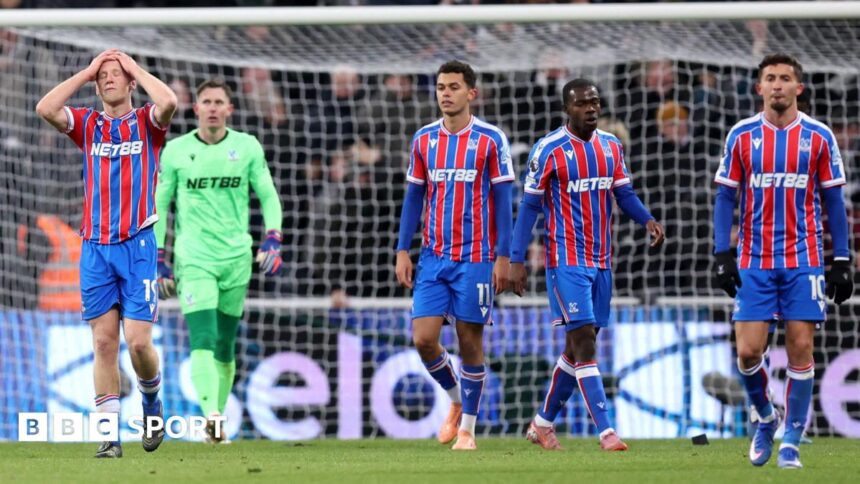
Palace’s famously passionate fanbase is not fooled by big price tags. They see a beloved captain sold, a last-minute shambles over McNeil, and a team devoid of confidence on the pitch. The record signings, while welcome, feel like isolated acts in a narrative of decline. The disconnect between the board’s transfer strategy and the visible, week-to-week deterioration of the team’s structure and spirit is a primary source of growing discontent. Supporters fear the new forwards will simply be feeding on scraps in a team that can’t stop conceding.
Predictions: Short-Term Pain, Long-Term Uncertainty
So, what comes next for Crystal Palace? The immediate forecast is turbulent. The fixture list offers little respite, and integrating two major attacking pieces into a struggling side is a challenge. The lack of defensive reinforcement will likely see the team continue to leak goals, undermining the potential firepower up front. A prolonged relegation battle is a very real possibility.
The summer promises yet another upheaval: a new manager will arrive, inheriting a squad with a glaring imbalance. They will have a exciting, expensive forward line but will need to immediately prioritize:
- Finding a commanding, Guehi-level centre-back.
- Reinforcing the midfield with athleticism and depth.
- Resolving the future of Mateta and other unsettled players.
The club-record signings are assets, but they are not a panacea. They paper over the specific crack of goal-scoring, but the fractures in defence, leadership, and long-term planning have been widened. The success of this window will not be judged on Johnson’s dribbles or Strand Larsen’s goal tally alone, but on whether the team can survive the season intact enough for a new manager to build a coherent unit from its expensive, mismatched parts.
Conclusion: Glitter, Not Glue
Crystal Palace’s January window was a tale of bold ambition undermined by profound structural neglect. In Brennan Johnson and Jorgen Strand Larsen, they have purchased glittering new parts for their machine. But with the engine (midfield) ageing, the chassis (defence) critically compromised, and the driver (Oliver Glasner) already checking his exit map, it is difficult to see how the vehicle progresses smoothly.
The cracks at Selhurst Park are not being filled; they are being decorated. The club has spent heavily to address the symptom—a lack of goals—while ignoring the disease: a weakened spine and a climate of instability. The hope now rests on the new attackers hitting the ground running to score enough goals to outweigh the inevitable defensive frailties. It is a high-risk, unbalanced strategy. For Palace’s long-suffering fans, the promise of a brighter future feels hostage to a present that remains dangerously fractured. The record signings are a start, but until the foundation is repaired, the palace remains built on shaky ground.
Source: Based on news from BBC Sport.