Bayern Munich’s Bergamo Blitz: A 6-1 Masterclass That Exposed a Stark Champions League Chasm
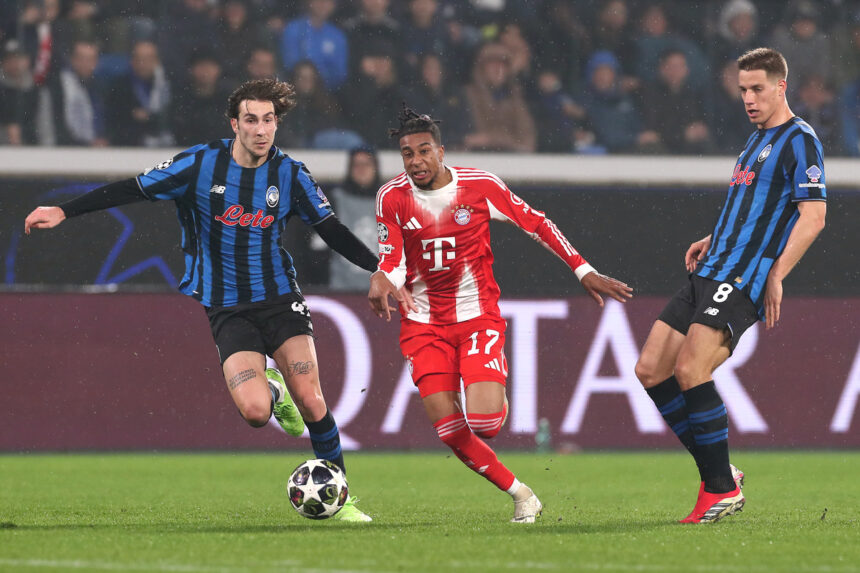
The Gewiss Stadium in Bergamo, a cauldron of Italian passion and fairy-tale European runs, fell into a stunned, disbelieving silence. On Tuesday night, the narrative wasn’t about Atalanta’s famed grit but about a cold, brutal exhibition of footballing hierarchy. Bayern Munich’s 6-1 evisceration of Atalanta in the first leg of their Champions League round of 16 tie was less a contest and more a clinical dissection, a statement that reverberated across the continent about the unbelievable difference in levels that can exist at this elite stage.
A Tactical Gamble That Backfired Spectacularly
Facing the Bavarian giants, Atalanta boss Raffaele Palladino made a bold, and ultimately fatal, tactical shift. Abandoning their familiar three-man defense for a back four, he threw both Gianluca Scamacca and Nikola Krstovic into a two-pronged attack. The intent was clear: meet fire with fire. However, with key midfield orchestrator Ederson and creative force Charles De Ketelaere injured, the plan was built on shaky foundations. Bayern, even without the rested Harry Kane and Jamal Musiala in their starting XI, possessed a devastating attacking unit of Olise, Gnabry, Luis Diaz, and Nicolas Jackson—a luxury of depth that underscored the gulf before a ball was kicked.
The early intensity was typically Atalanta. They pressed, harried, and won the ball in dangerous areas. But within minutes, the pattern was set: Bayern absorbed the fleeting pressure and struck with surgical precision. The first shot on target came from Michael Olise, a warning siren that went unheeded. What followed was a collapse of structural and psychological proportions.
The Anatomy of a Humiliation: Bayern’s Ruthless Efficiency
Bayern’s performance was a textbook example of how to dismantle an opponent. They were not necessarily at their flowing, peak brilliance for 90 minutes; instead, they were ruthlessly efficient, punishing every error with a chilling lack of sentiment.
- Transition Terror: Atalanta’s aggressive shape left cavernous spaces behind, which Bayern’s pacy forwards exploited mercilessly. Every turnover became a potential goal-scoring opportunity.
- Midfield Dominance: Even without Musiala starting, Bayern controlled the central zones. Joshua Kimmich and Leon Goretzka dictated the tempo, isolating Atalanta’s attack and launching waves of attacks.
- Individual Brilliance: This was a night where superior individual quality decided the tie. From Olise’s direct running to Serge Gnabry’s incisive movement, Atalanta’s defenders were consistently outmatched in one-on-one situations.
The goals told the story of a team operating on a different plane. Josip Stanisic’s opener was a result of sustained pressure. Olise’s finish was cool. Gnabry’s strike was predatory. By the time substitutes Nicolas Jackson and Jamal Musiala added their names to the scoresheet, it was a sobering demonstration of Bayern’s unstoppable attacking force, a squad so potent that its record-breaking striker could watch the carnage from the bench for an hour.
Atalanta’s Mirage and the Reality of the Elite
This result forces a harsh reassessment of Atalanta’s campaign. Their miraculous, against-all-odds comeback against Borussia Dortmund in the play-offs now feels like a distant memory, a feat that perhaps papered over the cracks of a squad stretched to its limits. Beating a faltering Dortmund side is one challenge; containing the focused fury of a Bayern Munich wounded by domestic disappointment is entirely another.
The injuries to Ederson and De Ketelaere were catastrophic, stripping the team of its tactical balance and creative hub. Giorgio Scalvini’s suspension further weakened a defensive line asked to play an unfamiliar system. Yet, even at full strength, the question remains: would it have been enough? Bayern’s performance suggested the gap was systemic, a chasm in resources, squad depth, and big-game pedigree. This wasn’t just a bad night; it was a brutal exposure of the ceiling Italian clubs outside the very top echelon often face in the Champions League knockouts.
Legacy of a Lopsided Tie and What Comes Next
The second leg in Munich is now a mere formality, a 90-minute procession towards the quarter-finals for Bayern. The real intrigue lies in the aftermath for both clubs.
For Bayern Munich, this was a chilling message to the rest of Europe. Even in a “transitional” year by their standards, their engine remains terrifying. The seamless integration of new faces like Olise and Jackson, coupled with the returning firepower of Kane and Musiala, makes them a nightmare matchup for any remaining contender. They have announced themselves as genuine title threats once more.
For Atalanta, the task is one of damage limitation and perspective. The focus must immediately return to securing a top-four finish in Serie A and pursuing success in the Coppa Italia. This defeat, while historic in its margin, cannot define their season. It must serve as a painful but valuable lesson in the levels required to consistently compete with the continent’s absolute best.
Conclusion: A Night That Defined the Divide
The 6-1 scoreline will echo through the hills of Bergamo for some time. It was a result that transcended a simple bad day at the office. Bayern Munich’s victory was a demonstration of cold, calculated superiority, a performance that laid bare the multi-dimensional gap—financial, technical, and squad-deep—that defines modern European football. Atalanta’s dream, built on passion, clever scouting, and a unique style, met the immovable object of a continental superclub operating with ruthless intent. In the end, the Champions League is a competition of levels. On a stark Tuesday night in Bergamo, those levels were not just different; they were worlds apart.
Source: Based on news from Yahoo Sports.