UCLA’s Grit on Full Display: Bruins Grind Past Michigan State Despite Bilodeau Injury
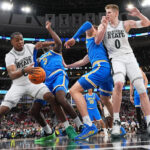
CHICAGO — The narrative surrounding UCLA basketball in mid-February was one of unraveling. A 23-point drubbing at the hands of Michigan State was compounded by a sideline spectacle, as head coach Mick Cronin, in a fit of frustration, ejected one of his own players before chastising a reporter in a now-infamous postgame exchange. The Bruins appeared fractured, their season teetering on the brink of disappointment. Just over four weeks later, inside the roaring cavern of the United Center, a transformed UCLA squad authored a starkly different chapter—one defined by resilience, collective will, and a season-altering 88-84 victory over those same Spartans in the Big Ten Tournament quarterfinals.
From February Fiasco to March Momentum
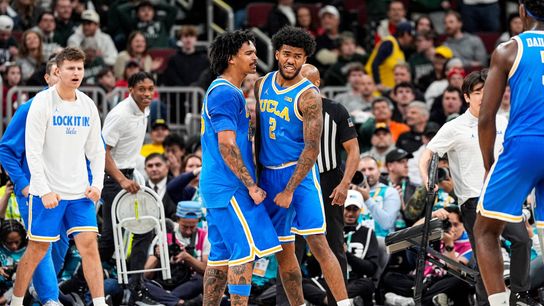
The contrast between that February 17th meeting and Friday’s clash could not be more pronounced. In the first game, Michigan State’s physicality and precision overwhelmed UCLA, exposing defensive lapses and offensive stagnation. The aftermath was louder than the game itself, with Cronin’s outburst signaling a program under severe stress. Fast forward to Chicago, and the Bruins (23-10, 13-7 Big Ten) displayed a hardened identity. They matched Michigan State’s famed toughness, won crucial 50-50 balls, and executed under pressure. This victory wasn’t just a single data point; it was the culmination of a dramatic turnaround, with UCLA now having won six of its last seven games. The team that left East Lansing in disarray has been replaced by one peaking at the precise moment the calendar flips to March.
“We’re a different team. Period,” Cronin stated postgame, his tone focused rather than fiery. “What happened in February stays in February. This group has learned to trust the process, trust each other, and fight for forty minutes. That’s what you saw today.”
The “Miracle” Injury: Bilodeau’s Absence and the Collective Response
UCLA’s path to redemption faced a monumental hurdle just minutes into the contest. Sophomore forward Tyler Bilodeau, a vital two-way presence and the team’s third-leading scorer, drove to the basket and came down awkwardly, immediately clutching his right knee. He did not return. Postgame, Cronin delivered a sobering assessment, indicating a knee sprain and stating it would take a “miracle for Bilodeau to play” in the semifinals. The injury could have deflated the Bruins, stripping them of a key component against a physical Spartan frontcourt.
Instead, it ignited a next-man-up ethos that defined the game. The response was collective and decisive:
- Lazar Stefanovic ascended to hero status, pouring in a career-high 28 points, including a cold-blooded step-back three-pointer with 1:12 remaining that pushed UCLA’s lead to five.
- Adem Bona played like a man possessed, battling through constant double-teams to finish with 18 points, 9 rebounds, and 2 blocks, anchoring the paint in Bilodeau’s absence.
- Dylan Andrews controlled the tempo, dishing out 8 assists against just 1 turnover while adding 15 points, consistently breaking down the Spartan defense.
“When Ty went down, we all looked at each other and knew we had to do more,” Stefanovic said. “Not one person replaces him. It takes all of us. That’s what this win was about.”
Tactical Adjustments and the Grind-It-Out Mentality
This victory was a testament to strategic adjustment and sheer will. Without Bilodeau’s scoring and length, UCLA had to be smarter and tougher. They committed to attacking the rim, earning 28 free throw attempts to Michigan State’s 14—a critical disparity in a tight game. Defensively, they switched more aggressively on screens to mitigate the Spartans’ (25-7, 15-5 Big Ten) offensive rhythm, forcing Tyson Walker and A.J. Hoggard into contested jumpers.
Most importantly, they won the “grind.” Cronin’s teams are built on a foundation of defense and rebounding, and in the final five minutes, UCLA made the winning plays that eluded them in February. They secured key offensive rebounds, dove for loose balls, and got crucial stops when needed. Michigan State’s Malik Hall was brilliant, scoring 25 points, but UCLA’s committee approach and tactical grit ultimately prevailed. This was not a pretty, finesse win; it was a Big Ten Tournament grind, a blue-collar effort that perfectly encapsulates the identity Cronin has been demanding all season.
Looking Ahead: NCAA Tournament Implications and Resilience Tested
This victory does more than just advance UCLA to the Big Ten semifinals; it solidifies their NCAA Tournament resume and announces them as a team no one will want to see in their bracket. The Bruins are now projected to be a solid 6 or 7 seed, carrying the powerful momentum of a team that has found its identity. However, the immediate future is clouded by Bilodeau’s injury. His potential absence creates a significant challenge for UCLA’s depth and frontcourt scoring.
Expert analysis suggests UCLA’s path forward will rely on a few key factors:
- Continued Guard Dominance: The backcourt of Andrews and Sebastian Mack must maintain its aggressive, playmaking form.
- Frontcourt by Committee: Berke Buyuktuncel and Devin Williams will see expanded roles and must provide defensive energy and rebounding.
- The “Cronin Factor”: Few coaches are better at drilling a defensive identity and preparing a team for single-possession games. His team is now battle-tested.
The prediction here is that UCLA, even if hobbled, is now a dangerous out. They have proven they can win a high-stakes game against a top-tier opponent without a key player. That experience is invaluable in March. The grit displayed against Michigan State is a transferable asset, one that travels well to neutral sites in the NCAA Tournament.
Conclusion: A Season Redefined in Chicago
The story of UCLA’s season has been rewritten in the span of a month. From the low point of a blowout loss and public turmoil, the Bruins have forged a new identity rooted in toughness and togetherness. Their quarterfinal victory over Michigan State was the ultimate validation of that journey. They didn’t just beat a team that had humiliated them weeks prior; they overcame a devastating in-game injury to do it, showcasing a depth of character that was once in question.
While the concern for Tyler Bilodeau is very real and his potential loss is immense, Friday’s performance proved UCLA is more than any single player. They are a collective force, peaking at the perfect time, and have transformed from a February question mark into a March threat. In the grind of Chicago, UCLA didn’t just win a basketball game; they announced their resurgence to the college basketball world.
Source: Based on news from Yahoo Sports.