Ukraine’s Paralympic Silver Medalist Credits AI: How ChatGPT Coached Maksym Murashkovskyi to Podium
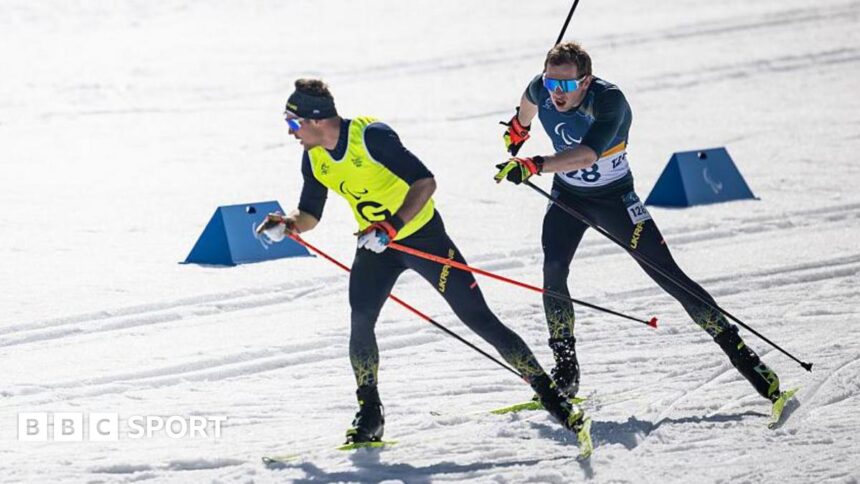
In the hushed, snow-blanketed forests of a Paralympic biathlon course, human grit meets technological precision. Athletes, guided by trust and voice, navigate a grueling test of endurance and marksmanship. The post-race interview is a familiar ritual: tears, gratitude, and thanks to coaches, family, and nation. But at the 2024 Paralympic Winter Games, Ukrainian biathlete Maksym Murashkovskyi rewrote the script. Standing with a hard-won silver medal around his neck, the 25-year-old vision impaired athlete and his guide, Vitaliy Trush, delivered a stunning revelation that echoes far beyond the podium. His secret weapon? An artificial intelligence chatbot. “For the past six months, I have been training with ChatGPT,” Murashkovskyi stated, crediting the AI with designing half his training plan, providing tactics, and fueling his motivation. This isn’t just a story of athletic triumph; it’s a landmark moment in the fusion of human potential and artificial intelligence in elite sport.
From Chatbot to Coach: Deconstructing an Unconventional Partnership
Murashkovskyi’s admission is more than a quirky anecdote; it represents a deliberate, sophisticated integration of AI into a high-stakes training regimen. For a biathlete with a visual impairment, the sport is a complex duality: the raw, physical burn of cross-country skiing, followed by the serene, controlled focus of rifle shooting, all guided by the essential voice and synergy of his guide, Vitaliy Trush. Into this delicate balance, Murashkovskyi introduced ChatGPT as a strategic partner.
He clarified that the AI’s role was multifaceted. It was not a replacement for human coaches or the irreplaceable bond with Trush, but a complementary tool that filled specific, critical gaps. According to the athlete, ChatGPT assisted in:
- Customized Training Plans: Generating periodized workout structures tailored to his specific event demands, recovery needs, and progress markers.
- Race Strategy and Tactics: Analyzing course profiles, weather variables, and competitor data to suggest pacing strategies and shooting range approaches.
- Psychological Motivation: Providing tailored motivational prompts, managing pre-race anxiety, and reinforcing mental resilience protocols.
- Data Analysis and Synthesis: Helping to interpret biometric data from wearables, connecting the dots between sleep, nutrition, training load, and performance.
“It was a huge volume of all of my training,” Murashkovskyi summarized. This suggests a proactive and iterative dialogue with the AI, where the athlete likely input his performance data, subjective feedback, and goals, and ChatGPT synthesized research, best practices, and logical progressions to output actionable advice.
Expert Analysis: The Promise and Peril of AI in Paralympic Sport
Sports scientists and technology ethicists are now parsing the implications of Murashkovskyi’s success. Dr. Anika Weber, a sports technologist at the Institute for Elite Sport, notes: “This is a logical, yet revolutionary, step. AI democratizes high-level coaching insights. An athlete in Ukraine can access a form of strategic analysis that was once the exclusive domain of well-funded national programs. The AI doesn’t get tired, doesn’t have biases based on past athletes, and can process millions of data points instantly.”
For Paralympic athletes, who often face unique challenges in accessing specialized coaching for their specific classifications, this democratization is potent. An AI can be endlessly patient, available 24/7, and customized to an individual’s impairment profile, suggesting adaptations a traditional coach might not immediately consider.
However, experts also sound notes of caution. “The risk lies in the ‘garbage in, garbage out’ paradigm and the lack of embodied intuition,” warns sports psychologist Marco Silva. “An AI has no lived experience of lactic acid burn or the pressure of a Paralympic shooting range. It can suggest a pacing plan, but it cannot feel when an athlete is on the edge. The crucial element was Murashkovskyi’s own expertise—his ability to critically filter the AI’s suggestions through the lens of his own bodily awareness and in partnership with his human guide.” Furthermore, questions arise about competitive equity and technological doping. If AI coaching becomes widespread, does it create an arms race where medals are won by the best algorithms, not just the best athletes? Governing bodies will need to grapple with these ethical frontiers.
The New Training Ground: Predictions for the AI-Augmented Athlete
Maksym Murashkovskyi’s silver medal is likely a harbinger of a new normal in elite sport, both Paralympic and Olympic. We can anticipate several key developments:
- Hybrid Coaching Models: The future elite coaching team will include a human head coach, specialized assistants, and an AI strategic analyst. The human provides empathy, intuition, and inspiration; the AI provides hyper-personalized data crunching and scenario modeling.
- Personalized Impairment Adaptation: AI will become brilliant at designing equipment modifications, training tweaks, and tactical workarounds for specific disabilities, accelerating innovation in adaptive sports technology.
- Mental Skills Development: As Murashkovskyi used it for motivation, AI chatbots will evolve into sophisticated mental training coaches, conducting simulated interview practice, managing cognitive load, and reinforcing resilience through personalized dialogue.
- The Rise of the “Athlete-Data Scientist”: Competitors will need new literacies. The ability to curate data, ask an AI the right questions, and interpret its outputs will become a core athletic skill, as fundamental as strength or stamina.
The playing field will not be leveled by technology itself, but by the astuteness with which athletes and teams integrate it into their holistic preparation. Murashkovskyi’s breakthrough demonstrates that the most powerful application of AI is not as an oracle, but as a catalyst for human creativity and dedication.
Conclusion: A Medal Forged in Human-AI Synergy
When the history of this Paralympic Games is written, Maksym Murashkovskyi’s silver will be remembered not just for the color of the metal, but for the nature of the partnership that created it. It was a victory powered by the indomitable spirit of a young Ukrainian, the trust and symbiosis with his guide Vitaliy Trush, and the innovative, analytical power of an artificial intelligence. This story ultimately reaffirms the primacy of human endeavor. ChatGPT did not ski the tracks or pull the trigger. Murashkovskyi did. The AI was a tool—a remarkably advanced and versatile one—that he had the vision and courage to employ masterfully.
His achievement signals a paradigm shift. The future of elite sport is not a cold, robotic arena, but a more intellectually demanding and personalized pursuit where athletic greatness is amplified by strategic partnership with technology. Murashkovskyi and Trush have shown the world that the heart of a champion, when augmented by intelligent tools and unwavering human connection, can achieve the extraordinary. The medal is Ukrainian, but the lesson is global: in the relentless pursuit of excellence, the next frontier may just be a conversation with a machine.
Source: Based on news from BBC Sport.