The Unlucky XI: A World-Class Alternative to FIFA’s The Best Men’s Team of the Year
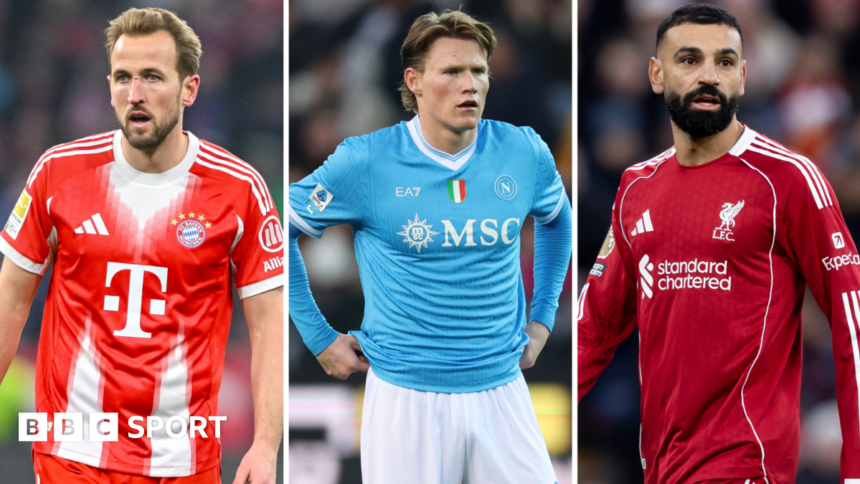
Another year, another FIFA The Best Awards, and another Men’s World XI that instantly sparks global debate. The ceremony in Qatar saw the usual constellation of superstars take their place in the hallowed 4-3-3 formation, a lineup dominated by six Paris St-Germain players. But as the confetti settled, the questions began. No Harry Kane? No Raphinha? A Scott McTominay-less midfield? The selection process, voted on by captains, coaches, and media, is inherently subjective, leaving a treasure trove of world-class talent on the outside looking in. For every celebrated inclusion, there is a disgruntled fanbase and a compelling case for a snubbed superstar. We’ve assembled the ultimate alternative World XI—a squad of phenomenal players who were unlucky to miss the cut, proving that the depth of talent in modern football could easily fill two, maybe three, elite teams.
- The Goalkeeper: The Unbreakable Wall Overlooked
- A Rock-Solid Rearguard: Defensive Snubs That Defy Logic
- The Engine Room: Midfield Maestros Left in the Wings
- The Forward Line: A Strike Force of Relentless Production
- Analysis & Predictions: What This Alternate Reality Tells Us
- Conclusion: A Celebration of Football’s Immense Depth
The Goalkeeper: The Unbreakable Wall Overlooked
While the chosen XI featured a deserving Gianluigi Donnarumma, one keeper’s sustained excellence at the very highest level was astonishingly bypassed. Thibaut Courtois of Real Madrid remains the definitive big-game goalkeeper. His 2024/25 season, though marred by injury, still featured a La Liga title and moments of sheer, match-defining brilliance. The Belgian’s performances in the Champions League, particularly his commanding presence and reflex saves, continue to set a standard. In an alternative world where the voting period slightly shifted, Courtois’s name would be in lights. Our alternative team needs a last line of defence who thrives under pressure, and there are few better. His exclusion is less a critique of the selected and more a testament to the cruel numbers game of fitting only one goalkeeper into an XI.
A Rock-Solid Rearguard: Defensive Snubs That Defy Logic
The official back four was exclusively Parisian, but several defenders across Europe mounted irrefutable cases. In central defence, William Saliba was the bedrock of an Arsenal side that pushed for the Premier League title to the final day. His composure, pace, and partnership with Gabriel transformed the Gunners. Alongside him, Ronald Araujo of Barcelona embodies defensive defiance. His warrior-like displays, crucial to Barca’s own title challenge, make him one of the world’s most complete and feared centre-backs.
At full-back, the omissions are just as glaring. Federico Dimarco of Inter Milan isn’t just a left-back; he’s an offensive weapon and defensive stalwart rolled into one, whose crossing and set-piece prowess were vital for the Serie A champions. On the right, the relentless consistency of Ben White at Arsenal, who delivered a career-best season in both defence and attack, provided a compelling argument. This alternative backline isn’t merely good; it’s a unit built to dominate any forward line, blending power, intelligence, and attacking verve.
- William Saliba (Arsenal): The Premier League’s most consistent centre-half.
- Ronald Araujo (Barcelona): A titan at the heart of Barcelona’s defence.
- Federico Dimarco (Inter Milan): The complete modern wing-back.
- Ben White (Arsenal): Evolution personified, a defender of immense reliability and growing influence.
The Engine Room: Midfield Maestros Left in the Wings
This is where the debate gets fierce. The official midfield three was stellar, but it left out players who carried their nations and clubs on their shoulders. First, Rodri’s absence from the actual team was arguably the most shocking snub of all, so he is the undisputed pivot of our alternative side. The Manchester City metronome is the premier defensive midfielder on the planet, the non-negotiable foundation for any team’s success.
Ahead of him, we install the dynamic Florian Wirtz. The Bayer Leverkusen talisman followed a historic Bundesliga title with another season of mesmerizing creativity, goals, and leadership, cementing his status as a global superstar. Completing this trio is the man whose goalscoring from midfield defied belief: Scott McTominay. For Scotland and Manchester United, McTominay was the clutch performer, scoring vital, often spectacular, goals when it mattered most. His unique threat offers something different to any midfield in world football.
This alternative midfield balances Rodri’s control, Wirtz’s genius, and McTominay’s explosive impact—a combination any manager would crave.
The Forward Line: A Strike Force of Relentless Production
Omitting a striker who broke a historic Bundesliga goalscoring record seems unthinkable, yet here we are. Harry Kane is the captain and centre-forward of our Unlucky XI. His debut season at Bayern Munich was individually spectacular, and his form for England remained impeccable. He is the quintessential number nine and an automatic selection in any team not featuring a certain alien from Paris.
On the right wing, Raphinha of Barcelona enjoyed his finest season yet, transforming into a leader and consistent end-product machine for both club and country. His work rate, delivery, and crucial goals make his exclusion hard to fathom. The left-wing spot goes to a player who redefined his ceiling: Phil Foden. Now operating more from the flank again, Foden’s technical majesty, big-game goals, and pivotal role in Manchester City’s latest trophy haul made him arguably England’s player of the year. This front three combines Kane’s ruthless finishing, Raphinha’s direct flair, and Foden’s inventive brilliance—a trio capable of dismantling any defence.
Analysis & Predictions: What This Alternate Reality Tells Us
Assembling this squad does more than highlight individual snubs; it reveals fascinating trends in modern football. The concentration of talent at a few super-clubs, like PSG, naturally skews voting. It also underscores how team success heavily influences individual accolades, sometimes at the expense of pure, consistent performance for club and country.
Looking ahead, the battle for 2026’s awards is already heating up. Players like William Saliba and Florian Wirtz are not just knocking on the door; they are breaking it down. The rise of a new generation, coupled with the enduring class of veterans like Kane and Courtois, promises even fiercer competition. Furthermore, the impact of major tournaments like the 2026 World Cup will be decisive; a standout performance in North America could propel any member of this alternative XI into next year’s official team.
The key takeaway is that football’s talent pool is deeper than ever. The difference between the “official” and the “unlucky” is often a matter of timing, narrative, and the narrow margins of team trophies. This alternative team could challenge for any honour on the planet.
Conclusion: A Celebration of Football’s Immense Depth
FIFA’s World XI is a celebration of excellence, but it is not, and cannot be, the final word. Our Unlucky XI—featuring the likes of Courtois, Saliba, Rodri, Kane, and Foden—is not a critique, but a companion piece. It is a testament to the breathtaking abundance of talent in the global game today. These players, through no fault of their own, found themselves on the wrong side of an incredibly tight vote. They represent the near-misses, the perpetual contenders, and the stars whose brilliance burns just as brightly off the awards stage. They are, in every sense, world-class. And their continued pursuit of recognition will make the football we watch over the coming year all the more compelling. The debate, as always, is the best part.
Source: Based on news from BBC Sport.