Verstappen’s Plea: Can F1 Find the Fun Again?
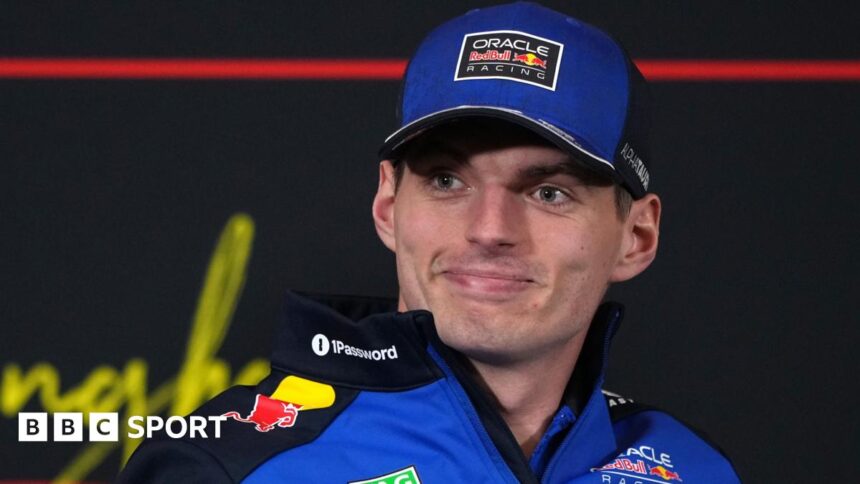
The image was a study in contrasts. Max Verstappen, the most dominant driver of his generation, had just executed a masterclass in damage control at the Australian Grand Prix, scything from a dismal 20th on the grid to a remarkable sixth place. Yet, in the post-race glare, the victory was not in the result, but in his candor. The four-time world champion, the sport’s reigning force, delivered a verdict that resonated through the paddock: he isn’t having fun. In a startling admission, Verstappen revealed a conflict at the heart of his profession, sparking a crucial conversation about the very soul of modern Formula 1.
The Driver’s Dilemma: Skill vs. System Management
Verstappen’s comments cut to the core of a technological tension that has been simmering since the dawn of the hybrid era and intensified with the latest generation of ground-effect cars. His point of contention isn’t with competition or speed, but with the energy management paradigm that now dictates a race. Drivers are no longer just pilots; they are systems analysts, constantly juggling a complex web of electrical deployment, fuel saving, and tire preservation, often from the very first lap.
“I am a bit conflicted, because I don’t really enjoy to drive the car but I do enjoy working with the team,” Verstappen stated. This distinction is critical. The thrill of pure, unadulterated racing—the visceral feedback, the late-braking heroics, the flat-out attack—is being sublimated by a strategic chess game played against a dashboard. The driver skill being highlighted is shifting from raw car control to computational efficiency, a transition that leaves purists like Verstappen yearning for a more elemental form of competition.
- Pre-Programmed Races: Much of the overtaking and pace differential is now dictated by pre-race energy deployment maps, reducing in-the-moment improvisation.
- The Lift-and-Coast Conundrum: Drivers are often forced to lift off the throttle early and coast into corners to save fuel and brakes, sanitizing the commitment required.
- Radio Traffic Overload: Constant engineer instructions on management modes can drown out the driver’s own race instinct.
A Chorus of Concern: Verstappen is Not Alone
While Verstappen’s status gives his words immense weight, he is far from a lone voice. Across the grid, drivers have expressed similar frustrations. The complaint is that the current formula, in its quest for efficiency and sustainability, has inadvertently created a Formula 1 spectacle that can feel processional and, at times, artificially constrained. The physicality and daring associated with legends of past eras are being replaced by a different kind of mental endurance.
This driver feedback is a vital metric for the sport’s health. When the best competitors in the world feel their primary tool—the car—is a source of frustration rather than joy, it signals a potential disconnect between engineering ambition and sporting essence. The risk is a generation of drivers who are celebrated as brilliant tacticians and system managers, but whose on-track artistry is muted by the very regulations designed to advance the sport.
The Path to Change: Inside the Negotiations
Importantly, Verstappen’s critique is coupled with a thread of optimism and, more significantly, agency. He is not merely sounding off; he is actively involved in shaping the future. “I have had discussions with F1 and the [governing body] FIA and we are working towards something that will hopefully improve everything,” he revealed.
This indicates that the driver’s perspective is being formally integrated into the F1 2026 regulations and beyond. The key areas of discussion likely include:
Power Unit Simplification: Reducing the complexity of the MGU-H system or its successor, placing a greater emphasis on raw power and driver-deployed electrical energy.
Fuel Allowance and Race Format: Revisiting the strict fuel flow limits and race fuel loads to allow for more flat-out racing segments.
Brake and Tire Durability: Engineering materials that allow for harder, more consistent pushing without catastrophic performance drop-offs.
The goal is not to revert to a bygone era, but to strike a new balance. Can F1 maintain its cutting-edge, road-relevant technological showcase while restoring the “fun factor” that turns drivers into gladiators and races into unforgettable dramas?
The 2026 Horizon: Predicting a More Driver-Centric Future
The 2026 power unit regulations represent the next major inflection point for the sport. The whispers from the technical departments and the driver council suggest a conscious effort to recalibrate. Predictions for the coming era hinge on a fundamental premise: sustainable fuels and advanced energy recovery must coexist with enhanced driver control.
We can anticipate a formula where the electrical power component is more powerful but also more directly controlled by the driver—a “push-to-pass” system on steroids that rewards bold overtaking moves rather than conserving energy for a pre-ordained lap. The cars themselves, while remaining aerodynamic marvels, may see regulations that promote closer following, making the energy spent on an overtake more likely to succeed. The objective is to create a product where the best driver on the day can truly shine through wheel-to-wheel combat, not just through flawless energy spreadsheet management.
Verstappen’s hopeful stance suggests he sees a blueprint that addresses these concerns. His commitment to Red Bull until 2028 is a powerful vote of confidence that the sport is heading towards changes he can believe in.
Conclusion: The Fun Imperative
Max Verstappen’s Australian GP drive was a testament to his supreme talent. His post-race comments were a testament to his passion for the sport’s core identity. His admission of conflict is not a threat, but a gift—a clear-eyed diagnosis from its most successful current practitioner. The pursuit of sustainability and technological marvel does not have to be the enemy of spectacle and sheer driving pleasure.
The journey from 20th to 6th in Melbourne proved Verstappen’s brilliance within the current constraints. But his louder message is a rallying cry for a future where such brilliance can be expressed with the throttle pinned open, the brakes screaming, and the driver’s instinct reigning supreme. For the health of Formula 1, the driver enjoyment that Verstappen seeks must be the ultimate KPI. If the most dominant force in the sport isn’t having fun, what does that say about the show for the rest of us? The work with the FIA and FOM is now the most critical development race of all—one where the finish line is a smile inside the helmet.
Source: Based on news from BBC Sport.