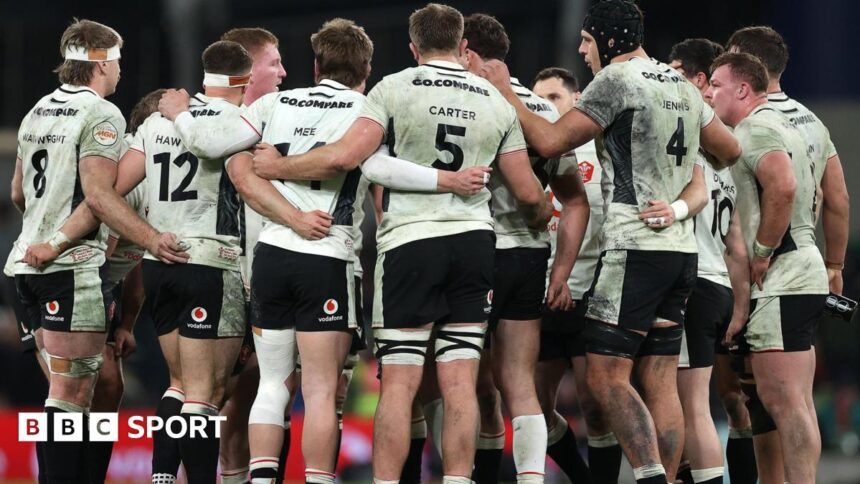
Wales Show Their Teeth in Dublin: Is the Elusive Win the Next Step?
The final whistle at the Aviva Stadium brought another entry in the record books: Wales’ winless run in Dublin extends to a dozen years. The scoreboard read 27-17 to Ireland, a familiar sight for the travelling fans. Yet, departing the cavernous arena, the overwhelming sentiment was not one of deflation, but of intrigue. This was not another capitulation. This was a statement. Wales, written off by many, arrived with a blueprint and a ferocity that rattled the world’s number two side and forced everyone, especially a respectful Andy Farrell, to sit up and take notice. The question now burns: having made profound progress, can this young Welsh side convert promise into precious, tangible victories?
Beyond the Scoreboard: A Performance That Restored Pride
For weeks, the narrative was suffocating. Pundits, particularly in Ireland, spoke of Welsh rugby’s decline as a fait accompli. The young squad was labelled green, the attack blunt, the task in Dublin deemed “mission impossible.” What transpired was a powerful rebuttal. Wales did not just compete; they dictated periods of the game against a settled, clinical Irish machine. The 27-17 defeat was a scoreline that flattered the hosts, masking the sheer competitiveness of the contest.
Warren Gatland’s side won the collision battle for large spells. Their defensive line speed, orchestrated by Mike Forshaw, was brutal and organised, forcing uncharacteristic errors from Johnny Sexton’s heirs. The set-piece, a supposed Irish fortress, was stormed repeatedly. Most importantly, the Wales character, questioned so often in the last 18 months, was resplendent. They absorbed early pressure, conceded a soft try, and instead of folding, hit back immediately. This resilience has been the cornerstone of Gatland’s greatest sides, and its return is the most significant takeaway from Dublin.
- Defensive Ferocity: The line-speed and tackle completion stifled Ireland’s multi-phase rhythm.
- Set-Piece Power: A dominant scrum and competitive lineout provided a crucial platform.
- Mental Resilience: Responding to adversity instantly showed a hardened mindset.
The Farrell Verdict: Respect Earned in the Foe’s Words
Sometimes the most telling analysis comes from the opposition camp. Ireland head coach Andy Farrell, a man not given to hollow praise, was unequivocal in his post-match assessment. In every answer, he circled back to one theme: his admiration for the Welsh performance. This was not patronising; it was a genuine acknowledgement of a plan well-executed and a threat palpably felt.
“I was really impressed with Wales,” Farrell stated, a refrain he would repeat. “Their line speed was incredible, they were physical, they played the game in the right manner.” When the victorious coach spends his press conference lauding the defeated, you know something has shifted. Farrell recognised that his team had been in a proper Test match, a battle vastly different from the one many had predicted. This earned respect is a currency more valuable than platitudes. It signals to the young Welsh players that they are on the right path, that their intensity belongs at this level. It validates the progress under Gatland in a way that a facile win over lesser opposition never could.
Bridging the Gap: From Valiant Defeat to Clinical Victory
Recognising progress is one thing; building on it is another. The chasm between a heroic loss and a season-defining win is narrow yet profound. It is crossed not with effort, but with precision. Wales’ key challenge now is to marry their undeniable physical and passionate performance with cold, clinical execution at critical moments.
In Dublin, decision-making in the red zone and individual errors at inopportune times proved costly. A missed pass here, a turnover there, a penalty concession at a pivotal moment – against a team of Ireland’s calibre, these are the margins. The creation of opportunities was encouraging; the finishing of them remains a work in progress. The leadership of Dafydd Jenkins was outstanding, but as a collective, converting pressure into points is the next non-negotiable step.
This is where experience, or the current lack thereof, is pivotal. This Welsh side is learning on the job in the most intense arena. Each close encounter like Dublin is a deposit in the bank of big-match temperament. The trick is ensuring that bank pays out with a win before confidence becomes defined by “good losses.”
The Road Ahead: Predictions for a Defining Campaign
So, can they start winning? The immediate fixture list provides a stern but revealing examination. The visit of Scotland to Cardiff is now a monumental encounter. A Scotland side brimming with talent but prone to inconsistency represents the exact tier of opponent Wales must begin to consistently defeat to prove this progression is real.
The prediction here is one of cautious optimism. Wales have shown they can disrupt the best teams with their physicality. At home, with a Principality Stadium roaring on the back of the Dublin display, they will be favourites against the Scots. A victory there would create tangible momentum, transforming “promise” into “points on the board.”
Looking further, the final two rounds against France and Italy will be another gauge of depth and adaptability. The goal for this Six Nations should no longer be mere respectability. It must be a positive win-loss record. Two victories, starting with Scotland, would represent a successful campaign and a firm foundation. The audacious dream of a title is premature, but the re-establishment of Cardiff as a fortress and the development of a ruthless edge are immediate, achievable targets.
Conclusion: A Corner Turned, But the Journey Continues
The narrative around Welsh rugby has been forcibly changed. No longer are they the easy touch, the team in crisis. The performance in Dublin was a line in the sand, drawn with grit and defiance. They have restored pride and, more importantly, proven their strategic and physical blueprint can trouble the very best.
However, moral victories have a short shelf life. The Wales rugby ethos, built by Gatland in his first era, was founded on turning tight games into wins, on being harder and smarter in the final quarter. This new generation has emphatically recaptured the hardness. Now, they must cultivate the smartness. The respect of Andy Farrell is a trophy, but it is not the one they play for. The next step is clear: take the confidence, sharpen the execution, and turn admirable defiance into historic results. The win in Dublin may have eluded them, but the belief that wins are coming should no longer be in doubt. The dragon is no longer sleeping; it’s snarling. The task now is to make it bite.
Source: Based on news from BBC Sport.