We’ve Not Moved On: Ibrox Pitch Invasion Proves Old Firm Rivalry Stuck in 1980 Time Warp
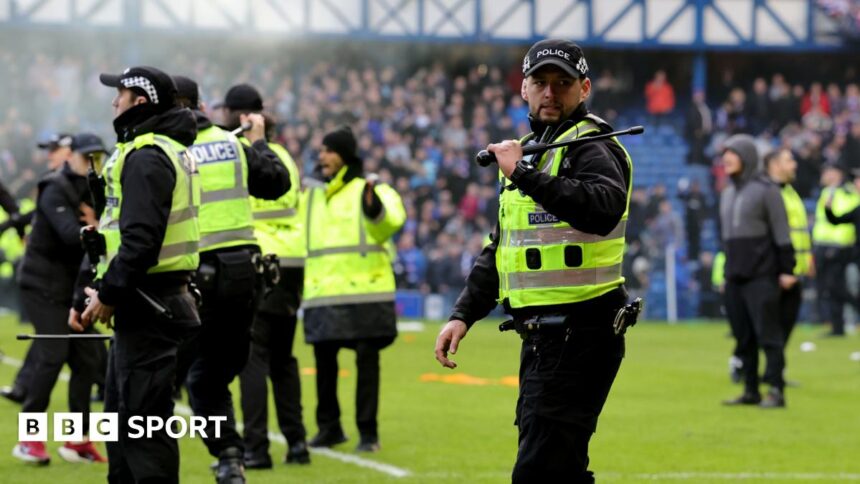
The final whistle had blown, the penalty had been scored, and the 2024 Scottish Cup final was consigned to the history books. Yet, as a phalanx of police in fluorescent jackets formed a human wall across the Ibrox turf on Sunday, it wasn’t 2024 we were witnessing. It was a grim re-enactment of a much darker chapter. The chaotic pitch invasion and subsequent clashes between Celtic and Rangers supporters, separated only by a thin blue line, felt like a societal flashback. It screamed a damning, inescapable truth: in many ways, Scottish football has not moved on from the Old Firm cup final of 45 years ago.
A Fractured Pitch: Echoes of 1980 in a Modern Era
For context, rewind to 1980. The Scottish Cup final between Celtic and Rangers descended into notorious chaos. A pitch battle involving hundreds of supporters, mounted police charges, and widespread disorder became an indelible stain on the fixture’s history. It was a nadir that prompted a societal reckoning and led to significant changes in how such games were policed and managed.
Fast forward to Sunday. The ingredients for a return to that era were, arguably, inadvertently reassembled. For the first time since 2018, Celtic were allocated the entire Broomloan Road Stand—approximately 7,500 tickets. This reinstatement of a meaningful away support, the lifeblood of the fixture’s atmosphere, was widely welcomed. Yet, the aftermath of Tomas Cvancara’s winning penalty revealed a stark reality: the infrastructure of tolerance and the cultural progress we assumed had been built over four decades proved frighteningly fragile.
As fans spilled onto the pitch, the immediate and instinctive action by authorities was telling. Police and stewards did not merely corral invaders back to the stands; they created a physical cordon to separate the two factions. This was not standard pitch invasion protocol. This was a specific, pre-planned contingency for an Old Firm clash. The sight of that cordon, officers back-to-back facing baying crowds, was a powerful, symbolic admission. It acknowledged that beneath the surface of a modern sporting contest, the ancient, tribal fault lines remain, capable of rupturing at any moment.
Beyond the Game: When Narrative is Hijacked by Chaos
The tragedy of Sunday’s scenes is the theft of focus. A dramatic cup final, decided by a late penalty, should be analyzed on its sporting merits. Brendan Rodgers’ tactical changes, Rangers’ defensive resilience, the impact of substitutes—these are the legitimate debates of a football match.
Instead, the ugly scenes that followed Tomas Cvancara’s winning penalty became the sole storyline. The narrative was hijacked. This displacement is a chronic issue for Scottish football. It allows the darkest elements within both supports to dictate the conversation, overshadowing the sport and the overwhelming majority of fans who simply wish to support their team.
Consider what was lost in the noise:
- The sporting contest itself: Celtic’s quest for a double, Rangers’ attempt to salvage a troubled season.
- The return of the away fan: The positive experiment of a large away allocation, which should be celebrated for atmosphere, now risks being condemned.
- Player safety: The fundamental duty of care to those on the pitch was breached, a point far more serious than any misplaced boast about “pitch celebrations.”
The discussion is no longer about football. It is, once again, about societal division, policing costs, and reputational damage. We are back in the 1980s.
The Allocation Dilemma: Progress or Peril?
The decision to grant Celtic a full stand was a bold move towards normalcy. The Old Firm away ticket allocation synonymous with the fixture is crucial for its unique, pressurized spectacle. Removing it since 2018, while understandable for safety, sanitized the derby and punished the legitimate, law-abiding supporter.
Sunday’s events, however, provide easy ammunition for those who advocate for segregation at all costs—even if that cost is the soul of the fixture. The immediate, reactionary prediction is simple: a return to the tokenistic away allocations, or worse. This would be a victory for the disorderly minority and a profound defeat for the game.
But would it solve the problem? The expert analysis suggests not. The issue is not primarily logistical; it is cultural. The hatred that spills over is not created by proximity in a stadium; it is fermented online, in communities, and passed down through generations. Reducing away fans to a few hundred might reduce the scale of a potential pitch invasion, but it does nothing to address the underlying sentiment. It simply hides it from view, while the fixture withers into a televised event with a library atmosphere.
A Path Forward: Staring Down the Barrel of History
So, where do we go from here? The predictions are bleak if the cycle continues. More stringent policing, further restrictions on fans, and a continued exodus of sponsors wary of association with chaos. The game’s commercial and reputational growth is held hostage by its past.
A strong conclusion demands uncomfortable truths. The solution cannot be found solely in policing or ticket allocations. It requires a multi-faceted approach:
- Uncompromising Accountability: Lifetime bans for anyone entering the pitch and criminal prosecution where appropriate. Clubs must be ruthless.
- Leadership from the Top: Continuous, visible, and joint efforts from both clubs to condemn not just violence, but the toxic discourse that fuels it. This message must be relentless.
- Reclaiming the Narrative: Media and authorities must steadfastly focus on the football first. Do not let the story be defined by those who seek to destroy it.
- Fan Responsibility: The majority must actively marginalize the destructive minority within their own ranks. Silence is complicity.
The image of that police cordon on the Ibrox pitch is a mirror held up to Scottish football. It reflects a game still wrestling with the same demons that haunted it 45 years ago. We have better stadiums, better cameras, and better policing strategies. But have we made meaningful progress in the hearts and minds that fuel this rivalry? Sunday’s answer was a deafening, depressing no. Moving on requires more than the passage of time; it requires a conscious, collective decision to leave the worst of our history behind. Until then, we remain trapped in a time warp, with the ghosts of 1980 forever waiting in the tunnel.
Source: Based on news from BBC Sport.