Packers’ Biggest Needs After the Zaire Franklin Trade: A New Hole Emerges
The Green Bay Packers front office, led by General Manager Brian Gutekunst, has been characteristically proactive this offseason. At the NFL Combine, Gutekunst identified inside linebacker and the secondary as areas requiring competition. He swiftly addressed the first by executing a trade, sending defensive lineman Colby Wooden to the Indianapolis Colts for veteran linebacker Zaire Franklin. Franklin is immediately penciled in as the starting middle linebacker and the defensive signal-caller, bringing proven production and leadership to the heart of Jeff Hafley’s new defense. While this move plugs one glaring hole, the nature of roster building in the NFL means solving one problem often reveals—or exacerbates—another. After the Franklin trade, the Packers’ list of offseason priorities has been significantly reshuffled.
The Franklin Fix: Stability at the Second Level
The acquisition of Zaire Franklin is a direct and decisive answer to a major question mark. Last season, the Packers cycled through players at inside linebacker, struggling to find consistent play. Franklin, a tackling machine who has averaged over 160 combined tackles over the last two seasons, brings immediate credibility. His familiarity with the defensive system—having overlapped with new Packers defensive coordinator Jeff Hafley in Indianapolis and played under former Eagles DC Jonathan Gannon—cannot be overstated. He will be the green dot communicator, a critical role in a new scheme, allowing Quay Walker to focus on playing fast and free. This trade transforms a position of weakness into one of experience and stability. However, the cost of doing business has created a new, potentially larger, vulnerability on the defensive front.
The Glaring Void: A Crisis at Nose Tackle
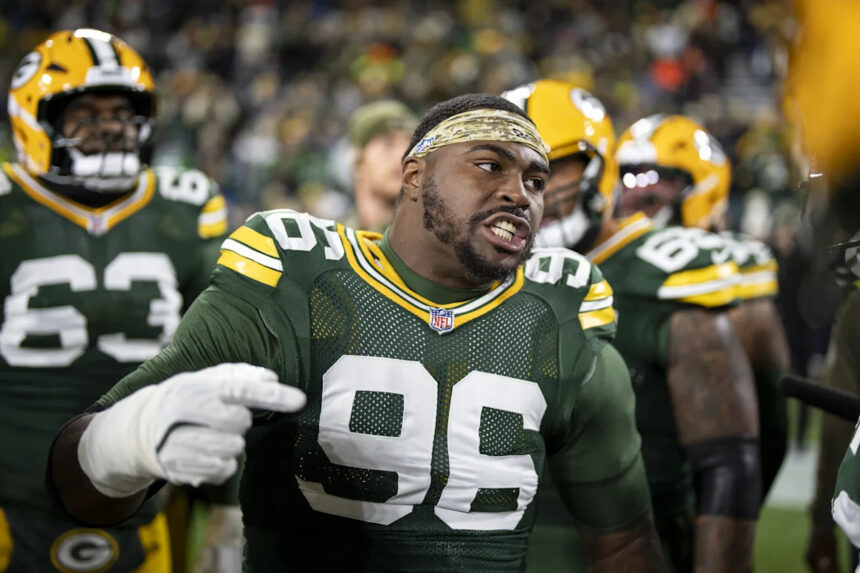
While the Packers fortified the linebacker corps, they inadvertently plunged the nose tackle position into a state of critical need. The departure of Colby Wooden, coupled with the non-retention of Quinton Bohanna and the expiring contract of Jonathan Ford, has decimated the depth chart. A stark statistic reveals the scope of the issue: only 48 percent of the team’s nose tackle snaps return for the 2025 season, and that number is misleading.
The majority of those returning snaps belong to Karl Brooks and Devonte Wyatt, who are primarily pass-rush specialists deployed in sub-packages. On traditional early-down runs, the Packers are essentially starting from scratch. The current in-house options are concerning:
- Nazir Stackhouse: An undrafted rookie who struggled to find a role in 2024.
- Warren Brinson: Another developmental player with minimal regular-season experience.
- Jordon Riley: Coming off a significant Achilles tear, his availability and impact are major unknowns.
Wooden, while not a natural fit for the role himself, was at least a body with experience. His trade leaves a massive, run-stuffing-sized hole in the center of the defensive line. In Hafley’s defense, which relies on a stout front to allow its playmakers to flourish, this is now the single biggest need on the roster.
Free Agency Pathways: Following the Gannon Blueprint
The good news for Gutekunst is that the market may align perfectly with the Packers’ new schematic philosophy. Jeff Hafley’s defense shares DNA with the systems run by Jonathan Gannon, under whom Zaire Franklin thrived. This connection provides a clear free-agent roadmap. Four former Gannon-era nose tackles are poised to hit free agency, offering potential solutions:
- Javon Hargrave & Dalvin Tomlinson: Established, high-level veterans who would provide an immediate, game-changing presence. As released players, signing them would not affect Green Bay’s compensatory pick formula.
- Khyiris Tonga & Roy Lopez: Younger, more cost-controlled options who have shown promise. As compensatory free agents, signing them could offset a future Packers comp pick, a factor Gutekunst historically considers.
Investing in one of these players would be the most direct way to stabilize the defensive front. A player like Tonga or Lopez could be a savvy, budget-friendly signing that allows resources to be used elsewhere, while a splash for Tomlinson would signal a true “all-in” mentality for a defense in transition.
Remaining Needs: Secondary and Offensive Line Depth
Even after addressing the nose tackle crisis, the Packers’ work is not complete. Gutekunst’s original combine comments highlighted the secondary, and that need remains acute. While the safety room looks promising with Xavier McKinney and Javon Bullard, cornerback depth is a pressing concern. Eric Stokes is entering a contract year amid persistent injury struggles, and the slot position lacks a definitive long-term answer. Expect the Packers to be active in both the veteran market and the early rounds of the draft at cornerback.
On offense, the right side of the line demands attention. The right tackle and right guard spots were in flux last season, and while Sean Rhyan showed promise, adding competition and high-end talent is necessary to protect Jordan Love and establish a dominant run game. This may not be the flashiest need, but it is foundational to the team’s success.
Predictions and the Road Ahead
The Packers’ offseason strategy is now coming into focus. The Franklin trade was a classic Gutekunst move: targeted and efficient. It allows the team to enter free agency and the draft without desperation at linebacker. The prediction here is that Gutekunst will act swiftly to address the nose tackle position in free agency, likely targeting a younger, scheme-fit player like Khyiris Tonga to pair with a mid-round draft pick. This provides a cost-effective solution that maintains future flexibility.
From there, look for the Packers to pursue a starting-caliber cornerback in free agency, perhaps a player like Ahkello Witherspoon or Kendall Fuller, before using their first-round pick (25th overall) on the best player available, likely at cornerback, offensive tackle, or even safety. The draft will then be used to add depth across the board, with a particular focus on the offensive line and pass-rush rotations.
Conclusion: A Calculated Gamble with a Clear Next Step
The trade for Zaire Franklin was a necessary and smart football move, but it fundamentally altered the Packers’ offseason calculus. What was a position of need at linebacker is now a strength, but the defensive line has been pushed to the brink. The nose tackle position has skyrocketed to the top of the needs list, becoming the pivotal domino that must fall for the new defense to function. Brian Gutekunst has the cap space, the draft capital, and a clear schematic template to fix it. How he chooses to do so—with a splashy veteran signing or a more measured approach—will define the rest of the Packers’ offseason and set the tone for Jeff Hafley’s defense in 2025. The mission is clear: protect the middle at all costs.
Source: Based on news from Yahoo Sports.