Cartel Chaos: Could Mexico’s Surging Violence Derail the 2026 World Cup Dream?
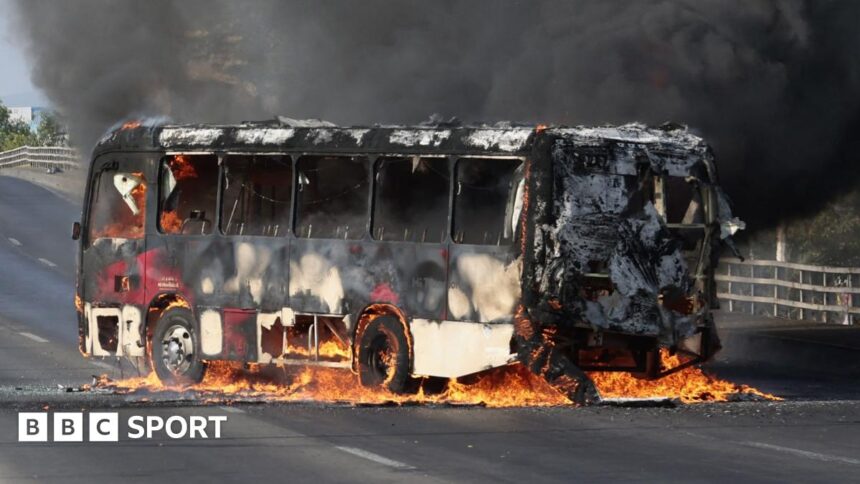
The image of a sun-drenched Azteca Stadium, packed with roaring fans for a 2026 World Cup final, is a cornerstone of FIFA’s vision for the first 48-team tournament. Yet, a starkly different scene unfolded across Mexico this week: armored vehicles on city streets, highways blocked by burning trucks, and the chilling crackle of gunfire replacing the cheers of the crowd. A dramatic escalation of cartel violence, triggered by the military operation against a kingpin, has plunged parts of the country into a state of crisis, casting a long, dark shadow over its role as a co-host for the globe’s biggest sporting event.
A Nation on Edge: The “El Mencho” Manhunt and Its Fallout
The spark that ignited the current conflagration was the Mexican army’s high-stakes operation targeting Nemesio Oseguera Cervantes, the elusive leader of the Jalisco New Generation Cartel (CJNG). While the government confirmed his death, the cartel’s response was immediate, coordinated, and terrifyingly brutal. Declaring a state of siege, the CJNG launched a multi-pronged offensive to demonstrate its power and destabilize the state.
This is not isolated gangland violence; it is a direct, militarized challenge to the Mexican state’s authority. The tactics employed are straight from a playbook of intimidation:
- Urban Warfare: Open gun battles between cartel gunmen and military forces in cities.
- Economic Strangulation: The systematic blocking of critical highways and roads with burning vehicles, paralyzing transport and commerce.
- Psychological Terror: Circulating videos of armed patrols controlling streets, sending a clear message of territorial dominance.
The human cost has been severe, with at least 25 National Guard officers killed in a 24-hour period, underscoring the ferocity of the conflict. While centered in Jalisco, the violence has rippled out to at least a dozen regions, proving the CJNG’s national reach and the fragile security landscape across the country.
From Pitch Problems to Global Perception: The World Cup Hosting Nightmare
For World Cup organizers, this eruption is a scenario drawn from their worst nightmares. The tournament’s success hinges on safety, seamless logistics, and a welcoming environment. Mexico’s current crisis threatens all three pillars. Security analysts point to several immediate and profound concerns that go far beyond typical event security.
Logistical Collapse: The cartel’s tactic of blocking major highways is a direct threat to the World Cup’s operational skeleton. Team movements, fan travel between host cities, and the delivery of crucial equipment could be severely disrupted. A burned-out truck on a key route between Guadalajara and Mexico City could derail a matchday.
Fan Safety and Deterrence: The most significant risk is to the safety of visitors. While stadiums and immediate surroundings can be hardened into fortresses, the World Cup experience extends to fan zones, hotels, and public spaces. The sight of urban gun battles, even in areas not hosting matches, would be catastrophic for international confidence. The mere perception of danger could lead to mass ticket cancellations and a chilling effect on travel, draining the event of its atmosphere and economic impact.
Resource Drain: Mexico’s security apparatus is now fully engaged in a hot conflict with a powerful non-state actor. This stretches military and police resources thin. The immense, specialized security detail required for a World Cup—protecting teams, VIPs, and infrastructure—could be compromised if the state is forced to fight a war on two fronts.
Expert Analysis: A Tipping Point for FIFA and Mexico
We spoke to several security and sports governance experts who requested anonymity due to the sensitive nature of the topic. The consensus is one of deep concern. “This isn’t a crime wave; it’s an insurgency,” one Latin America security consultant stated. “FIFA has contingency plans for protests or isolated terror threats, but a sustained, nationwide challenge to state sovereignty by cartels is a different category of risk altogether.”
Another expert, with experience in mega-event security, highlighted the precedent: “FIFA removed the 2023 Club World Cup from China due to COVID policies. They have a threshold for disruption. The question is whether this violence is a tragic spike or the new, sustained normal. If it’s the latter, the pressure from sponsors, broadcasters, and participating nations to reconsider the hosting arrangement will become immense.”
The experts identified key red flags:
- Timing: The outbreak occurs with two years of lead time, which is both a blessing and a curse. It allows for mitigation but also provides a long window for further instability.
- Cartel Motivation: The CJNG has shown it values demonstrating power over avoiding international scrutiny. A global event like the World Cup could be seen as a prime stage for such a demonstration.
- Political Pressure: The Mexican government will be under dual pressure: to appear strong and in control for the world, while also combating the cartels militarily. These objectives may conflict.
The Road to 2026: Scenarios and a Stark Conclusion
As the smoke clears from this week’s violence, the path forward is fraught with uncertainty. Several potential scenarios could unfold, each with dramatic implications for the World Cup.
Scenario 1: Rapid De-escalation and Fortress Security. The government successfully contains the cartel’s offensive, reasserts control, and the violence recedes to pre-spike levels. Mexico then implements a “fortress” security plan for the World Cup, with extreme measures around venues and travel corridors. The tournament proceeds, but under a palpable tension, with fans experiencing a heavily militarized environment.
Scenario 2: Sustained Instability and Contingency Triggers. The conflict simmers or continues in cycles, creating persistent pockets of insecurity. This would force FIFA and regional organizers to activate serious contingencies. This could mean:
- Relocating matches from higher-risk Mexican cities to venues in the United States or Canada.
- Creating highly restricted “bubbles” for teams and officials, isolating them from the host country.
- A significant downgrade of Mexico’s hosting role, perhaps limited to a few, easily secured venues.
Scenario 3: Full-Blown Crisis and Host Reassignment. In the worst case, where cartel violence escalates further and directly targets World Cup infrastructure or personnel, FIFA could be forced into the unprecedented step of removing Mexico as a co-host. While logistically and financially catastrophic, the liability would be too great.
The ultimate conclusion is stark. The dream of a unified, celebratory North American World Cup now faces its most formidable opponent long before the first whistle blows: the destabilizing power of transnational cartels. This week was not just a security incident; it was a live-fire stress test of Mexico’s capacity to guarantee the fundamental safety required for a mega-event. The 2026 World Cup is no longer just a story of soccer. It has become a high-stakes referendum on the Mexican state’s authority, and the world will be watching, with trepidation, to see if the beautiful game can survive in a landscape of such profound and violent conflict.
Source: Based on news from BBC Sport.