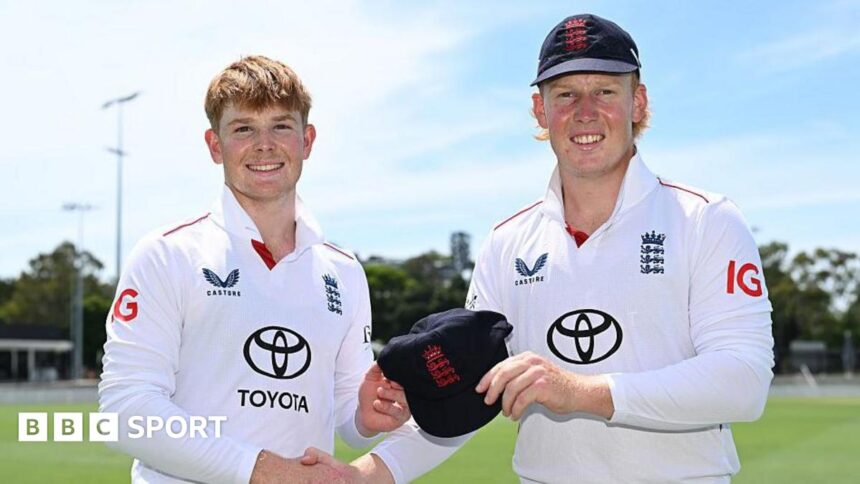
England’s 2027 Ashes: The New Guard Ready to End the Australian Drought
Another Ashes campaign in Australia has concluded, its echoes fading into the familiar, hollow silence of defeat. England’s wait for a Test series win on Australian soil now stretches into a second decade, a gnawing narrative that will define the lead-up to the next battle for the urn on home turf in the summer of 2027. While moments like Jacob Bethell’s maiden century and Joe Root’s belated Australian ton provided fleeting solace, the 2025-26 tour ultimately posed more questions than it answered about the team’s future trajectory. With the leadership seemingly committed to its aggressive philosophy and reluctant to initiate a brutal clear-out, the evolution towards 2027 may be gradual. But beneath the surface, a new generation is stirring. The pressure for places will not come from sweeping revolutions, but from a talented cadre of youngsters whose time is aligning perfectly with England’s most urgent quest: to finally win back the Ashes.
The Incumbent Core: Who Survives the Journey to 2027?
Before identifying the new blood, we must assess the existing timber. The Bazball doctrine, for all its recent setbacks, is unlikely to be wholly abandoned. This continuity provides a framework for succession planning. Captain Jacob Bethell, despite a challenging tour, will be central to the 2027 plans, his leadership and batting pedigree still viewed as the cornerstone. The mercurial Harry Brook will be 28, theoretically entering his prime, and remains a destructive force capable of defining sessions. Among the bowlers, Josh Tongue’s heart and skill in Australia cemented his status as a attack leader, while the unique angle of left-armer Ben Coad offers a point of difference. Wicketkeeper Jamie Smith, with his elegant batting, is the clear long-term option behind the stumps.
However, the 2027 series will demand tough calls on legendary veterans. Joe Root will be 36; his class is eternal, but his role may shift. Stuart Broad and James Anderson will be long retired, their monumental overs finally bowled. This creates the most significant void: the need for a relentless, wicket-taking seam attack that can thrive in all conditions. Filling that void is the single greatest challenge facing English cricket.
The Batting Prodigies: Building the Next Top Order
England’s batting future shines brightly, with several prodigies already knocking loudly on the door. The most prominent name is James Rew. The Somerset left-hander is not just a accumulator; he is a run-machine with a first-class average already nudging 50. His temperament and appetite for big hundreds scream Test match pedigree. By 2027, he could be the rock at number three or five, providing the perfect counterbalance to the flair around him.
Beyond Rew, the pipeline is rich:
- Danial Ibrahim (Surrey): A player of sublime timing and calm demeanour, Ibrahim has been marked for greatness since his schoolboy days. His technique is sound, and his growth in the County Championship will be closely monitored.
- Hamza Shaikh (Warwickshire): An elegant, right-handed top-order batter, Shaikh possesses the kind of orthodox, fluid style that translates seamlessly to the Test arena. His development over the next two seasons is crucial.
- Noah Thain (Essex): The powerful left-hander offers a dynamic option. A natural stroke-player, Thain’s ability to shift gears could make him a perfect fit for the middle-order enforcer role.
These players represent more than just talent; they represent structural depth. They will push the incumbents daily, ensuring that complacency cannot set in during the build-up to the Ashes.
The Bowling Revolution: Finding the Heirs to Broad and Anderson
This is the critical department. England cannot simply replace Anderson and Broad; they must evolve beyond them with a diverse, potent attack. The search is for bowlers with X-factor, pace, and durability. Leading this new wave is Joshua de Caires of Middlesex. More than just a handy off-spinner, he is a burgeoning all-round talent with a tight, nagging line and the ability to contribute vital runs. His potential as a successor to Moeen Ali’s role is significant.
The seam bowling prospects, however, are the most exciting. Keep a close eye on:
- Farhan Ahmed (Nottinghamshire): The younger brother of Rehan, leg-spinner Farhan is regarded as an even greater talent. His wrist-spin offers the mystery and wicket-taking threat England have often lacked in support of Jack Leach.
- Eddie Jack (Hampshire): A tall, raw-boned fast bowler from the Rose Bowl factory that produced Chris Tremlett, Jack generates disconcerting bounce and has the frame to become a workhorse.
- John Turner (Hampshire): While known for his white-ball exploits, Turner’s express pace is a rare commodity. If he can hone his red-ball skills and maintain fitness, he could be the shock weapon England need to unsettle Australian batters.
The key will be managing workloads and exposure. The England setup must carefully integrate these bowlers, perhaps through A-tours and strategic home series, to ensure they are battle-hardened, not broken, by November 2027.
The 2027 Forecast: A Hybrid Ashes Challenge
So, what might the England team look like when the Australians arrive in the summer of 2027? Expect a hybrid side, blending the remaining pillars of the current era with the brightest graduates from the county system. The leadership of Bethell will be vital in integrating this mix. The top order could feature a blend of Bethell’s grit, Brook’s brutality, and the emerging class of James Rew. The bowling attack, likely led by Tongue, may feature a high-pace option like Turner or the persistent Jack, complemented by the spin of de Caires or Ahmed.
The biggest strategic shift may come in the brand of cricket played. The all-out aggression of the early Bazball era might mature into a more nuanced, conditions-aware approach—one that can both blaze away at The Oval and grind it out at a damp Lord’s. This tactical flexibility, learned from painful Australian lessons, could be England’s ultimate weapon.
Conclusion: The Long Game to Glory
The path to the 2027 Ashes is not about discarding the present, but about responsibly building upon it. England’s failure to win in Australia again has set the clock ticking, but it is a four-year timer, not a panic alarm. The talent required to finally reclaim the urn is not a distant dream; it is already taking guard in county matches and lighting up age-group tournaments. The challenge for the selectors and coaching staff is one of curation and courage: to identify the right players from the pool of Rew, Ibrahim, de Caires, Ahmed, and others, and to give them the experiences that forge Test match temperament.
The wish for change may be limited at the very top, but on the field, change is inevitable. The transition is already underway. If managed with foresight and patience, the fusion of surviving stalwarts and these hungry, gifted newcomers can create an England team not just capable of winning the 2027 Ashes, but of defining a new era. The long wait must end. The new generation holds the key.
Source: Based on news from BBC Sport.