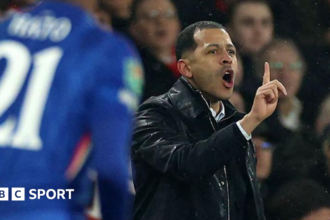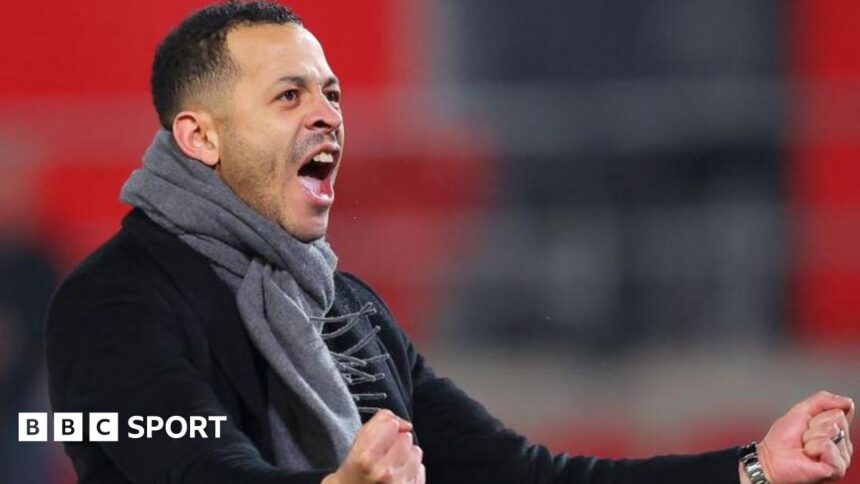
Why Chelsea Have Turned to ‘Innovator’ Liam Rosenior
The revolving door at Stamford Bridge has spun once more, but this time it has stopped on a name that signals a profound, and perhaps final, shift in Chelsea’s chaotic modern era. The appointment of Liam Rosenior, a 41-year-old less than two years removed from his own dismissal at Hull City, as head coach is not merely another gamble on potential. It is a deliberate, structural bet on a specific type of modern football thinker—an “innovator” groomed within the club’s own ecosystem. In choosing Rosenior, Chelsea are not just hiring a manager; they are fully committing to a model, and banking on a personality uniquely shaped to thrive within it.
From the Tigers’ Den to the Blueprint: The Rosenior Rebirth
To understand Chelsea’s audacious move, one must first look past the blunt fact of Rosenior’s Hull City departure in May 2023. His work at the MKM Stadium was, in fact, the foundation of his current appeal. Tasked with a philosophical overhaul, Rosenior implemented a possession-dominant, progressive style at a club more accustomed to pragmatism. He transformed Hull into one of the Championship’s most aesthetically pleasing sides, boasting some of the division’s highest pass-completion rates and build-up metrics.
Yet, the crux of his sacking—falling short of the playoffs—highlights the traditional tension between process and results. For Chelsea’s data-driven ownership, however, the process was the prize. They saw a coach successfully instilling a complex, modern ideology against a challenging backdrop. This was not a failure in their eyes, but a compelling case study. His subsequent 18-month apprenticeship at Strasbourg, Chelsea’s sister club, was the masterstroke. Operating within the same multi-club model and under a similar sporting structure to Chelsea, Rosenior didn’t just talk the talk; he proved he could walk the BlueCo blueprint.
- Philosophical Alignment: At Strasbourg, he continued his commitment to controlled, attacking football, steadily improving the team’s underlying performance data.
- Structural Harmony: He worked seamlessly with a technical director and data department, a non-negotiable for the Chelsea hierarchy.
- Player Development: He earned praise for improving young talents, a core Chelsea mandate with their squad’s age profile.
The Innovator’s Toolkit: Why Rosenior Fits the Chelsea Structure
Enzo Maresca’s departure, reportedly due to friction over control and transfers, laid bare the essential requirement for Chelsea’s next appointment: collaboration over command. Rosenior arrives not as a defiant tactician demanding veto power, but as a “company man” who has already excelled in the very system that frustrated his predecessor. Described by peers as a meticulous analyst and a compelling communicator, his skillset is tailor-made for this new Chelsea.
He is a coach of the video analysis generation, known for his detailed, individualised player instruction. Furthermore, his reputation as a strong man-manager and eloquent communicator addresses a critical need in a dressing room brimming with expensive, young talent needing clear direction and belief. Unlike a superstar manager with a pre-set, rigid system, Rosenior is seen as a flexible tactical adapter, capable of moulding his principles to the squad’s strengths—a vital trait for a group still searching for its identity.
This is the crux of Chelsea’s reasoning: in Rosenior, they get a coach whose modern methodology aligns with their data-centric approach, whose personality promises harmony with the sporting directors, and whose recent history proves he can develop players within their specific corporate framework. The risk of inexperience is outweighed by the certainty of fit.
The Premier League Furnace: Is Rosenior Ready?
The question of readiness is legitimate. The Premier League is a stratospheric leap from the Championship and Ligue 1’s mid-table. The glare of the Stamford Bridge spotlight, the weight of a billion-pound squad, and the relentless scrutiny represent an immense psychological challenge. However, Rosenior is no naive newcomer. His long playing career at top-flight and high-level Championship clubs, combined with years of coaching preparation under mentors like Wayne Rooney and Shaun Derry, has given him an intimate understanding of the league’s pressures.
His readiness may be less about his CV’s bullet points and more about his inherent characteristics. His noted emotional intelligence and calm demeanour are assets in a storm. He is not coming to conquer Chelsea, but to integrate with it. The initial focus will not be on a title challenge, but on implementing a clear, stable style of play, improving individual players, and building a cohesive unit. The hierarchy’s patience—or lack thereof—will be the ultimate test. If they truly believe in their model, they must afford their model student time to graduate to the highest level.
Predictions and The Road Ahead for Chelsea
The 2024/25 season under Rosenior will be judged on a curve distinct from the traditional top-four-or-bust mandate. Key benchmarks for success will include:
- Establishing a Clear, Watchable Identity: Moving beyond chaotic matches to consistent, controlled performances.
- Unlocking Key Young Talents: Tangible improvement in players like Enzo Fernández, Moisés Caicedo, and Noni Madueke.
- Stamford Bridge as a Fortress: Rebuilding the toxic atmosphere into a positive, patient one.
- Top-Six Challenge: A return to European competition, likely the Europa League, would represent solid progress.
Expect a Chelsea that prioritises ball possession and structured build-up, with full-backs tucking into midfield and a focus on creating through controlled overloads. Rosenior’s challenge will be to add cutting edge and defensive solidity to this philosophy. The transfer window will be his first test of collaboration, working with Paul Winstanley and Laurence Stewart to identify targets that fit his tactical vision within the club’s broader strategy.
Conclusion: A Final Roll of the Model’s Dice
Chelsea’s appointment of Liam Rosenior is the most definitive statement yet of their new-era project. It is a rejection of the superstar manager paradigm and an embrace of a coherent, club-first football operation. They are not hiring a saviour, but a supremely gifted conductor for an orchestra they have assembled at great cost. The gamble is not primarily on Rosenior’s tactical acumen—which is highly regarded—but on whether the Premier League’s relentless demand for immediate results will allow the time for a harmonious, process-driven project to flourish.
In betting on the innovator from within, Chelsea have finally shown their full hand. This is their model, their structure, their vision. Liam Rosenior is its purest embodiment. His success or failure will not just be a verdict on one young coach’s ability, but the ultimate judgement on the entire BlueCo experiment at Stamford Bridge. The journey from Hull’s dismissal to Chelsea’s helm is complete. The far more arduous journey, for both man and club, begins now.
Source: Based on news from BBC Sport.