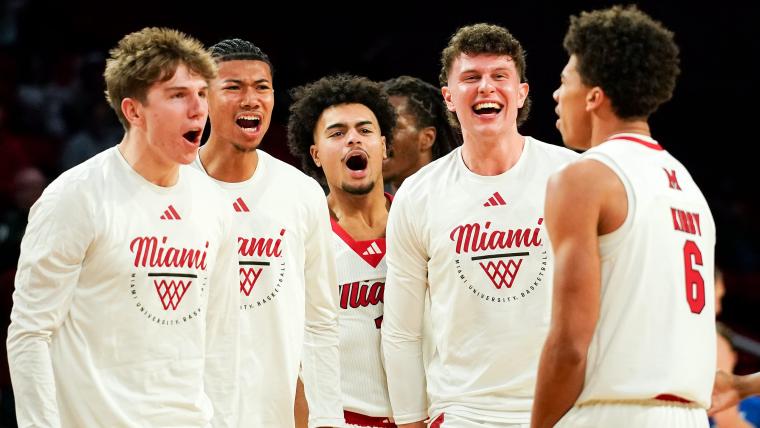
The 31-1 Conundrum: Why Miami (Ohio)’s Historic Season Starts in the First Four
The NCAA Tournament selection committee has spoken, and its verdict on the 2025-26 Miami (Ohio) RedHawks is a masterclass in the nuanced, and often controversial, calculus of March Madness. Head coach Travis Steele’s squad captured the nation’s imagination, storming to a pristine 31-0 record before a heartbreaking overtime loss to UMass in the Mid-American Conference Tournament final. Yet, when the bracket was revealed, the 31-1 RedHawks found themselves not among the protected seeds, but in Dayton, slated for a First Four matchup against the SMU Mustangs. The decision has sparked debate from Oxford to every corner of the college basketball world: How can a team with one of the best records in modern history be forced to play an extra game just to reach the Round of 64?
The Brutal Truth: Schedule Strength vs. Shiny Record
To understand the committee’s logic, one must look beyond the dazzling win-loss column. The central, inescapable factor anchoring Miami (Ohio)’s seed is its lack of strength in their schedule. In the era of advanced metrics like NET, KenPom, and strength of record, who you play—and where you play them—is often as important as whether you win.
The RedHawks’ non-conference slate was notably soft. It lacked the high-major opportunities that provide “quadrant 1” chances, the gold standard for tournament resumes. While they handled their business flawlessly, their most notable victories came against mid-major peers, failing to secure a signature win that would resonate in the committee room. Their dominance in the MAC, while impressive, did little to move the needle, as the conference’s overall rating provided few opportunities for resume-boosting victories.
Essentially, the committee viewed their 31 wins through a lens of skepticism. Were they a powerhouse that steamrolled a tough path, or a product of a favorable schedule? The answer, in their eyes, tilted toward the latter. This is the perennial challenge for elite mid-major teams: schedule aggressively and risk losses, or dominate a softer schedule and risk being undervalued. Miami’s path, while yielding a historic record, chose the latter.
The Anatomy of an At-Large Bid and the First Four Reality
It’s crucial to note that Miami (Ohio) did not receive the MAC’s automatic bid—that went to the UMass team that beat them. Their invitation came via an at-large team selection. This distinction is vital. As an at-large, they were evaluated against other bubble teams and seeded based on their total body of work, not just their record.
When stacked against other at-large candidates from power conferences—teams with more losses but far tougher schedules, including multiple Quad 1 wins—the RedHawks’ resume simply didn’t measure up for a higher seed. The committee placed them among the last four at-large teams selected, which, by the tournament’s structure, are slotted into the First Four matchup games in Dayton.
This placement underscores a harsh reality: a gaudy record alone is not enough. The system is designed to reward challenging schedules. The RedHawks’ journey is a stark reminder that in the pursuit of an at-large bid, quality of victories consistently trumps quantity of victories.
Key Factors in Miami’s First Four Placement:
- Non-Conference SOS (Strength of Schedule): Ranked among the lowest for at-large teams.
- Quadrant 1 Record: A dearth of opportunities, with likely zero or one Q1 win all season.
- Lack of Signature Wins: No victories over projected tournament teams from major conferences.
- Conference Profile: The MAC, while competitive, is typically a one-bid league, offering limited resume-building games.
- The UMass Loss: Coming in the conference final, it was their only game against a likely NCAA team (UMass as auto-bid) and they lost, eliminating their “auto-bid” escape hatch.
Travis Steele’s Challenge: Turning Disrespect into Fuel
For Coach Travis Steele, this seeding is a powerful motivational tool. He now has the unique task of guiding a team that expected a celebratory seed into a must-win play-in game with a “nothing-to-lose” mentality. The narrative writes itself: “Us Against the World.”
The First Four matchup against SMU presents a unique challenge and opportunity. SMU, likely from the American Athletic Conference, will have faced a tougher schedule and will be battle-tested. This game will be a brutal litmus test for Miami’s legitimacy. Can their system, which worked flawlessly for 31 games against MAC competition, hold up under the bright lights against a desperate, athletic team from a stronger conference?
Steele must get his team to channel any frustration into focused execution. The RedHawks’ style, predicated on discipline, defense, and efficient offense, will need to be perfect. The pressure is immense; a loss here turns a historic 31-1 season into a footnote, remembered more for its disappointing end than its remarkable journey.
Prediction and Legacy: What’s Next for the RedHawks?
All eyes will be on Dayton for this compelling First Four matchup. The stakes could not be higher. For SMU, it’s a chance to validate their season. For Miami (Ohio), it’s about proving the committee wrong and earning the national respect their record suggests they deserve.
Prediction: Miami’s cohesion and the chip on their shoulder will be significant factors. They have played with target on their back all season in the MAC. However, SMU’s superior athleticism and competition level will present problems they haven’t seen consistently. This will be a tight, gritty game. Expect Miami’s experience in close games—they’ve had plenty, including their lone loss—to be the difference. We predict the RedHawks survive a nail-biter, advance to the Round of 64, and immediately become the sentimental favorite and a dangerous opponent for their next foe.
Regardless of the outcome, the 2026 Miami (Ohio) RedHawks have already secured a place in tournament lore as one of the most uniquely seeded teams ever. Their story is the ultimate conversation starter about the values of the NCAA selection process. Is it a flaw in the system that a 31-1 team must play an extra game, or a necessary correction that prioritizes competitive balance? Their performance against SMU won’t definitively answer that question, but it will determine whether their historic season is remembered as a charming oddity or the beginning of a miraculous Cinderella run. The First Four isn’t their punishment; it’s their proving ground.
Source: Based on news from Yahoo Sports.