Why Mike Trout’s Absence from Team USA is a Defining Moment for the 2026 World Baseball Classic
The image is etched into baseball lore: the bottom of the ninth, two outs, a one-run game for the world championship. Shohei Ohtani, the game’s most electrifying talent, staring down Mike Trout, his generational teammate and the captain of Team USA. The 2023 World Baseball Classic finale was a script too perfect for Hollywood, culminating in a legendary strikeout that crowned Japan and left Trout and the Americans one run short.
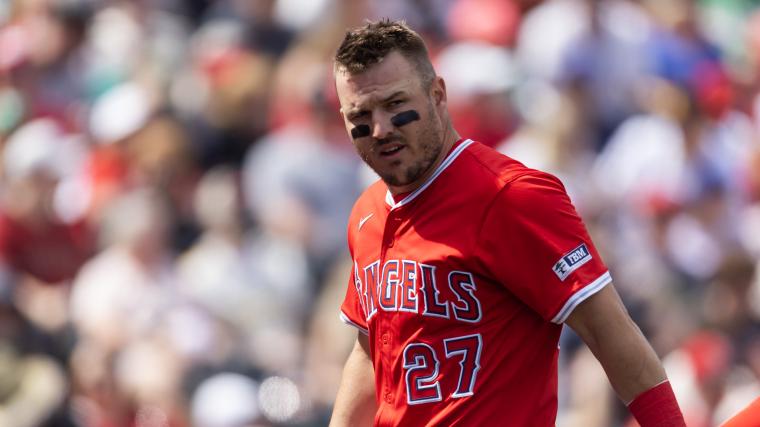
Fast forward to the 2026 tournament, and the narrative has taken a stark turn. The United States will defend its 2023 runner-up status not only without the “C” on Trout’s chest but without Trout at all. In a move that signals a pivotal shift for both the player and the event, the Los Angeles Angels superstar will be absent from manager Mark DeRosa’s roster. While stars like Aaron Judge and a cadre of young talent prepare to don the red, white, and blue, Trout will be in camp, focused solely on the Angels’ 2026 season. His absence is not a snub, but a sobering reflection of the complex calculus facing modern superstars—a story of legacy, longevity, and the unrelenting pursuit of a personal championship dream.
The Captain’s Final Act: A Legacy Forged in 2023
To understand the significance of Trout’s 2026 absence, one must first appreciate the weight of his 2023 participation. Accepting the role of captain was a monumental commitment for a player notoriously dedicated to his daily routine and his MLB franchise. He became the face of the U.S. effort, a leader who helped recruit peers and legitimize the tournament for other American stars. That final at-bat against Ohtani, despite its outcome, was a transcendent moment for the sport, elevating the WBC to unprecedented heights.
Trout’s 2023 WBC performance was a testament to his commitment. He played through the tournament with a visible intensity, helping to galvanize a clubhouse of All-Stars into a cohesive unit. The strikeout that ended the game was not a failure of effort, but a dramatic exclamation point on a classic contest. In many ways, that moment completed a chapter. Trout answered the call to lead his country on the global stage and delivered a classic baseball moment. Having reached that pinnacle of international drama, the personal cost-benefit analysis for a return trip three years later inevitably changed.
The Inescapable Calculus: Health, Team, and Unfinished Business
The primary driver behind Mike Trout’s decision is a confluence of factors centered on his health and his unwavering commitment to the Los Angeles Angels. Since the 2021 season, Trout has been plagued by injuries, missing significant time with a calf strain, a rare back condition, and a hand fracture. These interruptions have been a source of immense frustration for a player whose career was defined by consistent, MVP-level production.
For Trout, the priority is now unequivocally the Los Angeles Angels’ 2026 season. The decision to skip the WBC is a proactive, strategic choice aimed at ensuring a full and healthy spring training. It eliminates any risk, however small, of an early-season soft tissue injury or the disruption of his meticulously crafted preparation routine. This is not a player turning his back on his country, but a veteran superstar making a painful, pragmatic choice for the longevity of his career and the fortunes of his franchise.
Furthermore, there is the unfinished business of an elusive World Series title. Trout’s individual legacy is secure as one of the greatest players of all time. Yet, the absence of a championship ring remains a glaring hole in his resume. Every decision, including forgoing the emotional pull of the WBC, is now filtered through the lens of finally delivering for the Angels. A full, healthy, and productive MLB season is the singular target.
Passing the Torch: A New Era for Team USA
Mike Trout’s absence also marks a natural, if accelerated, passing of the torch. Manager Mark DeRosa’s 2026 roster is constructed with both star power and a clear eye on the future. The outfield will feature the colossal presence of Aaron Judge, the explosive talent of Byron Buxton, and the defensive wizardry of young Pete Crow-Armstrong. This new core is more than capable of carrying the offensive and defensive load.
The evolution of Team USA’s identity is key. The 2023 team was about establishing credibility, led by a veteran captain. The 2026 squad can now be about athleticism, depth, and a new kind of collective leadership. Trout’s decision, while a loss in name recognition, may inadvertently strengthen the unit’s cohesion, allowing other voices to emerge without the shadow of a definitive captain. The U.S. program has reached a point where it no longer relies on a single icon; its talent pool is deep enough to absorb even this significant absence.
- Aaron Judge assumes the role of lineup centerpiece and de facto leader.
- Youthful energy from players like Crow-Armstrong injects a new dynamic.
- The roster construction shows the WBC’s elevated status, attracting top stars in their prime.
The Lasting Impact: What Trout’s Decision Means for the WBC
Trout’s choice is a landmark moment for the World Baseball Classic itself. It signals the tournament’s maturity. In its early iterations, the WBC needed stars at any cost to build credibility. Now, it is a respected, high-stakes event that factors into the complex career decisions of elite players. A star saying “no” is a sign of the event’s seriousness, not its weakness; it is treated with the same gravity as an MLB playoff run.
This sets a potential precedent for other veterans with injury histories or specific team obligations. It acknowledges that player health and MLB commitments are the paramount concerns. The WBC’s success will increasingly be built on the participation of stars at their physical peak, eager for the global stage, alongside veterans for whom the timing is right. Trout’s 2023 captaincy was a gift that helped solidify the tournament’s prestige. His 2026 absence is the next step in that evolution—a testament to the real stakes now involved.
Conclusion: A Bittersweet Symphony of Priorities
Mike Trout will not be in a Team USA uniform in 2026. The man who embodied the spirit of the tournament and provided its most iconic moment just three years prior will be watching from afar. This is not a story of decline or disinterest, but one of painful, necessary prioritization. It is the story of an all-time great whose battle with injuries has forced a sharper focus, whose loyalty to his MLB franchise has never wavered, and whose ultimate dream—a World Series—remains unfulfilled.
For fans, it is a bittersweet reality. The dream of a Trout-Ohtani rematch on the WBC stage is extinguished. Yet, in its place emerges a compelling new chapter: a Team USA with a fresh identity, and a Mike Trout singularly obsessed with conquering the mountain that has eluded him. His absence in 2026 will be felt, but it underscores the very legitimacy he helped build. The WBC is no longer a exhibition; it’s a choice. And sometimes, the most impactful choices are the ones to step away, redirecting all energy toward a final, defining climb.
Source: Based on news from Yahoo Sports.