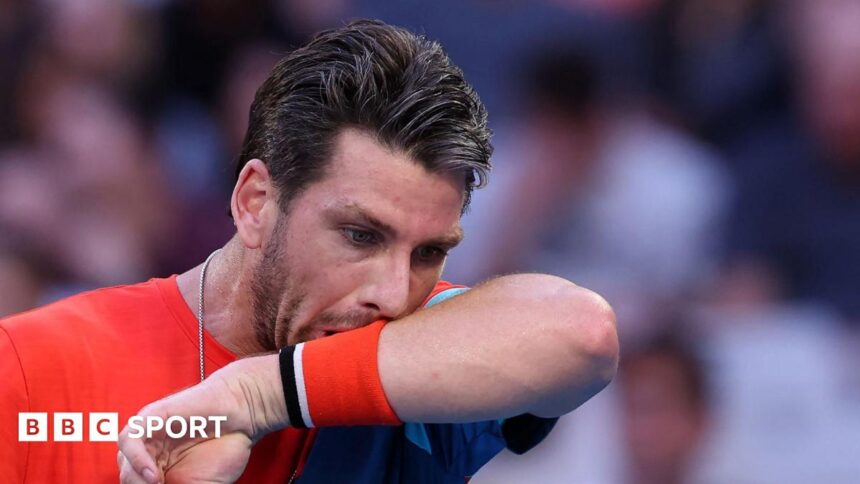
Why Cameron Norrie’s Wimbledon Exit Exposes Britain’s Deep-Rooted Tennis Paradox
The scene on Court No.1 was a familiar, painful microcosm of British tennis. Cameron Norrie, the nation’s last singles hope at Wimbledon, battled valiantly but ultimately fell in four sets. The narrative wrote itself once more: the dependable workhorse had reached the third round, the established ceiling for a generation, and could ascend no further. Norrie’s exit is not merely the conclusion of one man’s tournament; it is a stark, recurring symptom of a systemic national issue. For all the investment, history, and fortnight of feverish national attention, British men’s tennis is, and has been for years, consistently punching below its weight. The data doesn’t lie, and it paints a picture of persistent mediocrity at the elite level.
The Anatomy of Dependability: Norrie as a Symptom, Not the Cause
To call Cameron Norrie the Mr Dependable of British tennis is both a compliment and a devastating indictment. His record is one of remarkable consistency in reaching a specific, modest benchmark. He has been the last man standing for Britain at 14 of the past 20 Grand Slam tournaments. This statistic is less about Norrie’s individual resilience and more a glaring spotlight on the vacuum behind him. If you are backing a Briton to reach the third round of a Grand Slam then he’s your man. Norrie, 30, has reached that stage in 15 of his past 20 majors. This is the hallmark of a superb professional—a top-30 stalwart who grinds out wins he should and rarely suffers early upsets.
Yet, the “third-round ceiling” has become a glass floor for British prospects. Moving beyond the last 32 is what has been consistently difficult for Norrie. The same goes for his compatriots. This pattern reveals a critical gap in the development pathway: we produce players proficient enough to be competitive on the tour, but lack the arsenal—be it a devastating weapon, elite athleticism, or the mental fortitude in crunch moments—to regularly threaten the true contenders in the second week of Slams. Norrie’s game, built on relentless physicality and a fiendish lefty forehand, can disrupt many. But against the very best, it often lacks the necessary knockout punch.
The Vacuum Behind: A Generation Stuck in the Gates
Norrie’s dependability only underscores the cyclical failure to build a genuine cohort. He is a one-man dam holding back a tide of criticism. Look at the recent history:
- Andy Murray’s Legacy Looms Large: The double Wimbledon champion created an unrealistic expectation of a seamless production line of champions, while also inadvertently casting a long shadow. Success became binary: win a Slam or fail.
- The Missing “Next Gen”: Where are the consistent challengers to Norrie’s status as British No. 1? Players like Jack Draper possess immense talent but have been crippled by injuries, unable to string together the seasons required to build momentum. Dan Evans, while brilliant on his day, faces similar round-of-32 barriers.
- Systemic Fragility: The pattern suggests a system that gets players to a certain world-class threshold—around the top 50—but then fails to provide the final 10% of development that separates tour players from Slam quarter-finalists and beyond. This could be in technical refinement, sports psychology, or navigating the unique pressures of being the British hope at Wimbledon.
The result is a lonely burden for Norrie. He is not competing with a friendly rival to push him higher; he is carrying the entire weight of a nation’s expectations on every swing at SW19, a pressure that his peers from other tennis-rich nations simply do not face in the same way.
Breaking the Cycle: Where Does British Tennis Go From Here?
Identifying the problem is easier than solving it. The Lawn Tennis Association (LTA), with its vast resources from Wimbledon profits, is perennially under scrutiny. The solution is not about finding one magical fix but a multi-pronged, long-term strategy:
- Embrace Diverse Playing Styles: The British game has often been critiqued for a preference for a certain, conservative style. Encouraging unconventional, aggressive play and unique weapons in juniors is crucial.
- Mental Conditioning as Priority: Getting over the line in a home Grand Slam requires a different kind of strength. Investing in world-leading, individualized mental coaching from the junior ranks is non-negotiable.
- Accept the Scrapheap of Early Specialization: The global game is becoming younger and more athletic. Britain must identify and commit to talent earlier, with a focus on athletic development alongside tennis skills, accepting that this high-risk approach won’t work for every child.
Critically, the success of Emma Raducanu’s 2021 US Open win, while phenomenal, was an outlier that potentially distorted the picture. It proved individual brilliance can strike, but it did not indicate a systemic correction. The men’s game requires its own, sustained blueprint.
Predictions and Realities: The Road to Relevance
In the short term, the outlook remains challenging. Norrie will likely continue to be the reliable standard-bearer, but his window as a top-30 player is not infinite. The immediate hope rests on Jack Draper’s shoulders staying healthy and his powerful game maturing. He possesses the big-match weapons that Norrie lacks—a huge serve and crushing forehand. If he can maintain fitness, he is the most likely candidate to smash the third-round ceiling.
Beyond him, the pipeline appears thin in terms of imminent top-10 threats. This suggests Britain may face a painful transitional period once Norrie’s consistency begins to wane. The nation may drop from having a dependable top-30 presence to having no one in the second week of Slams for a few years. This potential drought must be the catalyst for genuine, uncomfortable reform within the system.
The prediction is not all bleak, however. The very public nature of this failure, highlighted every time Norrie walks off court as the last Briton, creates intense pressure for change. The LTA’s recent initiatives, like the Pro Scholarship Programme for elite teens, are steps in the right direction but need time and ruthless evaluation.
Conclusion: Beyond Punching Below Weight
Cameron Norrie’s latest Wimbledon exit is not his failure; it is the failure of a system that has produced one extraordinary champion in Murray and a handful of admirable but limited professionals since. He is the embodiment of British tennis’s current paradox: incredibly consistent, yet consistently stuck. The third-round ceiling is more than a statistic; it is a psychological barrier and a developmental checkpoint the nation has repeatedly failed.
Until Britain addresses the holistic gap between being a good tour professional and a genuine Grand Slam force—cultivating not just sound techniques but champion mentalities, explosive athleticism, and game-defining weapons—the pattern will hold. The nation will continue to celebrate the dependability of a Norrie while quietly lamenting what could have been, and what, for so many other nations, consistently is. To stop punching below its weight, British tennis must first admit it’s in a fight of a different, more demanding class altogether.
Source: Based on news from BBC Sport.