How Vanderbilt’s Duke Miles Carved Up Tennessee’s Elite Defense in a Stunning SEC Upset
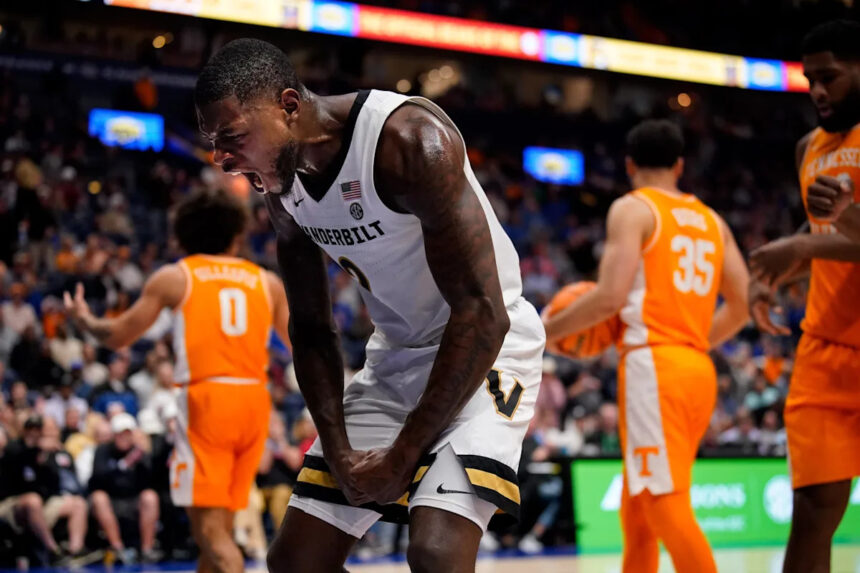
NASHVILLE – For a Tennessee basketball program built on a bedrock of defensive identity, the scene at Bridgestone Arena was a jarring anomaly. The Vols, owners of the SEC’s stingiest defense and a lineage of lockdown perimeter artists, had no answer for the blur of maroon and gold wearing No. 3. Vanderbilt guard Duke Miles didn’t just score; he performed a surgical dissection, dropping 30 points on a staggering 11-of-14 shooting to fuel the Commodores’ 75-68 upset in the SEC Tournament quarterfinals. In a single afternoon, Miles did what only one other player had managed all season, exposing the rare, exploitable seams in Rick Barnes’s defensive machine and sending a shockwave through the conference.
The Tennessee Defensive Pedigree Meets an Unlikely Scalpel
To understand the magnitude of Miles’ performance, one must first appreciate the fortress he breached. Tennessee’s defensive reputation is not a recent trend; it’s a culture. This season, the Vols successfully transitioned from the era of Zakai Zeigler and Jahmai Mashack—defenders who could demoralize opponents with their ball pressure and tenacity—to a new, younger group that had admirably maintained the standard. They entered the tournament allowing the fewest points per game in the SEC, a unit predicated on physicality, disciplined rotations, and forcing contested, inefficient shots.
They had rendered high-powered offenses stagnant. Only Mississippi State’s dynamic freshman Josh Hubbard had cracked the 30-point barrier against them all season, and even that came in a Bulldogs loss. Tennessee’s defense was a collective nightmare, a system designed to swallow individual brilliance whole. Duke Miles, a capable but not historically prolific scorer, was supposed to be another victim of that system. Instead, he became its most proficient surgeon.
Deconstructing the Duke Miles Masterclass
Miles’ performance was a clinic in efficient, assertive offense. He didn’t just get hot; he executed a near-flawless game plan that targeted specific weaknesses in Tennessee’s armor. His 30 points on only 14 field goal attempts is a statistic of almost absurd efficiency, a testament to his shot selection and finishing ability.
Key elements of Miles’ dominant outing included:
- Blazing Speed in Transition: Miles consistently beat Tennessee’s defense down the floor before it could set its formidable half-court structure. He turned defensive rebounds and made baskets into immediate attacking opportunities, scoring before the Vols’ help-side defense could rotate.
- Precision from Deep: Going 4-of-5 from three-point range was the backbreaker. Miles, a 32% three-point shooter on the season, elevated with confidence. This outside threat forced Tennessee’s defenders to close out hard, which he then used to set up his devastating drives.
- Elite Finishing at the Rim: When he did attack, Miles displayed a combination of body control, craft, and fearlessness. He finished through contact and over taller defenders, converting high-difficulty layups that demoralized a team accustomed to altering or blocking those attempts.
- Exploiting Ball-Screen Coverage: Tennessee’s aggressive hedging and switching on ball screens can confuse many guards. Miles used his speed to reject screens, attack seams before they closed, and make decisive reads, often finding a clear path to the basket before the Vols’ communication could catch up.
This wasn’t a case of a player hitting miracle shots. This was a calculated dismantling, proving that even the best systems can be vulnerable to a guard with a specific, explosive skill set operating at peak confidence.
What Miles’ Breakout Reveals About Tennessee’s Tournament Ceiling
While this loss does not erase Tennessee’s defensive credentials, it provides a clear blueprint for future opponents in the NCAA Tournament. The Vols have occasionally shown vulnerability to lightning-quick guards who can create their own shot off the dribble and command constant attention. Miles joined Hubbard in illustrating that when an opponent has a primary ball-handler who can consistently break down the first line of defense, it can force Tennessee into uncomfortable rotations and open up opportunities elsewhere.
The game raises a critical question for Rick Barnes: was this an anomalous performance by a player who reached a temporary, unsustainable peak, or is it a schematic concern? The likely answer lies in the middle. Tennessee’s defense remains elite, but it is not infallible. The loss underscores the heightened importance of Zakai Zeigler as the team’s defensive quarterback and emotional engine. When an opponent finds a rhythm, Tennessee must rely on its veterans to stabilize, communicate, and ramp up the physical pressure to disruptive levels. The younger guards, while talented, were given a harsh lesson in March intensity by Miles.
Looking Ahead: Implications for Vanderbilt and the Vols’ March Madness Run
For Vanderbilt, Duke Miles authored a legacy game. It transforms from a surprising win into a legendary individual performance that will be remembered in SEC Tournament lore. It provides immense momentum for the program and establishes Miles as a player capable of taking over a game against any competition. For Tennessee, the immediate sting is real, but the long-term impact may be more nuanced.
Prediction for Tennessee’s NCAA Tournament: The Vols will remain a feared defensive team and a high seed capable of a deep run. However, their path will be perilous if they encounter a guard-rich region. Opposing coaches will study the Miles tape obsessively. Tennessee’s response will define their March. They must:
- Sharpen their ball-screen defense communication.
- Ensure their perimeter defenders contain dribble penetration without excessive help, which Miles punished.
- Use this loss as a galvanizing moment of defensive refocus, much like elite teams often do after a late-season wake-up call.
The Vols have the personnel and the coach to make these adjustments. This loss, painful as it is, provides a more valuable teaching tool than any blowout victory could have at this stage.
Conclusion: A March Moment Forged in Defiance and Precision
In the end, the story of the 2024 SEC Tournament quarterfinals will be the day Vanderbilt’s Duke Miles looked Tennessee’s defensive juggernaut in the eye and did not blink. He didn’t just score; he authored a masterpiece of offensive basketball against a canvas known for destroying such art. His performance stands as a testament to the unpredictable magic of March, where individual brilliance can, for one afternoon, override systemic dominance.
For Tennessee, the mission is now clear. The identity forged over a long season was challenged in a profound way. How they repair, adjust, and reinforce that identity will determine whether their March ends in disappointment or in Houston. The Vols’ defense remains their calling card, but thanks to Duke Miles, they now carry the sharp, painful memory of the day it was cut open, a reminder that in tournament play, there is no room for defensive lapse against a player with nothing to lose and everything to prove.
Source: Based on news from Yahoo Sports.