Will the Champions League Haunt Pep Guardiola’s Manchester City Legacy?
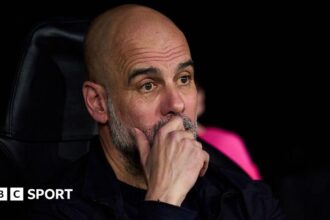
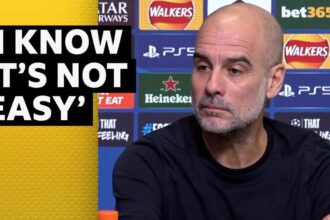
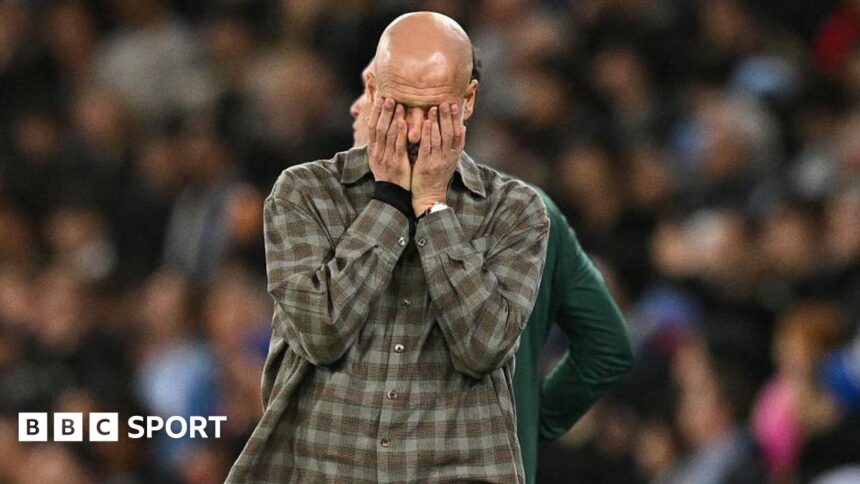
The final whistle at the Etihad Stadium echoed with a rare sound: silence. A 1-1 draw with Real Madrid, sealing a 5-1 aggregate defeat, wasn’t just a loss; it was a profound, tactical unraveling. For Pep Guardiola, the architect of Manchester City’s domestic dominance, the 2024/25 Champions League exit was a stark reminder of the one trophy that continues to define his era in nuanced, complex terms. He has conquered England, but Europe’s premier competition, the very stage he was hired to own, remains a capricious companion. As the dust settles on another campaign, a pressing question emerges: will the Champions League, despite his 2023 triumph, ultimately be remembered as Guardiola’s great Manchester City regret?
The Unparalleled Domestic Dominion: A Foundation of Greatness
To contextualize any potential regret, one must first acknowledge the scale of Guardiola’s achievement. His tenure at Manchester City is not merely successful; it is a systemic overhaul of English football. He arrived with a philosophy so demanding it was initially met with skepticism. What followed was a period of unprecedented domestic dominance that has redefined excellence in the Premier League.
Under his guidance, City have become a relentless winning machine. The statistics are staggering:
- Six Premier League titles in seven seasons, including historic centurion and four-in-a-row campaigns.
- A clean sweep of domestic trophies (Premier League, FA Cup, League Cup) in 2018/19.
- A style of play that combines tactical control, aesthetic beauty, and crushing efficiency.
This is the work of a generational coach. He has not just won; he has imposed his will, turning the world’s most physically demanding league into a canvas for his intricate ideas. The domestic supremacy under Guardiola is absolute, placing him and his City squad firmly among the greatest dynasties the English game has ever seen. This foundation is what makes the Champions League narrative so compelling—it’s the only peak left seemingly unconquered with consistency.
The European Conundrum: Triumph, Tragedy, and Tactical Overthink
Guardiola’s relationship with the Champions League at City is a saga of near-misses, heartbreak, and, finally, redemption—followed by immediate renewed questioning. His three titles (two with Barcelona’s legendary side, one with City) cement his legacy among the elite. Yet, at the Etihad, Europe has been a theatre of dramatic contrasts.
For years, the narrative was of Champions League heartbreak at City. Quarter-final defeats to Liverpool and Tottenham, the stunning loss to Lyon, and the iconic collapse against Real Madrid in 2022 all followed a familiar pattern: City dominance, missed chances, and a fatal moment of concession. These were not mere losses; they were psychological hurdles that grew with each passing year, feeding the “overthink” critique. The 2023 victory in Istanbul, defeating Inter Milan, was a monumental release. It completed the set and silenced many doubters.
However, the recent comprehensive defeat to a transitional Real Madrid has reopened the debate. The tactical decisions by Guardiola—particularly the surprising deployment of a back-three and man-marking system that his players appeared uncomfortable executing—were directly scrutinized. It was a stark reminder that in the Champions League’s knockout crucible, the margin for error is vanishingly small, and even the greatest minds can outsmart themselves. The victory in 2023 proved he could win it with City. The exit in 2025 suggests sustaining that pinnacle is perhaps the ultimate challenge.
Legacy Defined: What Constitutes “Regret” for a Perfectionist?
Labeling Guardiola’s time at City with “regret” requires a nuanced definition. For a perfectionist of his caliber, regret may not be about failure, but about the gap between potential and achievement. With the resources, the squad depth, and the tactical genius at his disposal, could—or should—City have won more than one Champions League in this era?
Consider the peers and benchmarks. Carlo Ancelotti, with five titles, demonstrates a unique, adaptable mastery of the competition. Guardiola’s Barcelona wins were with a once-in-a-lifetime team. At City, he built his own masterpiece, yet Europe’s biggest prize has been won only once. The missed opportunities in Europe—those agonizing late collapses—will inevitably be part of the story. They are the “what ifs” that historians of the game will debate: what if Riyad Mahrez scored against Lyon? What if Rodrygo didn’t happen in 2022?
Yet, to frame his entire City project through the lens of a single cup competition risks gross simplification. His legacy is multifaceted: he transformed a club, a league, and the very ideology of English football. The Champions League is the glittering, elusive cherry on top of an already monumental cake. The regret, if it exists, is not one of failure, but perhaps of a legacy that could have been unassailably, rather than arguably, the greatest of the modern era.
The Final Verdict: A Complicated Crown, Not a Haunting Regret
So, will it be his regret? The answer is likely no—but with a significant asterisk. The Champions League will remain the defining complexity in Guardiola’s legacy, not its failure. The 2023 victory ensures he delivered on his ultimate mandate, freeing him from the “can’t win it without Messi” trope. However, the nature of the competition and his own sky-high standards mean the quest for multiple titles was always the subconscious goal.
Looking ahead, the cycle continues. City will be favorites again next season. The Premier League title remains the expected baseline. But the Champions League draw, a moment of magic, or a single tactical gamble will decide their fate. This volatility is what fuels the narrative. For Guardiola, the competition is less a regret and more a perpetual, captivating duel—a puzzle he solved once but must solve again and again to meet the inflated expectations his own genius created.
In the final analysis, Pep Guardiola’s Manchester City story is one of breathtaking, record-shattering success. The Champions League legacy at City adds layers of drama, tension, and a touch of mortal fallibility to a project that often seems superhuman. It is the note of intriguing imperfection in a symphony of dominance. While the nights of European heartbreak will forever be part of the tapestry, they are overshadowed by the sheer weight of medals, the revolution in style, and that one, glorious night in Istanbul. The Champions League is not his regret; it is his complicated, enduring, and most compelling challenge.
Source: Based on news from BBC Sport.