Formula One on the Brink: Will Bahrain and Saudi Arabia Races Be Canceled?
The high-octane world of Formula One is facing a critical test of geopolitics versus sport. With the 2026 season still in its early stages, the championship is poised to make a monumental decision that could reshape its calendar and test its stated principles on safety. The opening races in Bahrain and Saudi Arabia, scheduled for mid-April, are now under severe threat of cancellation following a significant escalation of regional tensions. The paddock’s focus is sharply divided between the on-track action in Shanghai this weekend and the urgent security briefings happening behind closed doors.
The Unfolding Crisis: Security Takes the Checkered Flag
For Formula One, the decision to race is always a complex calculation, but the primary variable is non-negotiable: the safety of all personnel, from drivers to mechanics to traveling staff and fans. Recent events have dramatically shifted that calculation. According to the state-owned Bahrain News Agency, an Iranian drone attack near the capital, Manama, injured 32 people just this Monday. This incident, coupled with similar reported attacks on locations in Saudi Arabia, has created an untenable security environment.
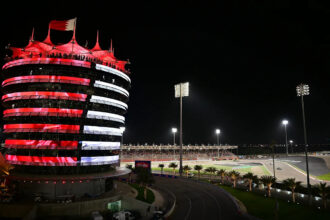
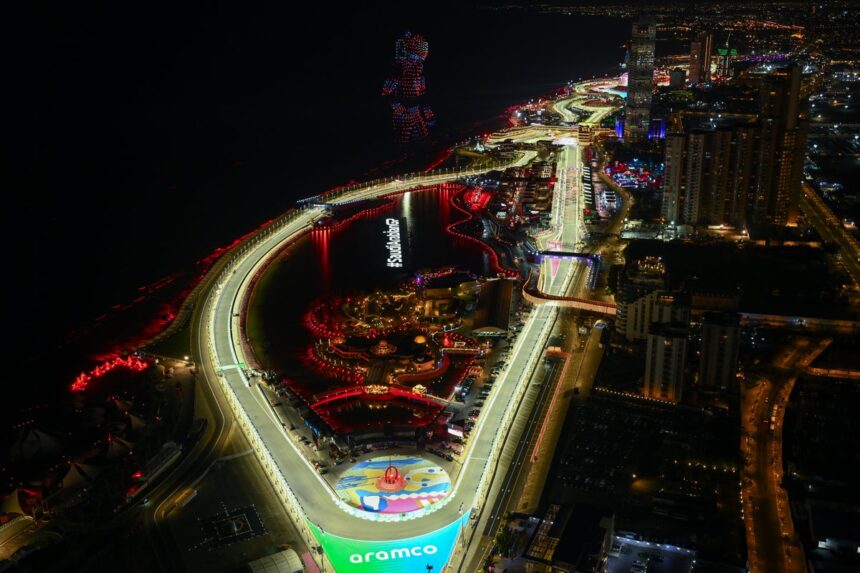
The Sakhir Circuit in Bahrain lies a mere 30 kilometers south of Manama. The Jeddah Corniche Circuit in Saudi Arabia, a high-speed street track, presents its own unique security challenges. With these events occurring less than a month before the scheduled Grands Prix, the window for credible safety assurances has effectively closed. Formula One management and the FIA are understood to be acting on expert governmental advice, which is reportedly leaning heavily against proceeding. The Independent’s understanding that an official confirmation of the cancellations is imminent within the next 48 hours underscores the severity of the situation.
The Replacement Race Dilemma: A Logistical Nightmare
Inevitably, the question of replacement races arises. The sport has shown remarkable agility in the past, notably during the COVID-19 pandemic, to fill sudden calendar gaps. Tracks with existing Grade 1 licenses and recent F1 experience are the immediate candidates. Paddock speculation has centered on three European circuits:
- Portugal’s Portimão Circuit: A fan and driver favorite that hosted races in 2020 and 2021. Its Algarve location offers favorable April weather.
- Turkey’s Istanbul Park: Another circuit with recent history and a legendary, challenging layout. Political and logistical hurdles have kept it off the calendar in recent years.
- Italy’s Imola Circuit: Already on the 2026 calendar for a later date, its compact infrastructure and deep ties to F1 make it a theoretically plausible candidate.
However, the crucial distinction from the pandemic era is the last-minute nature of this potential cancellation. Organizing a Grand Prix is a monumental undertaking involving the movement of thousands of people and hundreds of tons of freight across continents. With the freight already in transit from Japan to the Middle East, rerouting it to Europe in time for a mid-April date is a Herculean, if not impossible, task. Consequently, it is widely understood that F1 will accept a five-week gap in the calendar between the Japanese Grand Prix on March 29th and the Miami Grand Prix on May 3rd.
Broader Implications: Sport, Strategy, and Sovereignty
The potential cancellation of two races is not merely a scheduling headache; it strikes at the heart of Formula One’s global expansion strategy and its delicate relationship with host nations. The Bahrain Grand Prix has been a staple since 2004, while Saudi Arabia’s Jeddah race represents a cornerstone of the sport’s push into new markets with significant financial investment.
This situation forces a difficult reckoning. On one hand, F1 has consistently maintained that it will not compromise on safety. Canceling the races upholds that principle but at a significant financial and diplomatic cost. On the other hand, proceeding against clear security advice is unthinkable. The decision will be scrutinized as a statement of the sport’s values and its risk threshold. Furthermore, it highlights the inherent vulnerability of hosting major global events in regions of geopolitical instability, a reality F1 has navigated before but perhaps not under such immediate and direct threat.
The 2026 season, already featuring major regulatory changes, now faces an unexpected disruption that could impact team development cycles, sponsorship obligations, and the competitive rhythm of the championship.
Looking Ahead: Predictions for the 2026 Season and Beyond
Based on the current trajectory of events and the logistical realities, our analysis points to the following likely outcomes:
- Official Cancellation Imminent: Expect formal announcements from F1 and the FIA confirming the cancellation of both the Bahrain and Saudi Arabian Grands Prix within days.
- No Direct Replacements: The five-week gap will become a reality, serving as an extended break for teams but a frustration for fans and broadcasters.
- Championship Impact: The loss of two rounds will condense the remaining season, potentially increasing pressure on teams to perform at every remaining event and possibly influencing the FIA’s stance on future double-headers.
- Long-term Contract Scrutiny: While both races are likely to return in future seasons, this episode will inevitably lead to tougher negotiations and more robust force majeure clauses in host country contracts. The sport’s due diligence on regional stability will be intensified.
In conclusion, Formula One finds itself at a familiar crossroads where the world of sport collides with global realities. The anticipated cancellation of the Bahrain and Saudi Arabian Grands Prix is a sobering reminder that no amount of financial investment or sporting spectacle can override fundamental security concerns. While the absence of these races will leave a void in the 2026 calendar and challenge the sport’s commercial engines, the decision to prioritize safety is the only defensible one. The coming days will confirm what the paddock already suspects: that for now, the checkered flag in the Middle East will remain furled, awaiting a more peaceful and stable time to wave. The true test will be how Formula One manages this crisis, protects its community, and adapts its long-term strategy in a world where the race track is never truly isolated from the tensions beyond its walls.
Source: Based on news from Yahoo Sports.