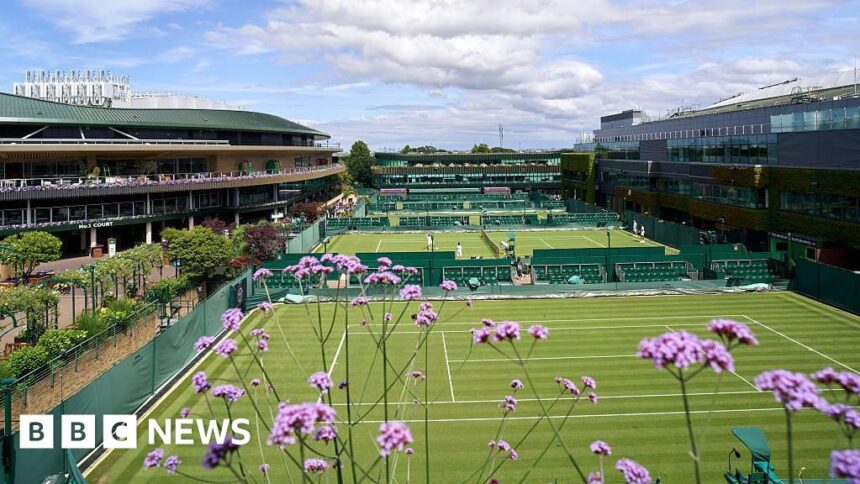
Wimbledon’s Grand Ambition: High Court Ruling Paves Way for Historic Expansion
The hallowed grounds of Wimbledon, synonymous with pristine grass, strawberries and cream, and sporting tradition, are poised for their most dramatic transformation in over a century. In a landmark legal decision that reverberates beyond the tennis world, the High Court has handed the All England Lawn Tennis and Croquet Club (AELTC) a decisive victory, removing a critical legal obstacle to its ambitious plan to expand the tournament’s footprint. The ruling marks a pivotal moment in a heated battle between sporting progress and local preservation, setting the stage for a new era for The Championships.
The Verdict: Unlocking the Land’s Potential
At the heart of the legal dispute was the status of a 73-acre plot of land adjacent to the current Wimbledon site, formerly the Wimbledon Park Golf Club. The AELTC, which purchased the freehold to this land in 1993, envisions a monumental development project known as the Wimbledon Park Project. The club’s plans are nothing short of transformative:
- Building 38 new tennis courts, including a brand-new show court with a capacity of 8,000 spectators.
- Creating a public park with restored heritage landscapes and a new boardwalk around the lake.
- Significantly upgrading practice and qualifying facilities, moving these operations from their current congested off-site location.
Opposition came from the local campaign group Save Wimbledon Park (SWP). Their central argument hinged on a historical point of law: they contended that a statutory trust existed under the Public Health Act 1875, which would legally bind the land to be kept “for the enjoyment of the public” in perpetuity. This would have effectively blocked any private commercial development.
However, in a clear and unequivocal ruling, Mr Justice Thompsell rejected this claim. He found that the land in question was “never appropriated or dedicated to the use of public recreation” and had historically functioned as a private golf club. Crucially, he stated that when the AELTC acquired the freehold three decades ago, any potential trust was extinguished, leaving the club “unencumbered” and free to develop. This legal interpretation forms the bedrock of the AELTC’s forward momentum.
Analysis: A Strategic Ace for Wimbledon’s Future
This ruling is far more than a simple property win; it is a strategic masterstroke for safeguarding Wimbledon’s preeminence in global tennis. For years, the AELTC has faced mounting pressure from the other Grand Slam tournaments. The Australian Open boasts a sprawling parkland complex with multiple retractable roofs. The US Open has undergone massive, state-of-the-art renovations. Roland-Garros, though space-constrained, has aggressively modernized.
Wimbledon’s current setup, while iconic, presents logistical challenges. The qualifying tournament is held miles away in Roehampton, creating a disjointed experience for players and fans. Practice facilities are limited relative to the scale of the event. The new expansion directly addresses these issues, creating a unified, world-class campus.
Expert analysis suggests this move is essential for Wimbledon to maintain its competitive edge. “The other Slams have been investing heavily in infrastructure and fan experience for years,” notes a veteran tennis journalist. “Wimbledon’s aura is unmatched, but in the modern sports economy, you cannot rest on tradition alone. This expansion allows them to enhance the player experience, increase on-site revenue streams, and potentially extend the tournament’s duration or capacity, all while future-proofing the event for the next generation.”
Furthermore, the club’s commitment to creating significant new public parkland and ecological areas is a key part of its planning application, an attempt to balance development with a community benefit that may soften local opposition in the long run.
Roadblocks and Rallying: The Path Ahead
Despite the High Court’s powerful serve, the match is not yet over. Save Wimbledon Park has immediately indicated its intention to appeal, seeking permission to take the case to the Court of Appeal. This promises to extend the legal drama and could delay the project’s start, though legal observers believe the clarity of Mr Justice Thompsell’s ruling makes a successful appeal an uphill battle.
The legal victory, while critical, is just one hurdle. The AELTC still requires full planning permission from the London Borough of Merton and the Greater London Authority. This process will involve rigorous scrutiny of the development’s environmental impact, traffic management, and architectural design. Local political sentiment remains mixed, with vocal opposition from some residents concerned about construction disruption, loss of green space, and the urbanization of a cherished local area.
The club must now navigate this political landscape carefully, leveraging its legal win to demonstrate the project’s inevitability while redoubling efforts to showcase its community benefits. The coming months will be a delicate dance of diplomacy, detailed consultation, and strategic persuasion.
The Final Set: Predictions for a Transforming Tournament
Looking forward, the trajectory now strongly favors the AELTC. The High Court’s removal of the statutory trust threat was the single greatest risk to the project. While appeals and planning debates will continue, the foundational legal authority to develop the land has been secured.
We can predict several likely outcomes:
- Gradual Implementation: The project will likely proceed in phases over the next decade, minimizing disruption to the annual Championships.
- Enhanced Grand Slam Status: A unified site with superior facilities will strengthen Wimbledon’s hand in negotiations with broadcasters and sponsors, and make it an even more attractive destination for top players.
- Qualifying Revolution: Integrating the qualifying event into the main site will elevate its profile, potentially creating a lucrative “Wimbledon Week One” festival of tennis.
- Lasting Local Tension: Despite the promised parkland, a segment of the community will remain opposed, viewing the expansion as the commodification of their local environment.
The ultimate vision is a Wimbledon that retains every ounce of its timeless charm while operating with 21st-century efficiency and scale. Imagine a seamless journey from qualifying rounds to the finals within one expansive, park-like setting, with improved access and amenities for fans.
Conclusion: Game, Set, and a Glimpse of Match Point
The High Court’s ruling is a watershed moment for Wimbledon. It has effectively confirmed that the club holds the title to its own future. The decision underscores a fundamental truth in the business of elite sport: to preserve tradition, one must sometimes embrace bold evolution. The AELTC’s plan is not merely about adding courts or seats; it is a comprehensive strategy to consolidate and elevate the entire Wimbledon ecosystem for decades to come.
While the final point has not been played—with appeals pending and planning permissions still required—the balance of power has shifted decisively. The dream of a vastly expanded Wimbledon, capable of meeting the future head-on while honoring its storied past, has just moved from the drawing board to the brink of reality. The game is firmly in the All England Club’s court.
Source: Based on news from BBC Sport.