Winter Paralympics Conclude in Cortina with a Spectacular, Legacy-Focused Ceremony
The flame was extinguished, but the spirit was unmistakably ignited for the future. The Milan-Cortina 2026 Winter Paralympics drew to a breathtaking close on a crisp Italian night, not in a vast stadium, but within the intimate and historic embrace of the Cortina Curling Centre. In a ceremony rich with symbolism, joy, and forward-looking optimism, the world bid a temporary farewell to the pinnacle of adaptive winter sport, celebrating a monumental 50th anniversary and passing the baton to a new era. The evening, a poignant blend of high art and heartfelt tribute, underscored a powerful truth: these Games are no longer just an event, but a permanent and evolving force for human potential.
A “Souvenir” of Triumph: Artistry and Athletics Collide
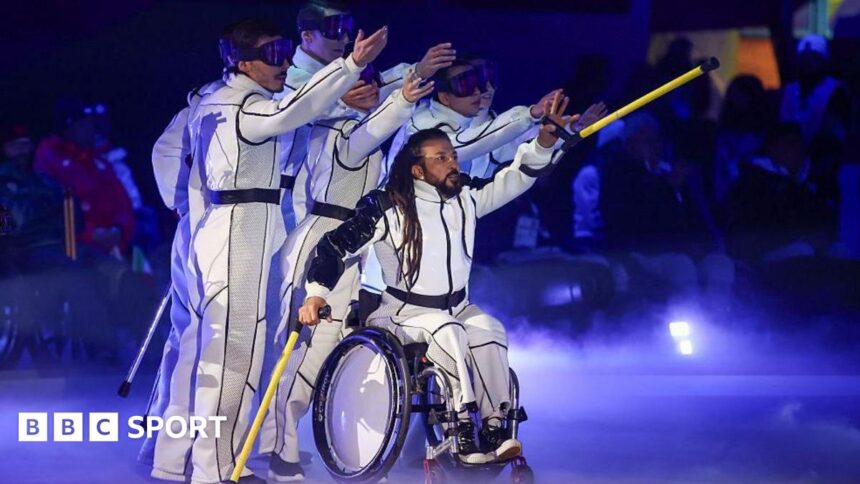
Entitled ‘Italian Souvenir,’ the closing ceremony was a masterclass in sensory storytelling. It moved seamlessly from reflective moments of athletic glory to explosive celebrations of Italian culture and universal human achievement. The production transformed the curling sheets into a dynamic stage, where light, music, and movement painted a narrative of resilience and unity.
A defining moment came with the performance of German dancer and performer Dergin Tokmak. Known globally for his breathtaking crutch dancing that defies physical expectation, Tokmak’s appearance was more than an act; it was a living manifesto of the Paralympic ethos. His performance, a blend of breakdance, acrobatics, and profound artistry, served as a powerful visual metaphor for the Games themselves: taking perceived limitation and transforming it into unparalleled grace, strength, and innovation. His presence on stage bridged the world of sport and art, reminding the global audience that the pursuit of excellence knows no single form.
The ceremony’s core, however, remained a tribute to the athletes. This historic edition, marking the 50th anniversary since the first Winter Games in Örnsköldsvik, Sweden in 1974, was the largest and most competitive yet. The record-breaking scale of Milan-Cortina 2026 is undeniable:
- A record 611 athletes from 55 National Paralympic Committees
- Competition across 79 medal events in six sports
- Unprecedented global broadcast coverage and digital engagement
As the athletes paraded into the venue one final time, the atmosphere was less one of conclusion and more of communal celebration, a shared “souvenir” of struggles overcome and personal bests achieved.
Parsons’ Praise and the Italian Legacy: Beyond the Podium
The formal proceedings reached an emotional peak with the closing speech of International Paralympic Committee President Andrew Parsons. His words transcended the standard thanks, focusing intently on the transformative legacy they have created. Parsons lavished praise on the Italian public for their passionate embrace of the Games, filling venues with an energy that elevated every competition.
More significantly, he directed profound gratitude toward the organising committee, not just for executing the event, but for embedding accessibility and a new perception of disability into the fabric of the Dolomites region. “You have built more than ramps and venues,” his speech implied, “you have built a new mindset.” This focus on lasting infrastructure—both physical and social—is the modern benchmark for hosting the Paralympics. The true victory of Milan-Cortina, as Parsons framed it, will be measured in the years to come through improved accessibility in Italian towns, continued growth in grassroots adaptive sports programs, and a permanently shifted public attitude toward disability.
This emphasis on legacy marks a critical evolution for the Paralympic movement. The conversation has decisively moved from “if” the Games will be successful to “how the host community will be fundamentally improved” because of them. The Italian organizers, by integrating the Paralympics so closely with the Olympic venues and schedule, have set a powerful precedent for true operational and philosophical integration.
Analysis: The Rising Tide of Paralympic Sport
From a sporting perspective, Milan-Cortina 2026 solidified several key trends that experts see defining the future. The level of athletic performance continues to skyrocket, with winning margins in alpine and Nordic skiing events measured in hundredths of a second. Technological innovation in equipment—from sit-skis to prosthetic limbs—is advancing at a rate comparable to Formula One, pushing the boundaries of what is physically possible.
Furthermore, the depth of competition has never been greater. Nations without traditional winter sports pedigrees are developing elite Para athletes, challenging the historical dominance of a handful of countries. This democratization of talent points to a healthier, more globally competitive movement. The media narrative also matured significantly, with coverage focusing more on athletic prowess and compelling backstories than solely on overcoming adversity. The athletes are now rightly covered as the elite competitors they are.
However, challenges remain. The IPC and future organizers must continue to fight for commercial parity with the Olympic Games and ensure that the visibility gained during the Games translates into sustained sponsorship and media deals for athletes year-round. The success of Milan-Cortina in engaging the Italian public is a blueprint, proving that when marketed with energy and parity, the Paralympics can captivate a nation.
Looking Ahead: The Road to 2030 and Beyond
As the Paralympic flag was handed over to the representatives of the 2030 Winter Games hosts, the gaze of the movement shifted to the future. The momentum is undeniable, but it must be actively nurtured. Based on the trajectory from Cortina, several predictions for the coming quadrennial cycle seem clear:
- Commercial Growth: Sponsor investment in the Paralympic movement will continue to climb, driven by proven audience engagement and the powerful social values the brand represents.
- Sport Expansion: Pressure will grow to include new, youth-oriented winter disciplines, potentially like Para snowboard cross or new Para ice hockey classifications, to keep the program dynamic and appealing.
- Technological Debate: The IPC will face increasingly complex questions about the role of advanced technology and prosthetics, navigating the fine line between fair competition and innovative advantage.
- Broadcast Innovation: Viewership will be driven by personalized digital content, athlete-driven storytelling on social platforms, and enhanced broadcast technologies that make the intricacies of different sport classes easier for new fans to understand.
The ultimate takeaway from the Cortina closing ceremony is that the Winter Paralympics have cemented their status as a stand-alone, world-class sporting spectacle. They are no longer an appendage but a powerhouse. The joyful, artistic, and deeply respectful farewell in the Italian Alps was not a goodbye, but a declaration. It declared that the community built over 50 years is stronger than ever, that the athletes are inspirations not for what they overcome, but for what they achieve, and that the legacy of these Games is a world made more inclusive, one mountain, one race, one unforgettable performance at a time. The flame in Cortina may be out, but the fire it lit burns brighter than ever.
Source: Based on news from BBC Sport.