WNBA, Players’ Union Forge “Transformational” CBA, Ushering in New Era of Prosperity
In the quiet, early hours of a New York morning, the future of women’s professional sports was rewritten. After a marathon final session exceeding 100 hours of intense negotiation, the WNBA and its players’ union, the WNBPA, announced a verbal agreement on a landmark new collective bargaining agreement. This pact, described by both sides as “transformational,” promises to fundamentally reshape the league’s economic landscape, directly rewarding the athletes who have driven its unprecedented growth. The deal, reached at approximately 2:20 a.m. ET Wednesday, sets the stage for the WNBA’s 30th season to tip off in May as a vastly different—and more equitable—enterprise.
The Dawn of a New Financial Reality
The core of this groundbreaking agreement is a seismic shift in how players are compensated. For decades, WNBA athletes have been lauded for their world-class talent while navigating salaries that paled in comparison to their male counterparts and even overseas opportunities. This new CBA shatters that paradigm.
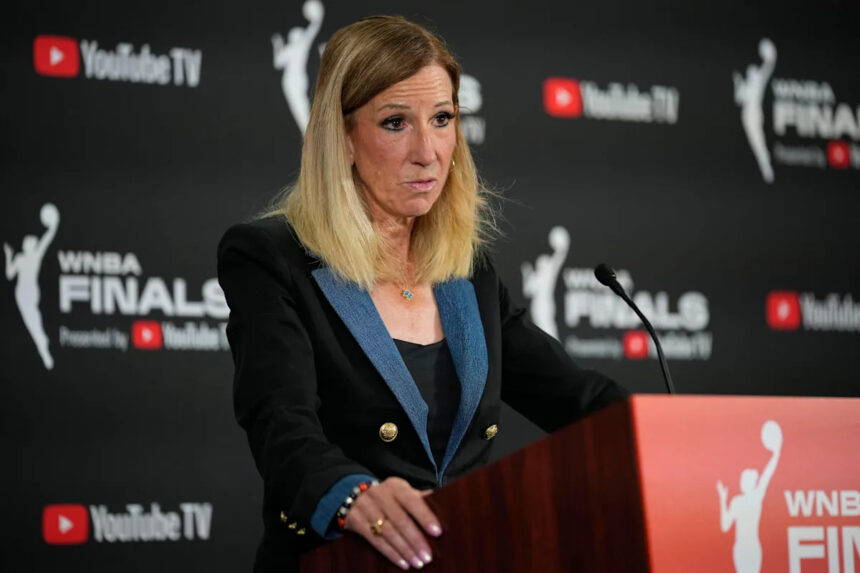
WNBA Commissioner Cathy Engelbert and WNBPA President Nneka Ogwumike stood together to announce the deal, a powerful visual symbol of the aligned vision they ultimately forged. “For the first time, player salaries are tied to a truly meaningful share of league revenue,” Ogwumike declared, highlighting the cornerstone of the agreement. This revenue-sharing model is the engine that will drive what she called “exponential growth in the salary cap.”
The numbers are staggering. The agreement is expected to:
- Increase average player compensation beyond $500,000, a figure that seemed distant just a few seasons ago.
- Create a strong possibility for the league’s first million-dollar players, a symbolic and practical milestone.
- Raise salaries fourfold from last season, injecting immediate, life-changing financial security into the league.
This outcome is the direct result of the players’ unwavering decision 17 months ago to opt out of the previous CBA. “We opted out because what we were giving to this league and what we were getting back didn’t match,” said union executive committee member Alysha Clark. “You could feel the growth everywhere, but it wasn’t showing up for the players the way it should. So we stayed with it until it did.”
Beyond the Paycheck: Holistic Player Investment
While the headline-grabbing figures focus on salary, the new CBA’s transformation extends far beyond the paycheck. The negotiations, which often grew contentious around issues like revenue sharing, housing, and franchise tags, aimed to improve the entire professional experience. The term sheet, to be finalized in the coming days, is expected to address critical quality-of-life and career-support elements.
Ogwumike emphasized the deal raises “the standard across facilities, staffing, and support.” This signals a league-wide commitment to providing resources on par with other major professional sports leagues. Investments in areas like:
- Charter flight access for more team travel, reducing the grueling physical toll of commercial travel.
- Upgraded housing standards and accommodations for players.
- Enhanced medical staff, mental health resources, and career development programs.
These provisions recognize that maximizing player performance and longevity requires a top-tier professional ecosystem. As the league sprints toward a May 8 opening day, these behind-the-scenes upgrades will be as crucial as the salary cap in attracting and retaining elite global talent.
A Ripple Effect Across Women’s Sports
The significance of this agreement cannot be contained to the WNBA’s 12 teams. It stands as a watershed moment for the entire landscape of women’s sports. “This is historical for women’s sports,” Nneka Ogwumike stated, a sentiment echoed by her peers. Executive committee member Brianna Turner framed it as a beacon: “I hope young girls and women see this and feel it, to know their voice matters, their value matters, and they don’t have to settle for less than that.”
This deal establishes a powerful new benchmark. It demonstrates that sustained advocacy, collective bargaining, and strategic partnership between a players’ union and league leadership can yield revolutionary results. The WNBA, long a pioneer, has now set a formidable standard for revenue sharing and player compensation that will resonate in boardrooms across professional women’s soccer, hockey, and beyond. It validates the commercial power of women’s sports and insists that the athletes who are the product must be primary beneficiaries of the boom they create.
Predictions for the WNBA’s High-Stakes 30th Season
With the foundational business of the CBA settled, the focus now violently shifts to the court. The 2025 WNBA season, the league’s 30th anniversary, is poised to be its most consequential yet. Here’s what to expect:
An Unprecedented Free Agency Frenzy: With the salary cap exploding, teams have immediate financial flexibility to make bold moves. The revenue-sharing model means the cap will continue to rise with the league’s success, making long-term planning both exciting and complex. Expect superstar movement and the formation of new super-teams, fueled by this new economic reality.
Elevated On-Court Product: Higher salaries and better working conditions will have a direct impact on performance. Reduced travel fatigue, increased focus on training, and the ability for more players to forego strenuous overseas play in the offseason will raise the level of competition night in and night out.
Global Talent Magnet: The WNBA is now a more financially compelling destination than ever. The league will become the undisputed pinnacle for the world’s best women’s basketball players, potentially altering the dynamics of international club competition.
Increased Scrutiny and Business Pressure: With great investment comes great expectation. Owners, sponsors, and the players themselves will be operating under a new intensity to grow revenue, expand media reach, and justify this historic pact through continued growth. The business of the league is now undeniably big-time.
The early-morning handshakes in a New York hotel lobby marked the end of a long fight and the beginning of a new era. The WNBA and its players have not just negotiated a contract; they have co-authored a manifesto for the future of their sport. By tethering player prosperity directly to league growth, they have created a virtuous cycle of investment and reward. As Cathy Engelbert noted, the league will now “have an amazing 30th season.” But more importantly, it will have a sustainable, equitable, and thrilling model for all the seasons to come. The players, who fought so diligently for this moment, can now do exactly what Brianna Turner promised: “Now, we get back to the game.” And they will do so, finally, on their own terms.
Source: Based on news from Yahoo Sports.