Senegal’s Last Stand: Lions of Teranga Appeal to CAS in Unprecedented AFCON Title Stripping
In a seismic development that has sent shockwaves through the global football community, the Confederation of African Football (CAF) has taken the extraordinary step of stripping Senegal of its 2026 Africa Cup of Nations title. The decision, which would see the trophy awarded to runners-up Morocco, has been met with immediate and fierce legal retaliation from Dakar. The Senegalese Football Federation (FSF) has officially announced it will file an appeal with the Court of Arbitration for Sport (CAS), setting the stage for a landmark legal battle that challenges the very foundations of football’s judicial and regulatory framework. This is not merely a dispute over a trophy; it is a fight for sporting integrity, the sanctity of final whistle, and the soul of African football.
The Unprecedented Decision: CAF’s Bombshell and Senegal’s Fury
The football world is still reeling from CAF’s announcement. While the specific, detailed grounds for the disqualification have not been fully disclosed to the public, the penalty—retroactively stripping a champion of its crown—is arguably the most severe in the tournament’s storied history. It surpasses points deductions or financial fines, striking directly at the legacy of a generation of players and the pride of a nation. The move has ignited a firestorm of controversy, with many questioning the proportionality and precedent of such a ruling long after the tournament’s conclusion.
The reaction from Senegal has been one of unified defiance. Augustin Senghor, the former president of the FSF and a current arbitrator within CAS himself, delivered a blistering condemnation. “Africa and the world will recognize the champions of the CAN Morocco 2026! Senegal will keep its trophy no matter what. It is a very sad day for African football!” His statement underscores the profound sense of injustice felt in Senegal and highlights the potential conflict and high-stakes drama now unfolding within the halls of international sport’s highest court.
The Legal Battlefield: Rule 5 and the Finality of the Referee’s Whistle
At the heart of Senegal’s impending appeal lies a fundamental, almost sacred, principle of the game. As several legal and football analysts have pointed out, the FSF’s case is expected to be built squarely on Rule 5 of the International Football Association Board (IFAB)—the universal Laws of the Game. This rule explicitly states that “The decisions of the referee regarding facts connected with play, including whether or not a goal is scored and the result of the match, are final.”
This is the bedrock upon which football has operated for over a century. It accepts human error as an immutable part of the sport’s drama. Senegal’s legal team will likely argue that any alleged infraction, unless it pertains to matters like ineligible players or off-field misconduct explicitly covered by competition regulations, cannot override the finality of the match result once the referee has ended the contest. To do so, they will contend, opens a Pandora’s box where every championship could be litigated indefinitely based on subjective re-officiating.
- Core Argument: The IFAB Laws are the supreme governing rules of the sport itself. CAF’s regulations must operate within this framework.
- Precedent: Historical CAS rulings often emphasize the primacy of on-field results barring clear regulatory breaches.
- Risk: A ruling against Senegal could set a dangerous precedent, undermining the authority of match officials and the certainty of sporting outcomes worldwide.
Expert Analysis: Unpacking the Stakes and Potential Outcomes
This case transcends a simple trophy dispute. It represents a critical juncture for football governance. Sports law experts are already dissecting the potential ramifications. On one hand, CAF must have believed it had compelling and irrefutable evidence of a significant breach to justify such a drastic measure. Their case will hinge on proving that the violation fell outside the protected scope of “facts connected with play” under IFAB Rule 5, such as a systemic administrative fraud or a proven case of pre-meditated corruption that infected the competition’s integrity at its core.
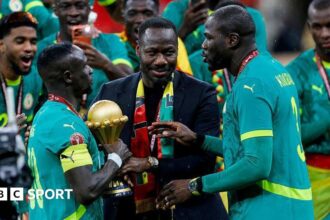
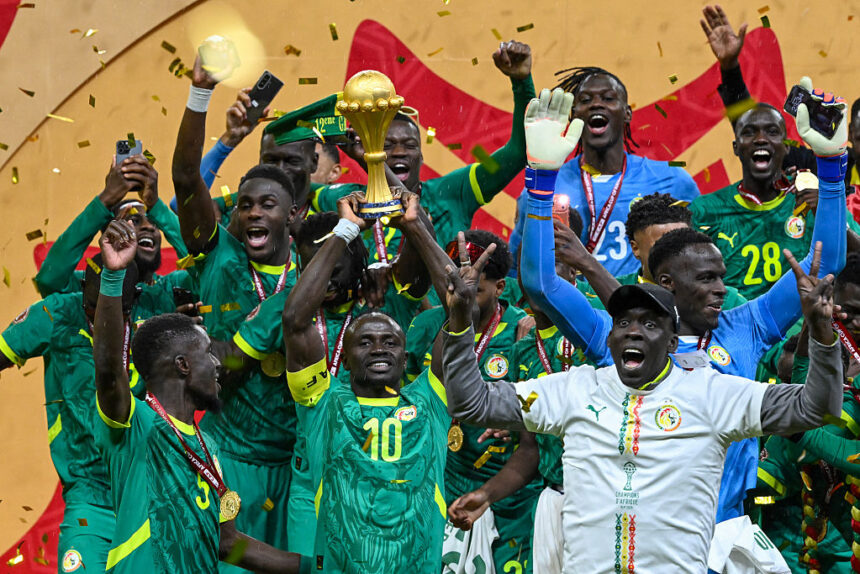
On the other hand, Senegal’s position appeals to the romantic and practical spirit of sport. The images of Sadio Mané lifting the trophy, the celebrations in Dakar’s streets—these are moments that, in the public’s mind, are sealed in history. Legally, they will frame CAF’s action as an overreach, a dangerous attempt to re-referee a match from an office, which could destabilize trust in all football results.
Augustin Senghor’s dual role as former FSF president and current CAS arbitrator adds a fascinating layer of complexity. While he will undoubtedly recuse himself from any panel hearing this case, his public stance signals the depth of conviction within Senegal’s football establishment and suggests the FSF is prepared for a protracted, principled war, not just a minor skirmish.
Predictions and the Shadow Over African Football
Predicting the outcome of a CAS case without full access to the evidentiary dossiers is perilous. However, we can forecast the contours of the battle and its inevitable consequences.
- Scenario 1: CAS Upholds CAF’s Decision. This would be a cataclysmic blow to Senegalese football but a powerful assertion of CAF’s disciplinary authority. It would immediately crown Morocco as champions, though the title would forever carry an asterisk and be shrouded in controversy. The long-term damage to the AFCON brand—seen as unstable and legally malleable—could be significant.
- Scenario 2: CAS Overturns CAF, Reinstates Senegal. This would be a monumental victory for Dakar and a severe embarrassment for CAF’s executive committee. It would reinforce the inviolability of on-field results but could be perceived as weakening the governing body’s ability to police serious off-field misconduct. It would also trigger serious internal scrutiny within CAF.
- Scenario 3: A Middle-Ground Sanction. CAS could seek a Solomonic compromise, upholding a finding of wrongdoing but deeming the title-stripping disproportionate. They might impose a different penalty, such as a heavy fine or future competition disqualification, while letting the 2026 result stand. This would satisfy no one fully but might be viewed as the most legally pragmatic path.
Regardless of the verdict, the shadow this case casts is long. Future AFCON tournaments will be played under the specter of this dispute. Every contentious refereeing decision will now invite speculation: “Is this another CAS case?” The pure, unadulterated joy of championship victory has been legally complicated.
Conclusion: A Defining Moment for the Continent’s Game
The appeal of Senegal to the Court of Arbitration for Sport is more than a legal maneuver; it is the roar of a wounded champion. This saga forces a uncomfortable confrontation between the need for robust governance and the timeless tradition that the game, once ended, is written in stone. The CAS panel will not just be adjudicating on regulatory compliance; they will be weighing the very essence of sporting finality.
As Augustin Senghor declared, this is indeed a sad day for African football. The beautiful game on the continent finds itself in an ugly, protracted courtroom drama. The “last chapter” of this story is yet to be written, and its author will be a panel of arbitrators in Lausanne. Their ruling will either restore a trophy to Senegal’s cabinet, legitimize CAF’s most severe punishment, or redefine the balance of power in football jurisprudence. One thing is certain: the outcome will echo far beyond the shores of Dakar and Casablanca, resonating in every football federation and courtroom where the sport is played and governed.
Source: Based on news from Yahoo Sports.