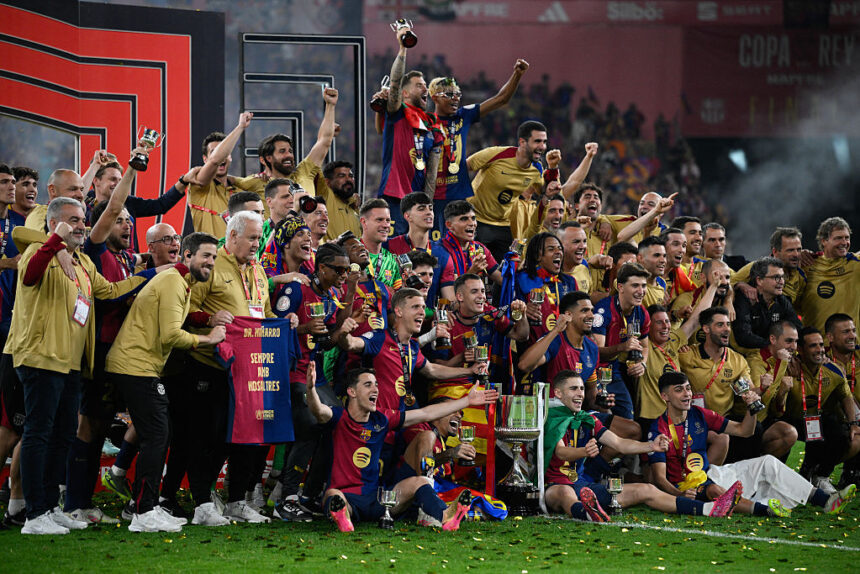
2025: The Year Spanish Football Reclaimed Its Throne
In the annals of Spanish football, certain years are etched in gold. 2025 has firmly joined that pantheon. This was not a year of quiet progress or hopeful rebuilding; it was a seismic period where La Roja roared, the Clásico delivered its most dramatic modern chapter, and a new generation of stars announced themselves on the world’s grandest stages. From international glory to domestic epics, Spanish football didn’t just compete—it authored the defining narratives, proving its enduring power, passion, and technical brilliance. This is the story of a year where history was written, rivalries were reforged, and the beautiful game, in its purest Spanish form, captivated the globe.
The Revenge Clásico: A Copa del Rey for the Ages
Forget the league table. The true soul of Spanish football often beats loudest in the knockout chaos of the Copa del Rey. The 2025 final was the ultimate proof. Dubbed “The Revenge Clásico” by press and fans alike, it transcended sport to become a cultural moment. The stage was set for a Real Madrid side seeking a domestic double against an FC Barcelona, under the meticulous hand of Hansi Flick, desperate to validate a new era with silverware.
The 90 minutes were a breathless, tactical whirlwind. Lead changes, breathtaking individual skill, and palpable tension created a masterpiece. A 2-2 deadlock at full-time felt less like a stalemate and more like a collective gasp before the plunge into chaos. Extra time became a psychological battlefield, each pass weighted with legacy, each tackle echoing with history.
Then, in the 112th minute, immortality found an unlikely vessel. Jules Koundé, the French defender, rose like a colossus in the Madrid box. Meeting a perfectly whipped corner, his header was a monument to unwavering faith and timing, arcing beyond Lunin’s reach. The net rippled. The explosion of noise from the Blaugrana faithful was the sound of catharsis. The 3-2 victory was more than a trophy; it was a reaffirmation of Barcelona’s identity under pressure. It proved that the Copa del Rey remains Spanish football’s most volatile and thrilling crucible, where legends are forged in a single, decisive moment.
La Roja’s Renaissance: A New Dynasty is Born
While club football provided the drama, the Spanish national team crafted a story of sustained excellence. Building on their 2023 UEFA Nations League triumph, La Roja entered every 2025 fixture not as favorites, but as artists. Under Luis de la Fuente’s steady guidance, a seamless blend of veteran wisdom and youthful audacity took hold.
The key to their success was a midfield mastery that felt both nostalgic and revolutionary. While veterans orchestrated, it was the explosive emergence of talents like Barcelona’s Pau Cubarsí as a defensive leader and the relentless engine of Real Sociedad’s Martín Zubimendi that defined the year. They played with a fearlessness and cohesion that overwhelmed opponents, dominating possession not as an end goal, but as a weapon to launch devastating, vertical attacks.
- Unbeaten Run: Spain maintained a staggering unbeaten record throughout 2025 in all competitions.
- Tactical Flexibility: Seamlessly shifting between a possession-based 4-3-3 and a dynamic 4-2-3-1, they became tactically unpredictable.
- Youth Integration: The successful integration of Lamine Yamal, Nico Williams, and other young stars ensured the team played with electrifying pace.
- Defensive Solidity: A record of clean sheets highlighted a perfect balance between attacking flair and defensive discipline.
This was no fleeting moment of form. The 2025 version of Spain established a clear blueprint, making them the team to beat heading into the 2026 World Cup. They played with a joy and authority that announced a new, lasting dynasty.
Individual Brilliance: The Stars Defining an Era
Team success was underpinned by staggering individual campaigns that shifted the global football landscape. 2025 was the year the Ballon d’Or conversation became distinctly Spanish.
At the forefront was Real Madrid’s Jude Bellingham, whose evolution from prodigy to outright leader was complete. His numbers—goals, assists, dominant performances in big games—were only part of the story. He became the undeniable heartbeat of his club, a player for whom the biggest moments seemed designed. Yet, his path to individual glory was fiercely contested by a resurgent force: Pedri González. Finally free of injury, the Barcelona midfielder spent 2025 conducting games with a preternatural calm, his vision and passing range returning to the forefront of Barça’s Copa del Rey triumph and their style.
Beyond the established names, new heroes emerged. The aforementioned Jules Koundé transformed from reliable defender to clutch match-winner. Athletic Club’s Nico Williams continued his ascent as one of Europe’s most unplayable wingers, his dribbling and final ball reaching world-class consistency. These players, across rival clubs, elevated the entire league and national team, creating a constellation of talent that made every match a showcase.
Looking Ahead: What 2025 Means for the Future
The dominance of Spanish football in 2025 was not an endpoint, but a powerful statement of intent. The implications for the coming years are profound. FC Barcelona’s Copa win under Hansi Flick provides a crucial foundation. It validates his project and signals a return to a pressing, intense style of play that can challenge on all fronts. The psychological boost of winning a Clásico in such fashion cannot be overstated.
For the national team, the road now leads directly to North America for the 2026 World Cup. Spain will not travel as dark horses, but as one of the prime favorites. The blend of experience and youth, of tactical intelligence and raw speed, makes them uniquely equipped for the challenge of a tournament across three host nations. The confidence forged in 2025 is an invaluable asset.
Furthermore, the continued success of Spanish clubs in European competitions, coupled with the league’s ability to produce and attract top talent, suggests the financial and sporting gap with other leagues is closing. La Liga is once again the stage where the future of football is being written.
Conclusion: A Year of Legacy and Launch
2025 will be remembered as a landmark year where Spanish football collectively turned potential into glory. It was a year that had everything: the raw, emotional theater of a Clásico decided in extra time, the strategic masterpiece of a national team operating at its peak, and the rise of individuals ready to carry the sport forward. The Copa del Rey victory for Barcelona was the dramatic centerpiece, a story of redemption and nerve that will be replayed for generations. Meanwhile, Spain’s national team built a machine of beautiful efficiency, making the entire world take note.
More than just a collection of wins and trophies, 2025 represented a restoration of identity. It proved that technical excellence, tactical intelligence, and passionate rivalry remain at the very heart of the global game. As the curtain falls on this unforgettable year, one truth is clear: Spanish football is not back—it is leading the way, having crafted a year of moments that will inspire, define, and propel it towards an even brighter future.
Source: Based on news from Yahoo Sports.