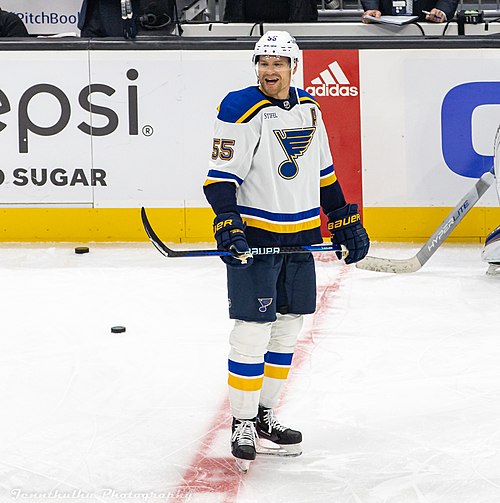
Blues’ Colton Parayko Blocks Trade to Sabres, Invoking No-Movement Clause
The NHL trade rumor mill is a constant churn of speculation, but it’s the players who ultimately hold the power to stop the gears. In a significant development that underscores the modern player’s agency, St. Louis Blues defenseman Colton Parayko has reportedly used his contractual leverage to veto a move. According to multiple sources, the veteran blueliner invoked his no-movement clause to nix a potential trade that would have sent him to the Buffalo Sabres. This decision sends ripples through both franchises, offering a stark look at roster-building challenges, player priorities, and the shifting landscape of the NHL.
The Anatomy of a Vetoed Deal: What This Means for Both Teams
While the specific trade package remains undisclosed, the framework of a deal being discussed—and ultimately blocked—reveals the strategic directions of both clubs. For the St. Louis Blues, exploring a Parayko trade signals a potential pivot. Despite his stature as a top-pairing fixture and Stanley Cup champion, the Blues’ roster is caught between retooling and contending. Moving a player of Parayko’s caliber and contract (eight years remaining at a $6.5 million AAV) could have accelerated a rebuild, potentially netting a haul of young assets, draft capital, or roster players to address other needs.
For the Buffalo Sabres, the pursuit was a clear signal of intent. General Manager Kevyn Adams has been meticulously assembling a young, dynamic core, but the team has conspicuously lacked a stabilizing, minute-munching, right-shot defenseman to shepherd its talented youth. Parayko, with his 6-foot-6 frame, championship pedigree, and ability to play in all situations, fit the profile perfectly. His rejection is more than a missed opportunity; it’s a pointed reminder of the hurdles small-market or rebuilding teams often face in attracting elite, established talent, even via trade.
- Blues’ Perspective: A chance to gain future assets and cap flexibility, but a commitment to keeping a core leader.
- Sabres’ Perspective: A stark setback in addressing their most glaring roster need with a prime target.
- League-Wide Impact: Reinforces the significant power of full no-movement clauses in player-team negotiations.
Expert Analysis: Why Parayko Said “No” to Buffalo
Invoking a no-movement clause is never a casual decision. For Colton Parayko, several calculated factors likely contributed to his choice to remain in St. Louis. First and foremost is stability. Parayko has spent his entire nine-year career with the Blues, winning a Cup in 2019 and building deep roots in the community. Uprooting his life for a team in a different phase of its competitive cycle is a monumental ask.
Secondly, the competitive timeline matters. At 31, Parayko is in the heart of his prime. The Buffalo Sabres, while brimming with potential, are still proving they can escape the league’s basement and become consistent playoff contenders. The Blues, despite recent struggles, possess a veteran core and have been in the playoff mix more often than not. For a player with championship experience, the immediate prospect of competing likely weighed heavily.
Finally, there is the undeniable pressure and scrutiny that comes with playing in a market like Buffalo, where the playoff drought is a constant narrative. In St. Louis, Parayko is a respected, established figure. In Buffalo, he would have immediately been anointed as the missing piece, facing immense pressure to single-handedly transform the team’s defensive fortunes—a burden any player would carefully consider.
This decision powerfully illustrates that for many players with full control, fit and lifestyle are as critical as salary and term.
Ripple Effects and Future Predictions for Blues and Sabres
The fallout from this blocked trade will define both teams’ offseasons. For the St. Louis Blues, the path forward is clear: Colton Parayko is your defenseman. The organization must now build around him, likely shifting other pieces on the blue line or forward group to reshape the roster. This episode also strengthens Parayko’s leadership role; the team knows he is fully invested. However, it also leaves General Manager Doug Armstrong with a complex salary cap puzzle to solve if he wishes to improve the team elsewhere.
For the Buffalo Sabres, the search for a top-tier defenseman becomes more urgent and public. Other names like Brett Pesce (before signing with New Jersey), Jakob Chychrun, or perhaps a player like Mario Ferraro could surface as targets. The Parayko rejection may force Adams to be more aggressive in free agency or to overpay in trade assets for a less ideal fit. It’s a significant setback in a critical offseason for the franchise.
Key predictions stemming from this event:
- The Blues will now aggressively shop other veteran defensemen to rebalance their roster and cap sheet.
- Buffalo will be linked to every available defenseman on the market, potentially driving up acquisition costs.
- Parayko’s standing in St. Louis is solidified, but the pressure on him to return to elite form intensifies.
- This will serve as a case study for agents negotiating future contracts, emphasizing the value of full no-movement protection.
Conclusion: A Defining Moment of Player Empowerment
The news that Colton Parayko vetoed a trade to the Buffalo Sabres is more than a transactional footnote. It is a defining moment of modern player empowerment in the NHL. The no-movement clause, once a rare privilege for superstars, is now a common tool for veteran players to control their destiny. Parayko’s decision highlights that success in today’s league isn’t just about drafting and trading—it’s about convincing players to buy into a vision, a city, and a timeline.
For the Blues, it means retaining a cornerstone, but also confronting the reality of a long-term contract they cannot easily move. For the Sabres, it’s a harsh lesson in the challenges of climbing the league ladder, where even your best-laid plans can be undone by a single signature on a contract from years prior. As the NHL offseason unfolds, the reverberations of Parayko’s “no” will be felt in front offices across the league, a potent reminder that in today’s game, the players ultimately hold the cards.
Source: Based on news from ESPN.
Image: CC licensed via commons.wikimedia.org