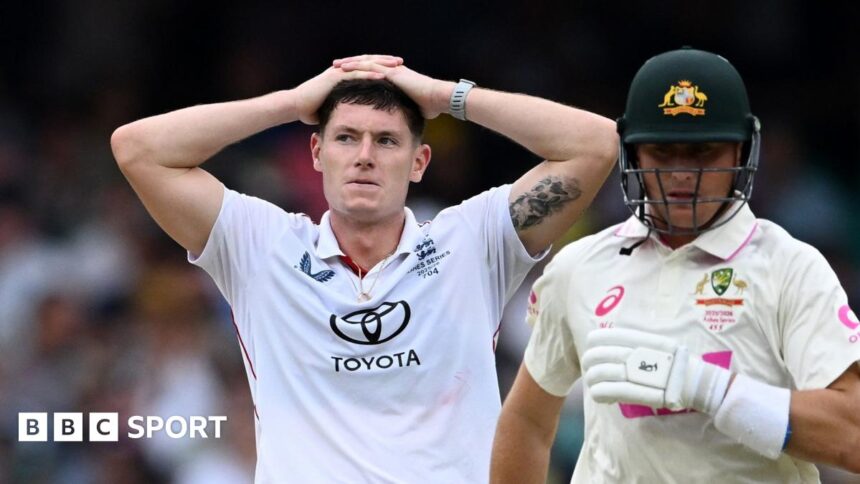
2/10: The Sydney Scorecard That Sums Up England’s Bowling Collapse
The Sydney Cricket Ground, a coliseum where Ashes dreams are made and shattered, has a long-standing relationship with rain. Statistically, it loses more days to the weather than any other Test venue in the world. But on the second day of the fifth Ashes Test, a different kind of deluge soaked English hopes. A light drizzle arrived only in the final moments, but for the preceding two sessions, a torrent of Australian runs poured down, exposing an English bowling attack given a generous platform and unravelling with alarming speed. The scorecard’s brutal verdict on their collective effort—2/10—was less a rating and more a damning epitaph for a day of abject surrender.
A Foundation of Rare Substance: Root’s Masterclass
For the first time in a series defined by brittle batting, England had posted a total of substance. Joe Root’s sublime 160, an innings of trademark precision and immense mental fortitude, guided England to 384. It was a score that, in any normal context, applied genuine first-innings pressure. It was a total built on patience, a quality conspicuously absent from England’s tour. The relief was palpable; finally, their bowlers had something to work with, a chance to dictate terms. This was the rare instance where England had won a significant session, let alone a day. The narrative was poised for a shift: could England’s attack, so often flogged across hard Australian fields, finally seize the initiative?
The answer, delivered with brutal Australian efficiency, was a resounding and definitive no.
The Great Unravelling: A Bowling Attack Exposed
What followed was a clinical dissection of England’s bowling resources, a session of play so one-sided it rendered Root’s heroics a distant memory. David Warner and Usman Khawaja strode out with the confidence of a team holding an unassailable 3-0 lead. England’s new-ball pair, Stuart Broad and Jimmy Anderson, bowled with customary discipline but without the threatening edge seen in years past. The Kookaburra ball went soft, and as it did, England’s plans appeared to evaporate into the Sydney haze.
The problems were systemic and immediate:
- Lack of Penetrative Pace: Beyond Mark Wood’s fiery but isolated spells, England offered no sustained hostility. The Australian batters were granted the luxury of time to adjust.
- Predictable Lengths : On a slow SCG pitch, England persisted with a good length, which was comfortably met by the Australian forward press. The lack of a potent bumper barrage or consistent full, swinging deliveries was glaring.
- Travis Head’s Counter-Attack: The arrival of Travis Head at the crease was the catalyst for the rout. His aggressive intent, seizing on any width or fractional error in length, forced England onto the back foot. His rapid half-century wasn’t just about runs; it was a psychological blitzkrieg that shattered any remaining English morale.
- Catastrophic Fielding : Dropped catches, misfields, and a general lethargy seeped into England’s work in the field. Chances went begging, boundaries were conceded through lazy efforts, and the shoulders slumped visibly. It was the body language of a defeated team long before the scoreboard confirmed it.
By the close, Australia had raced to 2/120, with Head responding to Root’s ton with a violent statement of his own. The run rate was soaring, the deficit evaporating. England’s 384 was transformed from a position of strength into a below-par total in the space of 50 overs.
The SCG: A Stage for English Misery
The venue for this collapse was poetically apt. Sydney, with its history of rain interruptions, often produces draws. But this was a different kind of washout—a rain of fours and boundaries that flooded the English scoreboard with alarming frequency. The ground that has witnessed more drawn Tests due to weather than any other was, for England, the stage for a decisive and final submission. The drizzle at stumps felt like a mercy killing, halting the inevitable Australian march towards and beyond England’s total.
This day encapsulated England’s entire tour. A flicker of competence, even excellence, from a world-class individual was immediately drowned out by systemic failure. The batting finally fires, and the bowling, bereft of ideas, firepower, and confidence, instantly surrenders the advantage. The 2/10 bowling performance was a collective failure of strategy, execution, and spirit.
Beyond Sydney: The Reckoning to Come
The predictions for the remainder of this Test are bleak. Australia will look to build a substantial lead, potentially in excess of 150, and then unleash their potent attack on an English batting line-up facing a demoralising fourth-innings chase. A 4-0 series defeat now looms as the most likely outcome, a scoreline that brutally reflects the gulf between the sides.
But the predictions that truly matter lie beyond this match. This Sydney collapse must serve as a watershed moment for English cricket. The inquest cannot simply focus on technical flaws or selection errors for this tour. It must address fundamental questions:
- How does England develop bowlers who can thrive in all conditions, not just seaming English decks?
- What is the plan to unearth a world-class, 90mph+ strike bowler to support or succeed the ageing Broad and Anderson?
- How does the structure of county cricket contribute to this recurring failure abroad?
The Ashes series defeat was confirmed weeks ago, but in Sydney, we witnessed the final, unravelling thread of England’s competitive credibility on this tour. The fight, so often talked about, was conspicuously absent.
Conclusion: A Rating That Resonates
The number 2/10 will linger. It is a fittingly stark assessment of a day where England’s bowling, handed a golden ticket back into a Test match, folded with a whimper. Joe Root’s magnificent century was rendered a footnote, a solitary act of defiance in a saga of collective failure. The SCG, a ground accustomed to the frustrations of weather, instead hosted a perfect storm of English cricketing flaws. As the rain finally fell on day two, it felt less like an interruption and more like a curtain falling on a touring party whose time in Australia has been defined by one relentless, painful truth: they have simply not been good enough. The rebuilding required is not incremental; it is foundational. And it starts with acknowledging that a score of 2/10 is unacceptable at this level of the sport.
Source: Based on news from BBC Sport.