2026 World Cup’s ‘Pride Match’ Draws Egypt vs. Iran: A Historic Clash of Sport and Society
The 2026 FIFA World Cup, already poised to be a tournament of firsts with its 48-team format and tri-host North American backdrop, has inadvertently set the stage for one of the most culturally and politically charged group stage matches in modern football history. Following the official fixture allocation, it was confirmed that the game designated by Seattle organizers as an LGBTQ+ ‘Pride Match’ will feature Egypt and Iran. This pairing, a consequence of the random draw, pits two footballing powerhouses from nations where homosexuality is illegal against a backdrop of planned celebrations for LGBTQ+ inclusion. The fixture, scheduled for June 26, 2026, at Seattle’s Lumen Field, is set to become far more than a battle for Group G points; it is a profound collision of sport, identity, and geopolitics on the global stage.
The Unplanned Convergence: A Draw with Dramatic Implications
Organizers in Seattle, a city renowned for its progressive values and vibrant LGBTQ+ community, had the foresight to designate a specific match date for a ‘Pride Match’ celebration. This initiative was part of a broader commitment by the 2026 Local Organizing Committee to promote inclusion and leverage the World Cup’s platform for social good. Critically, these plans were cemented long before the final draw determined which nations would compete. The football gods, in their unpredictable wisdom, delivered a fixture of staggering symbolic weight.
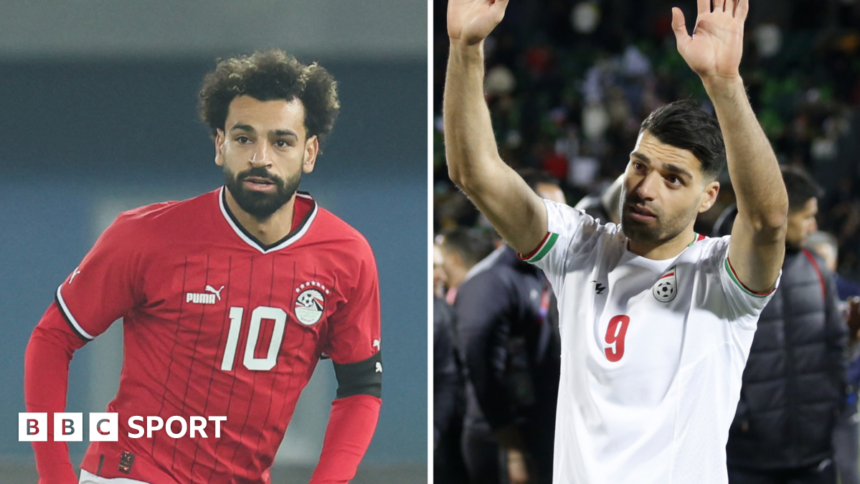
Egypt and Iran, drawn into Group G alongside Belgium and New Zealand, now find themselves at the epicenter of this conversation. Both nations possess rich footballing traditions and passionate fan bases. Egypt, led by global superstar Mohamed Salah, is a continental giant. Iran, known as Team Melli, is Asia’s top-ranked side and a perennial World Cup contender known for its disciplined, tough-to-break-down style. On the pitch, the match is a crucial early encounter for both teams’ knockout stage aspirations. Off it, the context is inescapable. The fixture allocation creates a unique diplomatic spotlight, placing the teams, their federations, and their traveling supporters in an environment explicitly celebrating a community whose rights are not recognized back home.
Navigating a Minefield: Teams, Fans, and FIFA in the Spotlight
The execution of the ‘Pride Match’ events will require unprecedented levels of sensitivity and planning. All eyes will be on how the competing teams and their official delegations navigate the pre-match and in-stadium ceremonies.
- Player and Federation Response: Will captains participate in pre-match activities promoting inclusion? How will the football associations of Egypt and Iran instruct their players to conduct themselves? A deliberate avoidance of planned ceremonies could itself become a story, while participation, however minimal, could spark backlash domestically.
- Traveling Supporters: A segment of each nation’s diaspora and traveling fans will likely embrace Seattle’s atmosphere, while others may find it confronting. The potential for tension, though hopefully minimal, will be a significant concern for security officials.
- FIFA’s Tightrope Walk: The global governing body is notoriously strict about keeping politics out of football, but it also has its own #FootballUnitesTheWorld campaign and human rights policies. FIFA will be under immense pressure to balance its inclusion principles with its non-interference stance. Any directive to teams could be seen as overreach; inaction could be criticized as cowardice.
Furthermore, the media narrative is already set. Every gesture, statement, or absence will be analyzed through the lens of this cultural juxtaposition. The match threatens to overshadow other group games, placing an intense, unique pressure on the athletes whose primary focus is simply to win a football match.
Beyond the Pitch: The Ripple Effects of a Symbolic Fixture
The implications of this Pride Match extend far beyond the 90 minutes at Lumen Field. This fixture serves as a stark, real-time case study in the complex role of mega-sporting events as catalysts for social discourse.
First, it creates a powerful platform for visibility. For LGBTQ+ individuals within Egypt, Iran, and across the Middle East and North Africa, seeing their national team compete in a match explicitly celebrating an identity they must often hide is a moment of profound complexity. It can be both isolating and empowering, a reminder of global disparities in human rights.
Second, it tests the theory of “sportswashing.” Nations often use sporting prestige to soften their international image. Here, the context of the match may instead amplify scrutiny of each country’s domestic laws. The global conversation will inevitably delve into the realities faced by LGBTQ+ citizens in both nations, a discussion activists may leverage for awareness.
Finally, it poses a fundamental question about the future of international sport: Can designated theme matches truly be inclusive when the participating teams come from cultures with opposing values? The 2026 experiment may set a precedent for how host cities and FIFA manage the increasingly inevitable intersection of sport and human rights.
Prediction: A Tense, Historic, and Ultimately Defining Affair
Predicting the outcome of this match involves more than forecasting the scoreline. On the field, expect a tense, tactical battle. Iran’s compact defense will challenge Egypt’s creative attackers. A single moment from a Salah or an Iranian counter-attack led by a player like Mehdi Taremi could decide it. A draw is a likely result, which would keep both teams’ hopes alive heading into their final group matches.
Off the field, the predictions are clearer:
- The stadium atmosphere will be a study in contrasts. Seattle’s home crowd will embrace the Pride celebrations with color and energy, while the reactions in the stands housing Egyptian and Iranian supporters will be more muted and potentially mixed.
- Diplomatic statements will be carefully worded. Both national federations will likely emphasize respect for host country customs while reaffirming their own cultural sovereignty. Players will stick to sports-centric comments in mixed zones.
- The match will be deemed a “success” by organizers if it concludes without incident, with the inclusive message displayed prominently to a global TV audience. The deeper, more uncomfortable conversations it sparks will be its true legacy.
This fixture will not change laws overnight. However, it will create an indelible image—a snapshot of our world in 2026, where the universal language of football speaks simultaneously about unity and deep division.
Conclusion: A World Cup Moment That Transcends Sport
The 2026 World Cup’s Egypt vs. Iran ‘Pride Match’ is an accidental masterpiece of scheduling, a moment where sport holds up a mirror to the world’s conflicting values. It is a reminder that the World Cup is never just a football tournament; it is a global gathering that magnifies societal tensions, celebrates human diversity, and forces difficult conversations into the open. While the players contest a vital Group G match, the broader narrative will unfold in the stands, in the media commentary, and in living rooms across the globe. This match, slated for a cool June evening in Seattle, will be remembered not for a spectacular goal or a saved penalty, but for the powerful, unresolved questions it poses about identity, respect, and the true meaning of inclusion in a beautifully fractured world. The final whistle will signal the end of the game, but the conversation it ignites will resonate long after the 2026 champion is crowned.
Source: Based on news from BBC Sport.