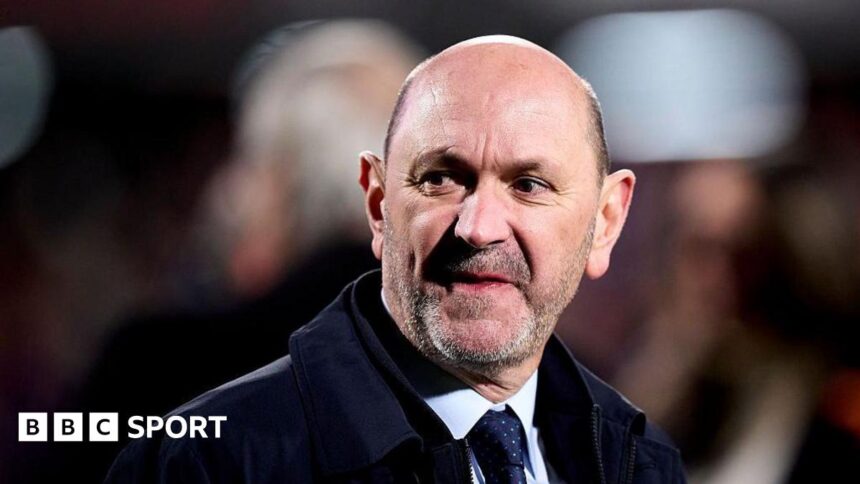
Spain Claims 2030 World Cup Final, Cementing Its Role as Centennial Host Leader
In a declaration that sets the stage for a decade of footballing geopolitics, the president of the Royal Spanish Football Federation (RFEF), Rafael Louzan, has unequivocally stated that Spain will host the final of the historic 2030 FIFA World Cup. This bold assertion, framed as a matter of proven capability rather than mere ambition, confirms Spain’s intended primacy in the unprecedented three-continent hosting plan. While the tournament will be a shared endeavor with Portugal and Morocco, with a symbolic opening trio of matches in South America, Louzan’s message is clear: the crown jewel of global sport will be decided on Spanish soil. This announcement ignites discussions on logistics, legacy, and the delicate balance of a co-hosting partnership destined to celebrate the beautiful game’s 100-year journey.
A Centennial Celebration Spanning Continents
The 2030 World Cup is not just another tournament; it is a homecoming and a centennial pageant. FIFA’s awarding of the event to a unique consortium of Spain, Portugal, and Morocco—with the opening matches in Uruguay, Argentina, and Paraguay—is rich with narrative. It honors the competition’s 1930 origins in Montevideo while propelling it into a future of transcontinental collaboration. This structure presents an unprecedented logistical challenge, requiring seamless coordination across time zones, cultures, and infrastructures. The decision to anchor the final in Spain, as presented by Louzan, suggests a centralization of the tournament’s climax, positioning the Iberian nation as the stable, experienced anchor of this ambitious project. It transforms a shared hosting duty into a hierarchy, with Spain aiming to be the undeniable epicenter when the world watches its most-watched sporting event reach its zenith.
Spain’s “Proven” Credentials: Analysis of a Confident Claim
Rafael Louzan’s confidence stems from a deep reservoir of institutional experience. His statement that “Spain has proven its organisational capacity over many years” is backed by a formidable curriculum vitae in mega-event hosting.
- 1992 Barcelona Olympics: A landmark event that transformed a city and set a new global standard for Olympic legacy and execution.
- Multiple UEFA Champions League Finals: Regular hosting of club football’s biggest match, most recently in 2022 at the Stade de France (though not in Spain, Spanish clubs’ dominance underscores the nation’s daily operational excellence).
- State-of-the-Art Infrastructure: A network of world-class, UEFA Elite-rated stadiums across the country, from the modern Wanda Metropolitano in Madrid to the iconic Camp Nou in Barcelona (pending renovations) and the innovative Estadio La Cartuja in Seville.
- Tourism and Transport Mastery: As one of the world’s top tourist destinations, Spain possesses the hotel capacity, security protocols, and international connectivity that few nations can match.
This track record is Spain’s strongest card. While Morocco brings exhilarating new territory and immense passion, and Portugal offers compact excellence, Spain presents the turnkey solution for an event of the 2030 final’s magnitude. The organisational capacity Louzan cites is a tangible asset, likely reassuring FIFA of a risk-minimized conclusion to their flagship event.
Navigating the Co-Host Dynamic: Diplomacy and Rivalry
Louzan’s definitive claim, however, does not come without diplomatic nuance. Morocco, a football-ascendant nation whose historic run in 2022 captured global hearts, has openly expressed its desire to host the final. For Morocco, it would be a crowning achievement, a statement of arrival on the world’s grandest stage. Portugal, too, with its storied history and modern venues, could make a compelling case. By stating Spain’s role so firmly, the RFEF chief has effectively opened the first formal negotiation—or perhaps confrontation—of the hosting partnership.
The success of the 2030 project now hinges on a delicate balance. The federations must present a united front while internally managing expectations. Spain’s leadership claim will need to be balanced with significant concessions elsewhere: a potential opening match for Portugal, a semi-final or a spectacular opening ceremony event for Morocco. The model may resemble UEFA EURO 2020, where the final was always destined for Wembley, but other critical matches were dispersed across the continent. How this co-hosting partnership navigates this internal competition will be a fascinating subplot, testing the strength of the “footbridge between continents” narrative that won them the bid.
Predictions and Legacy: What a Spanish Final Means for 2030
If Louzan’s vision holds, the implications are significant. A final in Spain, almost certainly at the Santiago Bernabéu in Madrid (after its ongoing futuristic renovation) or possibly at Camp Nou, creates a specific legacy pathway.
- Commercial and Media Hub: Spain would become the de facto operational and media center for the tournament’s climax, concentrating global attention and economic spillover.
- Footballing History: It would tie the 100th-year final to a nation whose clubs and national team have profoundly shaped modern football, creating a poetic link between history and the present.
- Infrastructure Focus: Spanish public investment would likely prioritize final-tier security, transport, and fan-zone projects, potentially setting a higher benchmark for its partner nations.
- Regional Development: While the final may be in Madrid or Barcelona, other Spanish regions will fiercely compete for group-stage and knockout matches, driving nationwide upgrades.
The risk, of course, is perceived imbalance. The narrative of a truly shared, revolutionary World Cup could be diluted if one host is seen as “more equal than others.” FIFA and the federations must work to ensure Morocco and Portugal feel like essential authors of the story, not just supporting actors. The 2030 World Cup final in Spain would be a spectacular event, but the tournament’s overall success will be judged on how seamlessly the three nations, and three continents, blend into one unforgettable football festival.
Conclusion: A Defining Goal in the Long Game to 2030
Rafael Louzan’s announcement is the first major strategic move in the seven-year buildup to the 2030 World Cup. It is a statement of intent, a leveraging of experience, and a bid to secure the most powerful symbol of hosting prestige. By publicly claiming the final, Spain has not only set its own goal but has also defined the primary internal challenge of this co-hosted tournament: managing ambition among partners. While the beautiful game will begin its centennial party where it all started—in the heart of South America—its ultimate moment, the raising of the trophy, is now projected to occur under the Spanish sun. The world will watch to see if this confident prediction becomes a self-fulfilling prophecy, and whether this unprecedented tri-continental collaboration can deliver a final as united and historic as the 100-year journey it aims to celebrate.
Source: Based on news from BBC Sport.