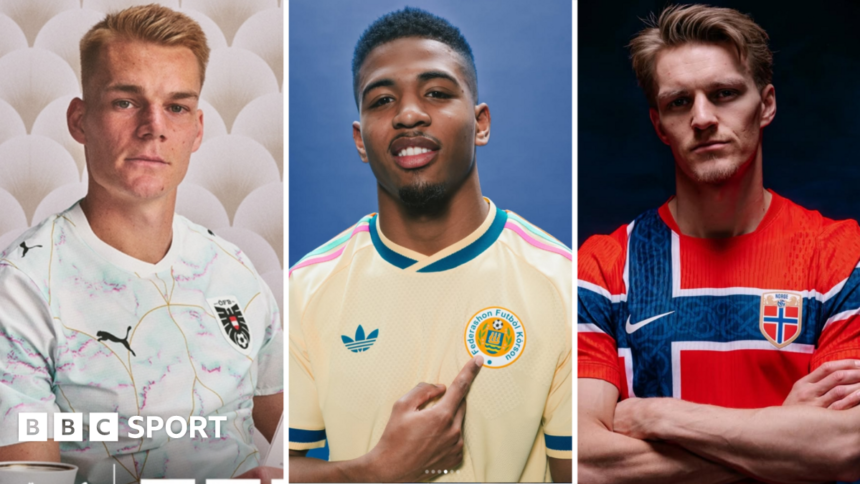
50 Days to Glory: Ranking the World Cup’s Most Striking Kits
The final countdown is truly on. With just 50 days until the first whistle blows at the 2026 FIFA World Cup across the United States, Canada, and Mexico, the global football fever is spiking. While narratives of legacy, underdogs, and potential champions dominate the discourse, there’s another, more vibrant battle already underway: the battle for sartorial supremacy. In an unprecedented expanded 48-team tournament, featuring 104 matches across 16 host cities, national identity will be projected not just through skill, but through style. From classic elegance to audacious modern statements, the kits players wear become the fabric of footballing history. Let’s dive into the threads that will define this summer’s spectacle.
Classic Revivals and Timeless Elegance
In a tournament of this magnitude, some nations understand that heritage speaks louder than hype. They return to iconic designs, reminding us that a kit can be a sacred cloth. Argentina’s iconic Albiceleste home shirt remains the standard-bearer. The famous vertical sky-blue and white stripes, now worn by a reigning World Champion, carry the weight of history and the magic of Lionel Messi’s final bow. It’s a timeless classic that needs no pattern or gimmick.
Similarly, Brazil’s iconic Canary Yellow jersey promises to dazzle under the North American sun. It’s more than a color; it’s a statement of intent, synonymous with the beautiful game itself. Italy’s Azzurro blue (should they qualify via playoffs) and the Netherlands’ vibrant orange fall into this category—colors so powerful they evoke an entire footballing philosophy. These kits are not worn; they are inherited.
Dazzling Designs and Cultural Homage
This World Cup cycle has seen kit manufacturers push creative boundaries, weaving national stories directly into the fabric. Leading this charge is Algeria’s mesmerizing away kit. Marking The Desert Foxes’ return to the World Cup for the first time since 2014, their stunning white away shirt features an intricate, swirling geometric pattern inspired by traditional Algerian art and architecture. It’s a masterpiece that tells a story of resilience and rich culture. One can easily imagine this kit becoming a cult classic, especially if Algeria makes a deep run.
Other nations follow suit with bold narratives:
- Germany’s away kit features a bold pink and red gradient, dubbed “Rising High,” representing the diversity of German society and landscapes—a daring departure from traditional black.
- Japan’s home kit incorporates a subtle, pixelated pattern symbolizing connectivity and the digital heartbeat of the nation, blending tradition with a futuristic vision.
- Mexico’s iconic green shirt often incorporates patterns from pre-Hispanic civilizations, turning each match into a celebration of deep-rooted history.
These designs do more than clothe athletes; they serve as moving exhibits of national pride.
The Dark Horses of Style
Beyond the traditional powerhouses, several teams are poised to steal the spotlight purely on aesthetic grounds. South Korea’s kits, often featuring dynamic tiger-stripe motifs (their national symbol), consistently deliver a fierce and unique look. Scotland’s away kit (pending playoff success) has recently featured stunning tartan designs, a direct and powerful link to their heritage that stands out in any crowd.
Newcomers and returning nations also bring fresh flair. The potential debut of a nation like Uganda or a returning side like Jamaica would introduce vibrant color palettes and patterns seldom seen on this stage. In a 48-team line-up, these visual surprises are part of the expanded tournament’s magic, offering fans new icons and styles to champion.
Kits as a Psychological Edge
A great kit does more than look good; it can instill confidence and even play a subtle psychological role. Imagine the intimidating aura of a unified Dutch Orange wall or the sleek, predatory black of a German away strip. Conversely, the bright, joyful colors of nations like Costa Rica or Morocco can embody a fearless, expressive style of play.
And then there’s the individual magic certain kits seem to conjure. The article’s note that defenders will be left bamboozled when Lionel Messi twists and turns past them in this swirl patterned away strip speaks to this phenomenon. A distinctive kit can make a genius’s movement even more hypnotic, the patterns blurring with his footwork to create an optical illusion on the pitch. The right kit becomes part of the legend.
The Verdict and Your Voice
Selecting a single favorite from this tapestry of talent is a near-impossible task. Does one choose the timeless authority of Argentina’s stripes, the cultural masterpiece of Algeria’s away kit, or the bold, progressive statement of Germany’s pink? Each represents a different facet of football’s appeal: history, identity, and innovation.
As we stand 50 days from kickoff, the stories are ready to be written, not just in the record books, but in the iconic imagery this tournament will produce. The sight of Kylian Mbappé in French blue, Vinicius Jr. in Brazilian yellow, or a breakout star in a lesser-known nation’s dazzling design will frame the memories of 2026.
Now it’s your turn. Which kit will you be wearing? Which design best captures the spirit of the game and the nation it represents? The pitch is set, the kits are unveiled, and the world is watching. Cast your vote for your favorite kits below and join the debate. In this World Cup of firsts, let your style flag fly.
Source: Based on news from BBC Sport.