Why Did the Dolphins Bench Tua Tagovailoa? A Franchise Pivots to Quinn Ewers
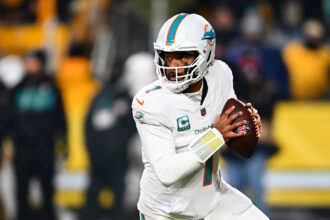
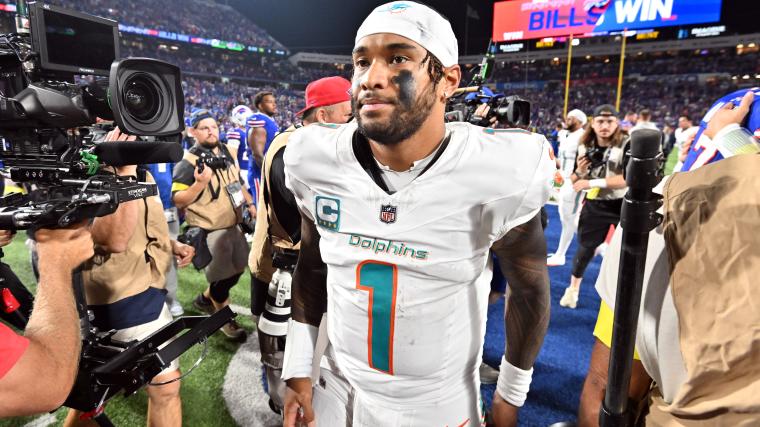
The sun set on the Tua Tagovailoa era in Miami not with a bang, but with the quiet, procedural thud of a mid-week press conference. In a move that signals a profound organizational shift, the Miami Dolphins have officially benched quarterback Tua Tagovailoa, turning the keys to the offense over to rookie Quinn Ewers. This decision, confirmed by head coach Mike McDaniel, comes just days after a loss to the Pittsburgh Steelers mathematically eliminated the Dolphins from playoff contention, ending a late-season surge that had briefly flickered with hope. The question now echoing through South Beach isn’t just about a lineup change, but about the end of a turbulent, injury-marred chapter and the stark beginning of a new one.
The Perfect Storm: Playoff Elimination and Persistent Questions
To understand the finality of this move, one must look at the confluence of events that led to Wednesday’s seismic shift. Tua Tagovailoa’s tenure in Miami has been a rollercoaster defined by breathtaking potential and devastating physical setbacks. This season followed a familiar script: early struggles led to murmurs of doubt, which were then silenced by a resilient win streak that showcased the dynamic, quick-strike offense he was drafted to run. For a moment, the narrative turned from “can he stay healthy?” to “can he lead a playoff charge?”
The Pittsburgh Steelers provided the grim answer. The playoff elimination served as a brutal line of demarcation. With nothing tangible left to play for in 2023, the Dolphins’ front office shifted its gaze irrevocably to the future. McDaniel’s Tuesday comment that “all options are on the table” was less a threat and more a prelude to an inevitable conclusion. Benching Tagovailoa isn’t merely a reaction to one loss; it’s a strategic pivot made possible by the collapse of the season’s only remaining goal.
Decoding McDaniel’s Decision: Beyond the Box Score
Mike McDaniel is a coach revered for his offensive genius and his unwavering loyalty to players. His decision to sit Tagovailoa, therefore, carries significant weight and speaks to multiple layers of organizational strategy.
- Injury Risk Management: This is the omnipresent, unspoken factor. Tagovailoa’s history with concussions is well-documented. Playing a veteran quarterback with that medical history in meaningless games is an untenable risk, both for the player’s long-term health and the team’s liability. Protecting Tagovailoa is a humanitarian and business imperative.
- Evaluating the Future: The Dolphins invested a first-round pick in Quinn Ewers for a reason. Practice reps are valuable, but live, regular-season snaps against a defense like Cincinnati’s are priceless. The final three games become an extended audition for Ewers, providing the coaching staff with critical data to inform their 2024 offseason plans.
- Asset Protection and Trade Implications: Tagovailoa is entering the final year of his rookie contract. A serious injury in a meaningless game could completely torpedo any potential trade value or complicate contract extension discussions. Preserving his health preserves optionality for the Dolphins this spring.
- A Clean Break for All Parties: Sometimes, a change is necessary for the psyche of both the player and the team. This move allows Tagovailoa to step away, reset, and ponder his future—whether in Miami or elsewhere—without the weekly grind. It also allows the locker room to immediately begin adapting to a new voice under center.
The Quinn Ewers Era Begins: What to Expect
The spotlight now falls on Quinn Ewers, the talented but raw quarterback from Texas. His collegiate career was a highlight reel of arm talent, boasting the ability to make every throw on the field with uncommon ease. However, questions about consistency and decision-making under pressure are why he was available for Miami in the latter part of the first round.
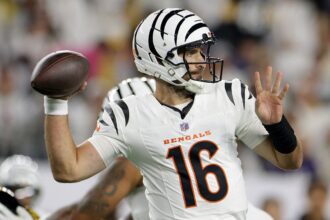
His debut against a Cincinnati Bengals team fighting for its own playoff life will be a baptism by fire. Fans should temper expectations for immediate polish. Instead, look for flashes of the elite talent that made him a top prospect:
- Arm Talent: Ewers can drive the ball to the sideline and launch it deep with minimal effort. Watch for 1-2 “wow” throws per game.
- Pocket Mobility: While not a pure runner, Ewers has good feel for navigating pressure and can extend plays.
- Rookie Mistakes: Expect misreads, potential delays of game, and throws into coverage as he adjusts to NFL speed. The key will be seeing improvement from Week 1 to Week 3.
McDaniel’s system is quarterback-friendly, designed to create easy reads and open receivers. How quickly Ewers can process information within that system will be the true test.
Predictions and Ramifications for the Dolphins’ Future
This decision sets in motion a chain of events that will define the Dolphins for years to come. Our analysis points to several likely outcomes:
1. Tua Tagovailoa Has Played His Last Snap for Miami: Barring an injury to Ewers, this benching feels permanent. The organization is using these final games to evaluate its rookie, a clear signal they are ready to move on. A trade in the offseason is the most probable conclusion, offering Tagovailoa a fresh start and the Dolphins potential draft capital.
2. A 2024 Quarterback Competition is Assured: Even with Ewers getting the nod now, the Dolphins will likely bring in a veteran bridge quarterback this offseason. The job in 2024 will not be handed to Ewers; he will have to earn it, ensuring he faces legitimate competition.
3. McDaniel’s Offense Will Evolve: Ewers’ skill set is different from Tagovailoa’s. While Tua excelled at pre-snap diagnosis and lightning-quick short-area accuracy, Ewers offers a more vertical, off-script element. McDaniel will spend the offseason tailoring the scheme to his new quarterback’s strengths, potentially opening up a new dimension of the playbook.
4. Increased Scrutiny on the Front Office: Moving on from a quarterback selected 5th overall just four years ago is an admission of a missed pick. The pressure now amplifies on General Manager Chris Grier and McDaniel. The Ewers selection must hit, or the entire football leadership structure could face existential questions.
Conclusion: The End of an Era, The Start of an Audition
The benching of Tua Tagovailoa is a sobering reminder of the NFL’s “what have you done for me lately?” ethos. Despite moments of brilliance and a clear connection with his head coach, Tagovailoa’s journey in Miami was ultimately undermined by factors often beyond his control—most tragically, his own physical vulnerability. The franchise, faced with a closed playoff window and an uncertain long-term investment, chose a hard reset over a hesitant pause.
For the next three weeks, Hard Rock Stadium transforms into a laboratory. Every snap Quinn Ewers takes is data. Every checkdown and every deep shot will be analyzed as the Dolphins blueprint their future. The move is bold, cold, and unequivocally forward-looking. The Tua Tagovailoa experiment, with all its hope and heartbreak, is over. The Quinn Ewers audition begins now, and the fate of the franchise hinges on its review.
Source: Based on news from Yahoo Sports.