Ohio University Fires Head Football Coach Brian Smith for Violating Alcohol Policy: A Program at a Crossroads
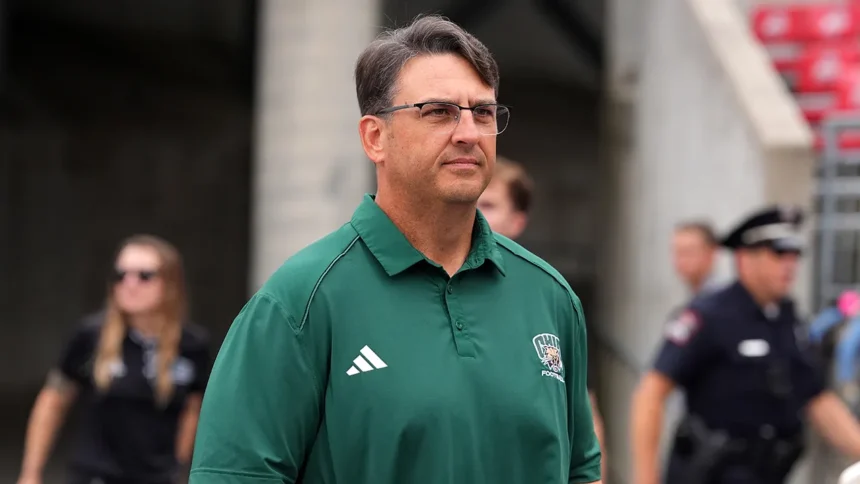
The world of college football was buzzing with reactions to Indiana’s stunning Big Ten Championship victory, with legends like Urban Meyer and Matt Leinart weighing in. But in Athens, Ohio, a quieter, more consequential drama was reaching its conclusion. Ohio University has fired head football coach Brian Smith for cause, a termination rooted in a violation of the university’s policy on “alcohol and other drugs.” This move, revealed through documents obtained by The Athletic, sends shockwaves through the Bobcat program and raises immediate questions about culture, accountability, and the path forward for a team seeking sustained success.
The Paper Trail: A Meeting, A Desk Drawer, and An Admission
According to the personnel file, the decisive moment came on November 24th. Smith met with Athletic Director Slade Larscheid and other university administrators to discuss a serious allegation. The core of the issue was not a public scandal or a recruiting violation, but a breach of internal conduct. A letter dated that same day details the meeting’s findings.
The coach allegedly acknowledged two specific infractions:
- Storing alcohol in his desk drawer on university property.
- Consuming alcohol in his office during business hours.
These actions directly violated both the school’s broader substance policy and the specific terms of his employment contract. For the administration, this provided clear, admitted grounds for a “for cause” termination, a legally significant distinction that typically allows the university to avoid a costly buyout of the remaining contract. This wasn’t a hasty decision; it was an administrative action following a policy breach the coach himself did not dispute in the meeting.
Beyond the Infraction: Assessing the Cultural and Programmatic Impact
On the surface, the violation may seem minor to some—a private act in an office. But through the lens of NCAA athletics administration, the implications are profound. A head coach is the ultimate leader and standard-bearer for dozens of young student-athletes. University policies, especially those concerning alcohol and drugs, are drilled into athletes from the day they step on campus.
Expert analysis suggests this firing is about leadership accountability as much as the act itself. “The message here is unequivocal,” says a veteran collegiate athletic director who spoke on condition of anonymity. “The rules that apply to your players and staff apply to you, doubly so. When you are the face of a multi-million dollar program, your judgment is under constant scrutiny. Storing and consuming alcohol in your office isn’t just a policy slip; it demonstrates a lapse in judgment that can undermine the entire cultural foundation you’re trying to build.”
For a program like Ohio University, which has prided itself on a reputation of solid, if not always spectacular, performance under coaches like Frank Solich, this incident is a stark departure from the expected norm. It introduces instability at a time when the program needs a steady hand to navigate the ever-changing landscape of the MAC and the transfer portal.
The Ripple Effect: Recruiting, Roster Retention, and the Coaching Search
The immediate fallout from firing a head coach is always turbulent. In this case, the unusual circumstances may amplify the challenges for the interim leadership and the eventual permanent hire.
Recruiting is the lifeblood of any program. High school commits and their families choose a school based on relationships, stability, and trust. A coach fired for violating conduct policies creates a difficult narrative for recruiters to counter. Rivals will undoubtedly use it to question the environment and leadership in Athens.
Perhaps more pressing is roster retention. The modern college athlete possesses unprecedented mobility through the transfer portal. A chaotic coaching change can trigger an exodus of key talent. Current players committed to Brian Smith and his vision may now seek opportunities elsewhere, potentially gutting the roster’s depth before a new coach even has an office—one presumably free of contraband.
The university’s coaching search will now be conducted under a unique shadow. Candidates will need to be vetted not only for Xs and Os but for impeccable character and judgment. The administration, led by AD Slade Larscheid, will be under pressure to find a leader who can restore integrity and command the locker room through action, not just words.
Predictions: What’s Next for Ohio Bobcats Football?
The road ahead for Ohio University football is fraught with uncertainty, but clear paths are emerging.
First, expect a nationwide search focusing on coaches with a reputation for discipline and program-building, possibly at the FCS or Group of Five coordinator level. A “safe” hire with a clean off-field record is now more likely than a brilliant offensive mind with baggage.
Second, anticipate significant portal activity. The 45-day window following a coach’s departure is critical. Ohio will likely lose several players, making the new coach’s first task one of roster triage and rebuilding through the portal themselves.
Finally, this incident will likely become a cautionary tale within athletic director circles. It reinforces that “for cause” termination clauses are not merely contractual formalities. When a coach’s personal conduct violates the core policies of the institution, administrations now have a recent, clear precedent for swift action, even absent a public or legal scandal.
Conclusion: A Stark Reminder of the Spotlight
While the college football world celebrated Indiana’s milestone and debated playoff implications, Ohio University delivered a stark reminder of the responsibilities inherent in leading a program. The firing of Brian Smith was not about a national championship run gone awry; it was about the fundamental contract between a university and its most visible employees. It was a statement that adherence to institutional policy is non-negotiable, especially for the person tasked with mentoring young athletes.
The Bobcats’ program now stands at a crossroads. The recovery from this self-inflicted wound begins with a transparent search for a leader who embodies the standards expected of every student on campus. The challenge is immense: to rebuild trust, stabilize a roster, and reassure a community that the program’s culture remains intact. The story is no longer about what was in a desk drawer, but about what the Ohio Bobcats choose to build from this moment forward.
Source: Based on news from Fox Sports.