Chargers’ Denzel Perryman Suspended Two Games by NFL for Reckless Hit
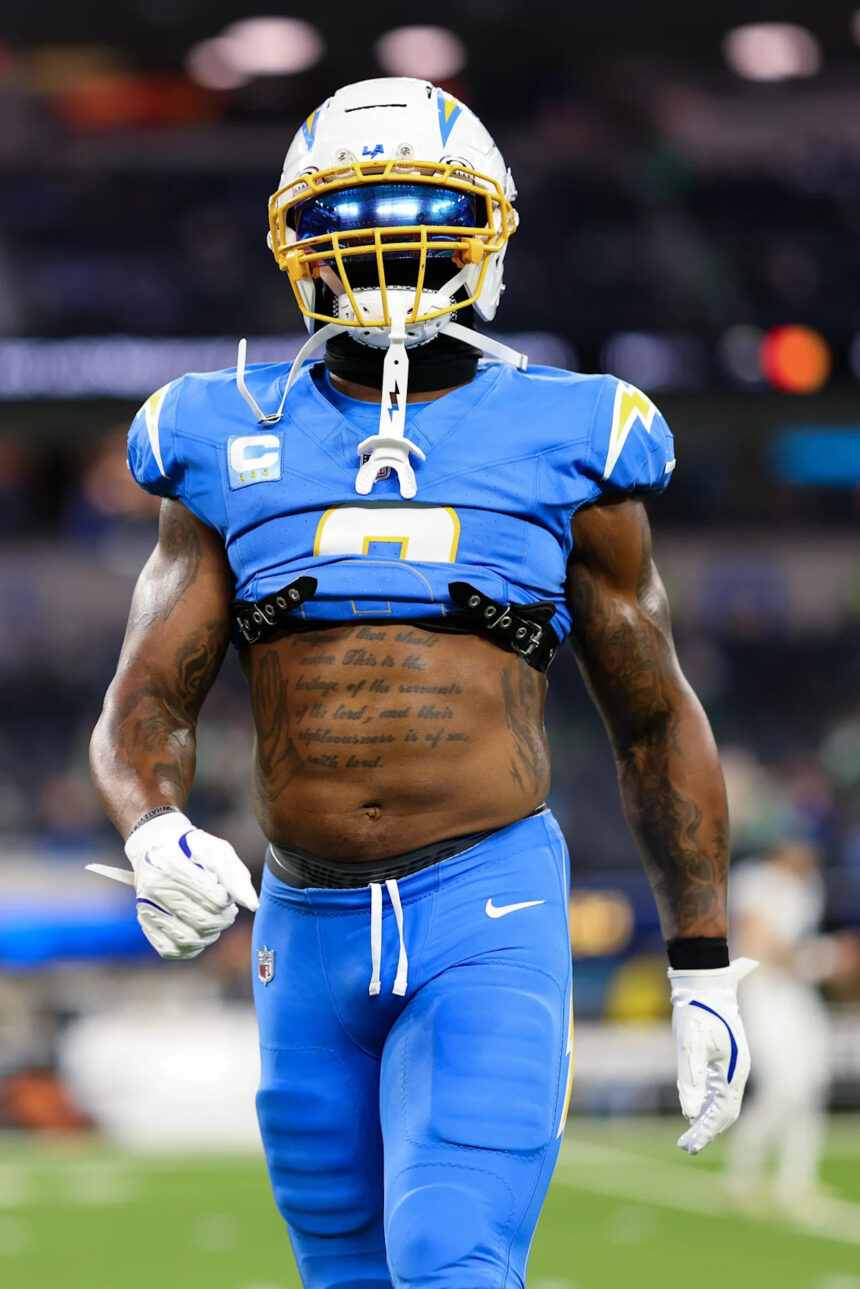
The Los Angeles Chargers’ defensive depth, already tested in a challenging season, has taken another significant blow. The NFL announced Monday that veteran linebacker Denzel Perryman has been suspended without pay for the team’s next two games for “repeated violations of playing rules intended to protect the health and safety of players.” This disciplinary action stems from a dangerous hit on Dallas Cowboys wide receiver Ryan Flournoy during Sunday’s contest, a moment that encapsulates the league’s ongoing struggle to eliminate unnecessary and hazardous contact from the game.
A Costly Decision: The Play That Sparked the Suspension
The incident occurred in the third quarter of the Chargers’ loss to the Cowboys. Rookie receiver Ryan Flournoy made a catch and was immediately tackled to the ground. With Flournoy clearly down and the play effectively over, Denzel Perryman dove head-first into the scene, leading with his helmet and making direct helmet-to-helmet contact with the defenseless player. The illegal hit drew an immediate flag for unnecessary roughness and left Flournoy slow to get up; he later exited the game and entered the concussion protocol.
This was not an isolated incident for Perryman, a physical player known for his hard-hitting style. The NFL’s statement explicitly cited “repeated violations,” indicating this suspension is the culmination of multiple infractions. The league’s crackdown on such hits, particularly those against defenseless players and involving the helmet as a weapon, has been a point of emphasis for years. Perryman’s actions, in a situation where a simple touch would have sufficed, represent the exact type of play the NFL is determined to remove.
- Key Incident: Helmet-to-helmet hit on a defenseless Ryan Flournoy already on the ground.
- Immediate Consequence: Flag for unnecessary roughness; Flournoy left the game.
- League Rationale: “Repeated violations” of player safety rules.
Ripple Effect: How the Suspension Impacts the Chargers’ Defense
Perryman’s absence creates a substantial void in the heart of the Chargers’ defense. The veteran has been a staple when healthy, starting all 10 games he has played this season and serving as a key communicator and run-stuffer. His production—47 total tackles, four tackles for loss, and three pass breakups—underscores his role as a central figure in the front seven.
With games against the high-powered Houston Texans offense and a divisional clash with the Denver Broncos, the timing is far from ideal. The suspension means the Bolts will be without one of their defensive signal-callers during a critical stretch. Stepping into the breach will likely be Troy Dye, a special teams ace and backup linebacker. While Dye is a capable athlete, he lacks Perryman’s experience and instinctual play against the run. This forces Defensive Coordinator Jesse Minter to potentially simplify calls or adjust personnel groupings, possibly leaning more on nickel packages to compensate for the linebacker depth.
The suspension also raises questions about the unit’s discipline and composure. In a season marred by close losses and self-inflicted wounds, losing a starter to an avoidable, non-football act is a frustrating setback for a coaching staff trying to establish a consistent, smart identity.
Expert Analysis: The NFL’s Enforcement and a Player’s Adaptation
From a league-wide perspective, this suspension is a clear message. The NFL’s health and safety protocol is non-negotiable, and penalties for repeat offenders will escalate. Perryman’s two-game ban is more severe than the typical fine, indicating the league viewed his history and the egregious nature of the hit as warranting stronger action. It serves as a stark reminder to all players: the responsibility to avoid dangerous techniques ultimately falls on them, regardless of the heat of the moment.
For Perryman himself, this is a pivotal moment in his career. At 31, his value is tied directly to his physicality and football IQ. The suspension, which will cost him two game checks, is a tangible financial penalty. More importantly, it brands him as a player who must consciously alter his approach. The line between being a feared, hard hitter and being a reckless liability has been drawn, and Perryman has crossed it in the league’s eyes. His ability to maintain his effectiveness while eliminating these penalty-prone hits will determine his longevity and value when he returns.
Key questions now surround Perryman’s future: Can he modify his instincts in a split-second scenario? Will teams be wary of his playing style in free agency? The suspension is more than a two-game hiatus; it’s a challenge to evolve his game.
Predictions: Navigating the Next Two Games and Beyond
The immediate forecast for the Chargers’ defense is cloudy. Facing C.J. Stroud and the Texans’ diverse attack without Perryman is a daunting task. Houston’s ability to run the ball with Dameon Pierce and mix in play-action will test the interior linebacker group severely. The following week, the Broncos’ resurgent run game, spearheaded by Javonte Williams, will present a similar challenge. The performance of Troy Dye and the surrounding cast will be a major storyline in both contests.
Looking ahead to Perryman’s return on January 5th, the dynamic within the team bears watching. Will he immediately reclaim his starting role, or will Dye’s potential performance create a competition? Furthermore, how will Perryman respond on the field? The hope is that this suspension serves as a catalyst for smarter play, but there’s always a risk a player becomes hesitant, diminishing the very aggression that makes him effective.
For the Chargers organization, this is another episode in a season of frustration. It highlights a lack of situational awareness and discipline that has plagued the team in key moments. Moving forward, the coaching staff must reinforce the lesson the NFL just delivered: no single play is worth a suspension that hurts the team and endangers an opponent’s career.
Conclusion: A Lesson in Accountability and Safety
The two-game suspension of Denzel Perryman is a significant event with layered consequences. It is a victory for the NFL’s player safety initiative, demonstrating a commitment to punishing repeat offenders with severity beyond a fine. It is a major setback for the Chargers’ defense, removing a veteran leader during a tough stretch of the schedule. And for Perryman, it is a costly personal and professional lesson in accountability.
The hit on Ryan Flournoy was unnecessary and dangerous, a relic of a style of football the league is actively trying to phase out. While fans and players often celebrate big hits, the line is clearly drawn at those that use the helmet as a weapon and target defenseless players. Perryman’s suspension is a benchmark in that ongoing effort. As the Chargers scramble to adjust their defensive plans, the broader NFL community will watch to see if this penalty serves as a true turning point—for one player’s approach and for the continued evolution of safety within the sport itself.
Source: Based on news from Yahoo Sports.