‘It’s Giving Me Goosebumps’: Europe’s Stars Relive the Grit and Glory of Bethpage Triumph
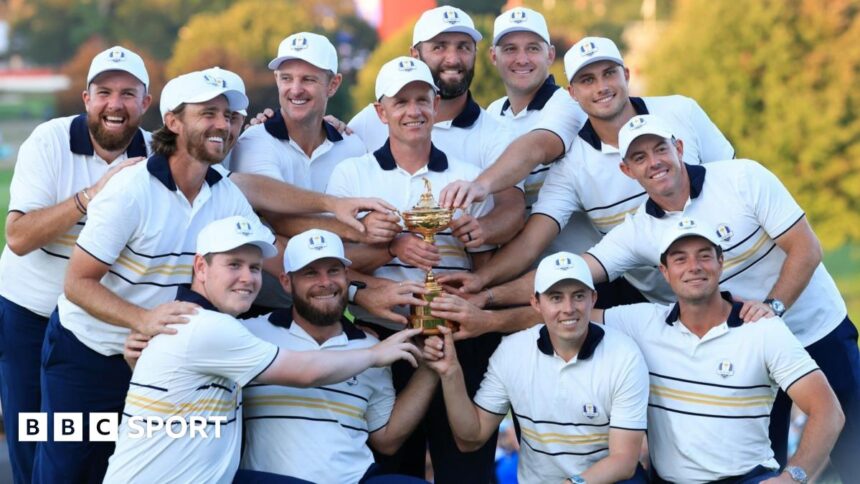
The Ryder Cup is not just won on points. It is forged in pressure, sealed in moments of collective breath-holding, and immortalized in the raw, unfiltered memories of those who lived it. Months after Europe’s stunning victory on American soil at Bethpage, the mere recollection of that September week is enough to send shivers down the spines of its heroes. “It’s giving me goosebumps,” they say, and in their retelling, a deeper, more determined story emerges—one not just of victory, but of a team playing for something beyond the scoreboard.
A Triumph Forged in Adversity and Unbreakable Unity
From the outside, Europe’s victory was a masterclass in team chemistry and clutch performance. Yet, an undercurrent of adversity threatened to shadow their achievement. The injury withdrawal of Viktor Hovland after the opening day presented a unique complication. While the Norwegian and his designated opponent, Harris English, were awarded a half point each, it created a potential narrative loophole the Europeans were acutely aware of.
Captain Luke Donald’s squad didn’t just want to win; they were desperate to triumph by more than a single point. The specter of the U.S. potentially citing Hovland’s absence as a decisive factor was a powerful motivator. This wasn’t about pride alone; it was about leaving no room for doubt, no asterisks, only the unequivocal truth of their superiority that week. This shared mission forged an even tighter bond, transforming a strong team into an unbreakable unit with a clear, gritty purpose.
“No Mercy”: The Relentless Pursuit of a Decisive Margin
This mindset crystallized in the singles matches on that tense Sunday. With the cup mathematically retained, the job was technically done. But for the Europeans, the true job was only complete with a decisive margin. This was starkly illustrated in the match involving rookie sensation Bob MacIntyre.
As MacIntyre held a comfortable lead late in his match, the assumption might have been to coast to a gentlemanly conclusion. Not so. The message from the team was clear and uncompromising. “There could be no mercy,” MacIntyre recalls being told. Every half point, every full point, was crucial to the mission of widening the gap. This directive underscores the modern Ryder Cup’s intensity: it is a contest fought to the very last putt on the very last green, regardless of the overall status. The team’s will to win comprehensively overrode any individual instinct to ease up, a testament to the collective drive Donald had instilled.
How a dramatic end to the Ryder Cup unfolded was a direct result of this philosophy. The final matches became a tense, point-by-point battle to build the lead, ensuring the scoreboard told the full, undeniable story of European dominance.
The Pillars of Europe’s Bethpage Victory
- Strategic Captaincy: Luke Donald’s meticulous pairings and calm leadership created a perfect environment for his players to thrive.
- Embracing the Villain Role: The European team used the ferocious Bethpage crowd’s energy as fuel, bonding together against the external noise.
- Rookie Resilience: Newcomers like Ludvig Åberg and Bob MacIntyre played with fearless poise, contributing critical points.
- The “No Mercy” Directive: The insistence on playing every match to its absolute conclusion, even after retention, demonstrated a champion’s mindset.
Expert Analysis: Why This Win Resonates Differently
This victory stands apart in the recent annals of the Ryder Cup. Winning away from home is always the ultimate challenge, but doing so with the added pressure of a pre-emptive narrative battle shows a remarkable mental fortitude. The team wasn’t just playing against 12 American golfers; they were playing against a potential “what if.”
The Hovland injury situation could have been a destabilizing distraction. Instead, Donald and his men weaponized it. It became a rallying cry, a tangible reason to push for every half-point. This analysis reveals a team operating on a higher psychological plane. They managed the uncontrollable—an injury to a star player—by hyper-focusing on what they could control: their performance on every single shot in every single match until the very end. The resulting margin of victory silenced all hypotheticals before they could even be properly voiced.
Looking Ahead: Predictions for the Road to Adare Manor
The echoes of Bethpage will undoubtedly reverberate to the next contest at Adare Manor in Ireland. This win has cemented a new generation of European leaders. Players like Rory McIlroy, Jon Rahm, and Matt Fitzpatrick have now experienced a defining away win, while the rookies have been baptized in the most intense fire imaginable.
For the United States, the search for answers continues. The task of integrating young talent with established stars in a cohesive unit remains elusive. The European model, built on a foundation of shared experience and palpable camaraderie, appears more robust. While home advantage at Adare Manor makes Europe an early favorite, the true legacy of Bethpage is the blueprint it provides: victory is found not just in skill, but in an unrelenting, unified pursuit of a total, unquestionable result.
Conclusion: More Than a Trophy, a Statement
When Europe’s stars get goosebumps today, it’s not just from remembering the champagne showers or the roar of the traveling fans. It’s from recalling the profound unity and clear-eyed purpose that carried them. The Ryder Cup triumph at Bethpage was a victory carved from a unique challenge, a win secured twice over—first to retain the cup, and then to legitimize it beyond any caveat. It was a statement that Europe’s heart, depth, and resolve run deep. As the memories are relived and the stories retold, one thing is crystal clear: this was a victory earned not just on the dramatic greens of Bethpage, but in the unwavering mindset of a team that refused to settle for anything less than total conquest.
Source: Based on news from BBC Sport.