Amorim ‘Blow-Up’ Brings Manchester United’s Jason Wilcox into the Spotlight
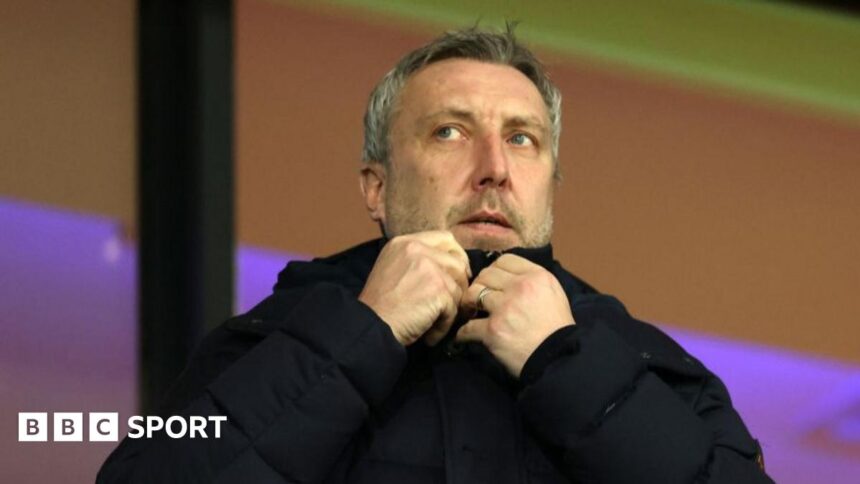
The search for a new Manchester United manager is never a quiet affair, but the recent and dramatic collapse of talks with Ruben Amorim has done more than just leave a vacancy. It has violently shifted the spotlight onto a figure operating behind the scenes, illuminating a new and potent power dynamic at Old Trafford. The fallout from the Amorim saga is not just about a manager who won’t be arriving; it’s the story of the executive who helped define the terms of engagement. In the aftermath, one name resonates with newfound authority: Jason Wilcox.
Once a fleet-footed winger for Blackburn’s 1995 Premier League champions, Wilcox has transitioned from a relative obscurity in the footballing executive world to a position of immense influence at one of the sport’s biggest clubs. His role as Manchester United’s director of football was always significant on paper, but the Amorim episode has proven it is decisive in practice. This is the story of how a former player, a meticulous builder of systems, has become the central figure in United’s new era under Sir Jim Ratcliffe.
From Ewood Park to the Executive Suite: The Unlikely Rise of Jason Wilcox
To understand Wilcox’s current clout, one must look at his journey. His playing career provides clues: a team player at Blackburn under the data-driven Ray Harford, a hard-working professional at Leeds. It was a solid career, defined by intelligence and adaptability more than sheer stardom—a trivia answer for the dedicated fan: which title-winner won three England caps in three different seasons over a four-year period?
But his post-playing path is where the blueprint for his United role was drawn. After coaching in Manchester City’s academy, he ascended to become their Academy Director in 2017. This was no ceremonial role. Under his stewardship, City’s youth system became a production line of technically superb, tactically intelligent players ready for Pep Guardiola’s first team. Phil Foden is the crown jewel, but the list of graduates and the millions in sales speak to a system built on a clear, dominant philosophy.
This success caught the eye of Southampton, who hired him as their Director of Football in 2023. His task was monumental: implement a top-down style of play and navigate a post-relegation rebuild. Though his tenure was brief, it was this very experience in installing a cohesive vision that made him the prime target for Manchester United’s new sporting hierarchy.
Key to his rise are several foundational principles:
- Philosophical Rigidity: Wilcox is a believer in a single, club-wide playing model.
- Data-Informed Decisions: His background is in modern, analytical talent identification.
- Structural Power: He operates with the clear mandate that the sporting director’s vision supersedes the manager’s preferences.
The Amorim Impasse: A Defining Power Play
The public courting and sudden departure of Ruben Amorim from managerial contention was the first major test of the Wilcox doctrine. Reports indicate the breakdown was not about money or personal terms, but about control and alignment. Amorim, a highly sought-after coach with a defined, successful style at Sporting CP, reportedly clashed with Wilcox’s insistence on total adherence to a pre-set footballing framework.
This was a watershed moment. For years, United have been accused of a lack of football identity, zigzagging between managerial styles from Mourinho’s pragmatism to Ten Hag’s pressing. Wilcox, backed by Ratcliffe and CEO Omar Berrada, represents a decisive break from that. The message from the Amorim fallout is stark: no manager, no matter how prestigious, is bigger than the project.
Wilcox’s stance signals a move towards the modern European model, akin to his former employers at City, where the director of football hires a head coach to execute a system, not a manager to build their own empire. This “blow-up” was likely a calculated, if risky, demonstration of where power now lies at Carrington. It proved Wilcox has the authority to walk away from a glamorous name for the sake of structural integrity—a previously unthinkable act in the post-Ferguson era.
The “City DNA” Debate: A Legitimate Concern or Paranoia?
Wilcox’s appointment has not been without its critics, and the skepticism often centers on one word: City. His deep ties to Manchester City, the club United are desperately trying to catch, inevitably raise eyebrows. The criticism is twofold:
- Cultural Infiltration: Can a figure so steeped in the “noisy neighbours'” philosophy truly grasp the unique, often chaotic, stature of Manchester United?
- Strategic Mimicry: Is United’s plan simply to copy the City blueprint, a move that risks appearing derivative and may not suit the club’s different ecosystem?
However, this perspective may miss the point. Wilcox and Berrada were not hired for their “City DNA” as a mystical quality, but for their specific expertise in building a modern football operation. Ratcliffe’s INEOS group is pragmatic; they have identified the best-in-class executives from the best-run club in the country. The challenge for Wilcox is not to create “City United,” but to distill the principles of elite sporting structure—alignment, long-term planning, elite talent development—and adapt them to the colossal, high-pressure environment of Old Trafford.
Predictions: What the Wilcox Era Means for Manchester United’s Future
The Amorim episode has set the tone. Wilcox’s influence will be all-encompassing and will define the next chapter at United. Several predictions can be made:
The Next Manager Will Be a “Head Coach”: The search will now unequivocally focus on candidates who are collaborators, not autocrats. Tactical flexibility within a defined system will be prized over a storied personal methodology.
Academy Revolution is Imminent: Wilcox’s core competency is youth development. Expect a rapid overhaul of United’s academy philosophy to produce players with the technical and tactical profile he demands, creating a sustainable talent pipeline.
A Summer of Strategic Signings: The transfer strategy will shift from chasing stars to identifying players whose data profile and skill sets fit Wilcox’s model. Versatility and cognitive ability will be key metrics.
Internal Tensions are Inevitable: If Erik ten Hag remains, his working relationship with Wilcox will be under the microscope. If a new coach arrives, the early months will be a delicate dance of implementing Wilcox’s vision while allowing the coach room to breathe.
Conclusion: The Architect Emerges from the Shadows
The collapse of the Ruben Amorim move was initially framed as a setback for Manchester United. In reality, it was the coming-out party for Jason Wilcox’s vision. The unassuming former winger has emerged from the shadows not just as an administrator, but as the chief architect of United’s footballing future. His willingness to engage in a power battle with a top managerial candidate reveals the sheer weight of his mandate from Ratcliffe and Berrada.
Gone are the days of the manager as a solitary king. The Wilcox era ushers in an age of structure, where the director of football is the constant, and the head coach is a crucial, but replaceable, component. The road ahead is fraught with challenge—balancing this new model with the club’s ingrained culture, facing the inevitable criticism, and ultimately, delivering results. But one thing is now crystal clear: at the new Manchester United, the most important signature on the team sheet won’t be a player’s or a manager’s. It will be Jason Wilcox’s.
Source: Based on news from BBC Sport.