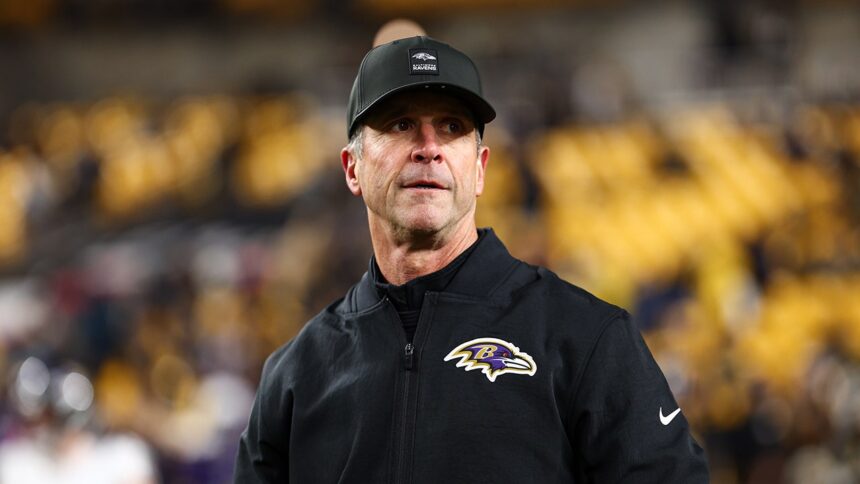
End of an Era: Baltimore Ravens Fire Legendary Coach John Harbaugh After 18 Seasons
The Baltimore Ravens, an organization synonymous with stability and defensive identity for nearly two decades, have made a seismic decision that reverberates through the entire NFL landscape. The team has fired head coach John Harbaugh, ending an 18-year tenure that included a Super Bowl championship and perennial playoff contention. The move, announced by owner Steve Bisciotti just two days after a crushing Week 18 loss, signals a profound philosophical shift for a franchise at a crossroads.
A Heartbreaking Finale and the Weight of Expectations
The curtain fell on the Harbaugh era in the most brutal fashion possible. With the AFC North title on the line in the season’s final game, the Ravens hosted the rival Pittsburgh Steelers. In a storybook twist for Steelers fans, newly acquired quarterback Aaron Rodgers, leading a late-season surge, engineered a dramatic 26-24 victory. The win clinched the final AFC playoff spot for Pittsburgh, simultaneously crushing Baltimore’s division hopes and, ultimately, sealing their coach’s fate.
This loss was the culmination of a season where the Ravens’ performance, though solid, fell short of the organization’s lofty standards. Despite fielding a talented roster, inconsistencies, particularly in late-game situations, plagued the team. The immediate fallout has sparked intense debate, with voices like Colin Cowherd questioning if Rodgers can be trusted to end the Steelers’ playoff win drought. Yet in Baltimore, the conversation swiftly turned inward, leading to a monumental organizational reckoning.
For Bisciotti, the evaluation extended beyond a single heartbreaking loss. It was an assessment of trajectory, messaging, and the elusive “next step” for a team that has been very good, but not great enough, in recent years.
Steve Bisciotti’s Decision: A Statement of New Ambition
In his official statement, Steve Bisciotti framed the decision as one of the most difficult of his ownership tenure, emphasizing his deep personal and professional respect for Harbaugh. However, the core message was one of necessary change.
“Following a comprehensive evaluation of the season and the overall direction of our organization, I decided to make a change at head coach,” Bisciotti stated. He highlighted the incredible 18-year partnership but concluded that a new voice was needed to guide the Ravens into their next chapter.
This decision underscores several key realities in today’s NFL:
- Tenure is rare: An 18-year run with one franchise is almost unheard of, placing Harbaugh in a category with legends like Tom Landry and Bill Belichick.
- The “Good to Great” Barrier: Consistently making the playoffs is no longer enough. The pressure to win Super Bowls, especially with a quarterback on a rookie contract, is immense.
- Organizational Reset: Sometimes, even a great coach’s message can grow stale. A change can reinvigorate a building and provide a jolt to players and staff.
Bisciotti’s move is a bold gamble, trading known, high-floor competency for the uncertainty—and potential ceiling—of a new regime.
John Harbaugh’s Legacy: A Pillar of Consistency and Success
To view this decision solely through the lens of 2025 would be a disservice to John Harbaugh’s remarkable legacy. Hired in 2008 from the special teams coordinator role, he immediately transformed the Ravens’ culture.
His accomplishments are etched in franchise and league history:
- Super Bowl XLVII Champion (2012 season), defeating his brother Jim’s San Francisco 49ers in the “HarBowl.”
- Most wins in Ravens history, surpassing franchise originator Ted Marchibroda many years ago.
- 10 playoff appearances in 18 seasons, including three AFC Championship Game berths.
- A .600+ winning percentage, a mark of sustained excellence.
- Development of a distinct identity: His teams were always tough, disciplined, and fundamentally sound, particularly on defense and special teams.
Harbaugh navigated massive transitions, from the Joe Flacco era to the Lamar Jackson era, adapting his offensive philosophy to win with a uniquely dynamic quarterback. He was a leader of men, respected by peers and players alike. His legacy in Baltimore is secure; he will be remembered as the coach who brought a second Lombardi Trophy to the city and maintained a standard of excellence for nearly two decades.
What’s Next for the Ravens and the NFL Coaching Carousel?
The Ravens’ head coaching vacancy instantly becomes one of the most attractive in the league. The job features a franchise quarterback in his prime, a strong front office led by General Manager Eric DeCosta, and a passionate fanbase. Expect the search to be wide-ranging but focused on two primary archetypes:
The Offensive Innovator: The clear priority will be finding a coach who can maximize Lamar Jackson’s unparalleled skill set and design an offense that peaks in the postseason. Candidates with proven success developing quarterbacks and crafting creative schemes will be at the top of the list.
The CEO Leader: Given the strong existing structure, the Ravens may also seek a strong cultural leader who can manage all phases while delegating to top-tier coordinators, much like Harbaugh did successfully for years.
This firing also throws a massive new variable into the annual NFL coaching carousel. A job of this caliber will attract sitting coordinators from successful teams and potentially even big-name college coaches. Furthermore, John Harbaugh’s availability will be closely watched. While he may take a year to reset, his track record virtually guarantees he will be a coveted candidate for any team with an opening next cycle, should he choose to return.
A Franchise at a Crossroads
The firing of John Harbaugh is not an indictment of failure, but a declaration of renewed ambition. It is the NFL’s ultimate “what have you done for me lately?” business, where past glory provides only so much insulation. Steve Bisciotti has made the calculated choice that the risk of decline under the status quo now outweighs the risk of change.
For Ravens fans, this is the end of a familiar, successful era. The only coach a generation of fans has known is now gone, ushered out by a loss to a bitter rival and the relentless pursuit of a championship standard he helped establish. The pressure now shifts to the front office to nail this hire. The successor must not only fill the shoes of a franchise legend but also achieve the one goal that eluded Harbaugh in his final years: delivering another Super Bowl to Baltimore. The Harbaugh era is over. The quest to build an even greater one begins today.
Source: Based on news from Fox Sports.