Hartley’s Howl: The ‘Stupid’ Dismissal That Summed Up England’s Ashes Agony
The air in the Sydney Cricket Ground was thick with the scent of eucalyptus and English despair. On day four of the fifth Ashes Test, with the series long gone but pride still nominally on the line, England’s batting once again performed a familiar, frustrating pantomime. At the heart of the latest episode was Will Jacks, a debutant thrown into the deep end, and his dismissal that provoked a raw, unfiltered outburst from a voice synonymous with cricket’s most famous radio broadcast. For commentator Kevin Hartley, it was the final straw: a moment of such glaring “stupidity” it left him struggling for comprehension on Test Match Special.
A Debutant’s Dream Turns to a Nightmare in Two Balls
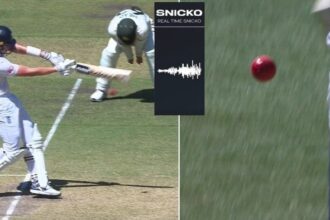
England, resuming on a precarious 218-4, needed substance. They needed time at the crease, a grinding of gears to salvage a draw from the wreckage of another heavy Ashes defeat. Instead, they got a two-ball nightmare. Will Jacks, the young Surrey all-rounder, walked in for his first Test innings. Two deliveries later, he was walking back. Facing Nathan Lyon, Jacks charged down the pitch to his second ball, aiming a wild, cross-batted heave into the leg side. The connection was poor, the execution worse. The ball spiralled high into the Sydney sky, a sitting duck for Pat Cummins at mid-on. The scoreboard read 219-5, and the commentary box erupted in disbelief.
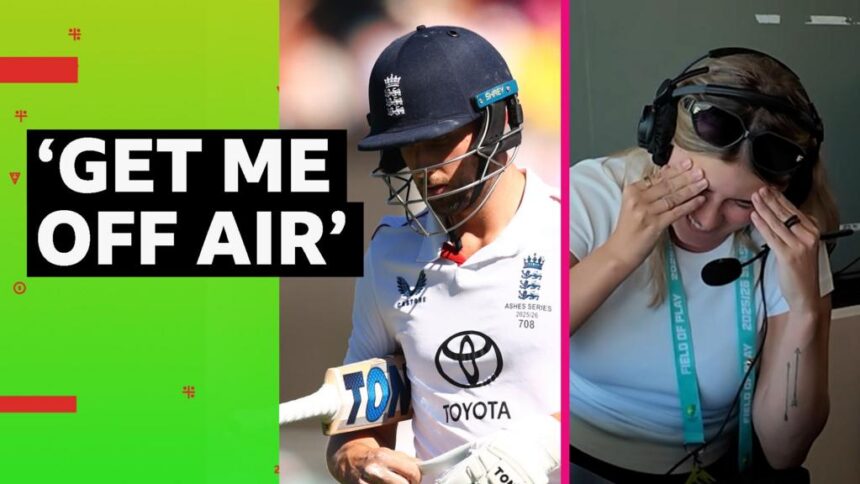
It was the kind of dismissal that transcends poor form; it was a catastrophic misjudgement of the match situation, the bowler, and the very fundamentals of Test match batting. For Kevin Hartley, a veteran observer known for his measured tones, the facade cracked. His voice, a blend of exasperation and bewilderment, captured the sentiment of a nation’s fans: “What on earth was that? That is just… stupid. Absolute stupidity. You’ve just arrived, the team needs you to dig in, and you try to hit the world’s best off-spinner into the stands with your second ball? I’m struggling to understand the thought process.”
The Commentary Box Unplugged: A Moment of Raw Frustration
Hartley’s outburst was more than just criticism; it was a symptom of a tour-long malaise. The Test Match Special box, a hallowed space of cake, camaraderie, and insightful analysis, is rarely a venue for such scathing condemnation. The reaction from his co-commentators—a stunned silence followed by murmured agreement—spoke volumes. This was not a hot-headed pundit on a television panel; this was the establishment’s patience snapping.
- The Context is King: Hartley’s fury was rooted in the game’s context. England were not chasing 300 in a T20; they were fighting for survival in a Test match.
- A Pattern of Self-Destruction: Jacks’ dismissal was not an isolated incident. It was a microcosm of England’s entire Ashes batting: a refusal to adapt, a reckless abandon that repeatedly played into Australian hands.
- The Debutant’s Burden: While sympathy exists for a young player in a high-pressure situation, the critique centred on the sheer lack of game-awareness expected at the elite level.
This moment laid bare the widening chasm between England’s stated “positive” intent and what many see as simple cricketing recklessness. Hartley, in his visceral reaction, became the voice of the traditionalist, arguing for the timeless virtues of temperament and match sense.
Expert Analysis: Where Does England Go From Here?
Jacks’ dismissal, and the reaction to it, forces a harsh spotlight onto England’s long-term project. The philosophy of aggressive batting, championed by Brendon McCullum and Ben Stokes, has provided thrilling victories and revitalised interest. However, the 2023 Ashes have been its sternest examination, revealing potentially fatal flaws when conditions demand grit over glamour.
The fundamental question is one of flexibility. Can this England team toggle between gears? The great teams of any era possess the ability to attack when the moment is right and to graft when the situation demands. England in Australia showed only one setting: full throttle. When it worked, as in Stokes’ miraculous innings at Lord’s, it was breathtaking. But more often, as with Jacks in Sydney, it led to a procession of soft dismissals that betrayed a lack of strategic depth.
Furthermore, the selection policy comes under scrutiny. Thrusting a relative rookie like Jacks into a cauldron of Ashes pressure, with the series lost and morale fragile, was a high-risk move. His dismissal suggests a player perhaps over-eager to impress, to fit into the team’s hyper-aggressive mould from ball one—a mindset that proved disastrous.
Predictions: A Reckoning or More of the Same?
The fallout from this Ashes defeat, punctuated by moments like the “stupid” Jacks dismissal, will define English cricket for the next two years. Two paths lie ahead:
Path One: The Doubling Down. The leadership could view this as a necessary growing pain. They may argue that with better execution and slightly kinder luck, their approach would have yielded better results. Expect continued selection of aggressive players, with an emphasis on “fearless” cricket regardless of venue or match situation. The results will be spectacularly inconsistent.
Path Two: The Nuanced Evolution. The more likely, and necessary, outcome is a subtle recalibration. The core philosophy of positivity need not be abandoned, but it must be tempered with pragmatism. This means:
- Developing situational awareness in young batsmen.
- Valuing the art of the leave and the defensive block as attacking weapons in their own right—by preserving wickets.
- Selecting batsmen with proven first-class temperaments to complement the stroke-makers.
The prediction here is for evolution. The stinging critiques from respected voices like Kevin Hartley are not easily ignored. They echo in boardrooms and in the public consciousness. England will likely seek a hybrid model: a team that can blast opponents away at home but possesses the tools to win ugly on the road.
Conclusion: More Than Just a Dismissal
Will Jacks’ two-ball duck in Sydney will be a footnote in Ashes history. But the reaction it provoked from within the Test Match Special commentary box will resonate far longer. Kevin Hartley’s struggle to understand the “stupidity” of the shot was the sound of a breaking point. It was the culmination of a series where England’s batting often seemed an exercise in self-sabotage, prioritizing style over substance to its own detriment.
This moment serves as a stark parable for the current English Test side. Aggression without intelligence is just recklessness. Freedom without responsibility leads to collapse. As England picks through the ashes of another failed Australian campaign, they must listen to the frustration in Hartley’s voice. It was not just the anger of a commentator witnessing a poor shot; it was the lament of a cricket lover watching a team forget how to play the long game. The road to redemption begins not by abandoning their identity, but by smartening it up. The alternative is more stupidity, and more sorrow, in commentary boxes and on scorecards for years to come.
Source: Based on news from BBC Sport.