The Grit and Grind of No. 35: Trevor Booker’s Brief, Impactful Brooklyn Nets Tenure
In the sprawling tapestry of the Brooklyn Nets jersey history, certain numbers resonate with the echoes of superstars, their legacies woven into the very fabric of the franchise. Others tell quieter, yet profoundly important, stories of the players who embodied the nightly struggle, the unheralded effort that defines a team’s character. The journey of jersey No. 35 is one of the latter. Worn by nine different players over the decades, it found a perfect, if temporary, home on the broad shoulders of Trevor Booker during the 2016-17 season. In an era of transition for the Nets, Booker wasn’t just a player; he was an attitude—a burst of relentless energy and veteran grit that left an indelible mark on a team searching for an identity.
From the Palmetto State to the Borough of Brooklyn
Trevor Booker’s path to Brooklyn was a testament to persistence and cultivated skill. A standout at Clemson, where he finished as the school’s all-time leader in blocks and rebounds, Booker was selected 23rd overall in the 2010 NBA Draft by the Minnesota Timberwolves. His rights were immediately traded to the Washington Wizards, where he spent his first four seasons carving out a role as a high-motor, undersized power forward. A subsequent stint with the Utah Jazz further refined his game, emphasizing his defensive versatility and knack for offensive rebounding. By the summer of 2016, Booker had established himself as a reliable, physical presence—a player whose value often exceeded the box score. The Brooklyn Nets, under new head coach Kenny Atkinson, were embarking on a gritty rebuild focused on player development and culture. They identified Booker as the perfect veteran to set that tone, signing him to a two-year, $18 million deal.
His arrival coincided with a pivotal moment in franchise lore. The Nets, carrying the rich history of the ABA’s New Jersey Americans, the New York Nets of Julius Erving, and the New Jersey Nets of Finals appearances, were now fully invested in building a new, self-sustaining future in Brooklyn. Booker, wearing No. 35, became an immediate cornerstone of that project.
The Engine of “Gritty Gets Pretty”
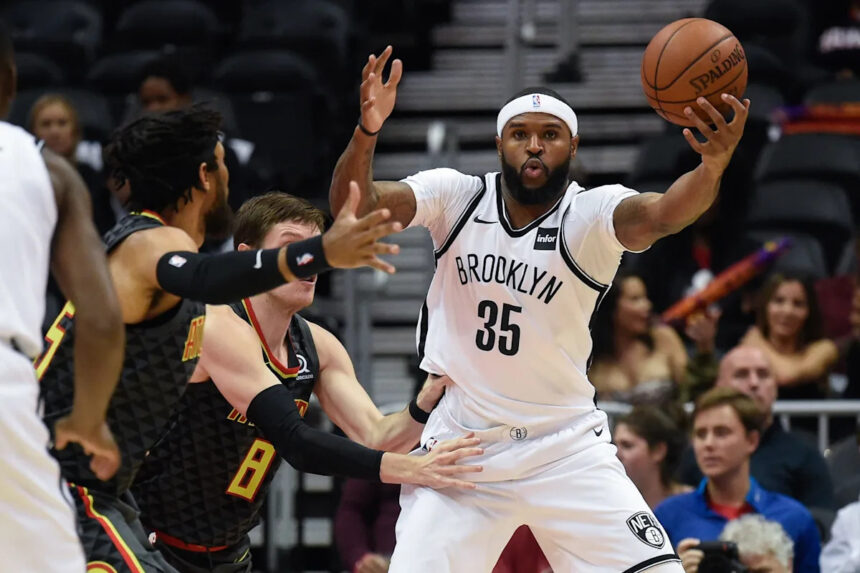
On a team not destined for the playoffs in the 2016-17 season, Trevor Booker’s impact was measured in effort, leadership, and palpable intensity. He started 43 of the 71 games he played for Brooklyn, averaging 10.0 points and a team-leading 8.0 rebounds in just 24.7 minutes per game. But these numbers only tell half the story. Booker was the embodiment of Coach Atkinson’s “Gritty Gets Pretty” mantra.
- Relentless Rebounding: At 6’8″, Booker often battled much taller opponents, using his exceptional strength, timing, and tenacity to carve out space. He ranked among the league’s best in offensive rebounding percentage, generating crucial second-chance opportunities for a team that needed them.
- Defensive Versatility: In an NBA trending toward switchability, Booker was a prototype. He could credibly guard centers in the post, chase power forwards on the perimeter, and provide help-side rim protection with his explosive leaping ability.
- Veteran Presence: On a roster filled with young players like Caris LeVert and Isaiah Whitehead, Booker’s professionalism was invaluable. He played hard every single night, setting a standard for preparation and competitiveness that resonated throughout the locker room.
His style of play made him an instant fan favorite at the Barclays Center. Every dive for a loose ball, every thunderous put-back dunk, and every emphatic chest-pump after a hustle play energized the building. In a season of development, Booker provided consistent, watchable heart.
A Sudden Departure and Lasting Legacy
The business of basketball, especially for a rebuilding franchise, often interrupts narrative arcs. On December 7, 2017, just 18 games into his second season with the Nets, Booker was traded to the Philadelphia 76ers in a deal that brought back draft capital—the lifeblood of Brooklyn’s long-term plan. His departure was sudden, a stark reminder that even culture-setters are assets in a strategic rebuild.
Yet, his legacy within the Nets’ organization endured. Trevor Booker’s tenure in Brooklyn, though brief, was a masterclass in how a role player can influence a team’s trajectory. He didn’t just fill a stat sheet; he helped establish a baseline of effort and toughness that would become a hallmark of the Kenny Atkinson era. The players who developed alongside him absorbed the lesson that NBA survival is earned through relentless activity. When the Nets later ascended to playoff contention, the foundation had been partly poured by the hard-hat mentality of players like Booker.
No. 35 in Nets History: A Number of Substance Over Stardom
Placing Booker’s chapter within the broader history of Nets jersey No. 35 reveals a fascinating pattern. This is not a number of flashy scorers or perennial All-Stars. It is a number worn by workers. Before Booker, it was donned by hard-nosed contributors like Jamie Feick, the rebounding specialist of the early 2000s Nets, and Reggie Evans, another player whose legendary rebounding and physicality made him a cult hero in Brooklyn for a season. The number carries a DNA of blue-collar labor.
Trevor Booker fit this lineage perfectly. He was the modern iteration of the Nets’ No. 35 archetype: the energetic, defensive-minded big who does the dirty work. In the franchise’s 52-number history, worn by over 600 players, certain jerseys tell the story of championships (No. 5, No. 32) and others tell the story of iconic talent (No. 7). No. 35, particularly in its Brooklyn incarnation, tells the story of the grind.
Expert analysis of successful rebuilds often highlights the importance of “culture carriers”—veterans who accelerate development by showing, not just telling. Trevor Booker was a premier culture carrier for the Nets. His influence helped transition the team from the aftermath of a win-now era into a respected, hard-playing unit that could develop talent and compete nightly. His style of play was a perfect bridge between eras, connecting the franchise’s gritty ABA roots to its modern, effort-based identity.
Conclusion: The Enduring Value of a Net for a Season
In the grand, half-century history of the franchise, Trevor Booker’s 88 games in a Nets uniform are a blink. But his impact on the team’s culture during a formative period was profound. He wore No. 35 not as a star, but as a standard-bearer. He reminded fans and teammates alike that basketball, at its core, is about effort, physicality, and joy in the competition. While the jersey has been worn since, Booker’s specific brand of explosive hustle and leadership during the 2016-17 season remains its defining Brooklyn moment to date.
As the Nets continue to evolve, the story of their jersey numbers is more than a list of names. It’s a chronicle of identity. And for jersey No. 35, the chapter written by Trevor Booker is one of foundational grit—a short, powerful paragraph that helped set the stage for the prettier chapters to come. In Brooklyn, they remember the dunks, the rebounds, and the sheer force of will. They remember the season No. 35 was synonymous with Trevor Booker’s undeniable heart.
Source: Based on news from Yahoo Sports.