England at a World Cup Crossroads as Seismic India Semi-Final Looms
The air in Mumbai still carries a faint, sweet scent of gulal. The vibrant, powdered hues of Holi—the festival of colour that triumphantly heralds the arrival of spring—cling to the city’s corners, a vivid metaphor for renewal and dramatic change. As the music of celebration fades, a different, more intense symphony prepares to swell from the heart of downtown. On Thursday, the iconic Wankhede Stadium, a coliseum of cricketing dreams and nightmares, will host a collision of titans. The T20 World Cup semi-final between defending champions England and the relentless host nation, India, is more than a match; it is a seismic event that will define legacies and signal a potential changing of the guard.
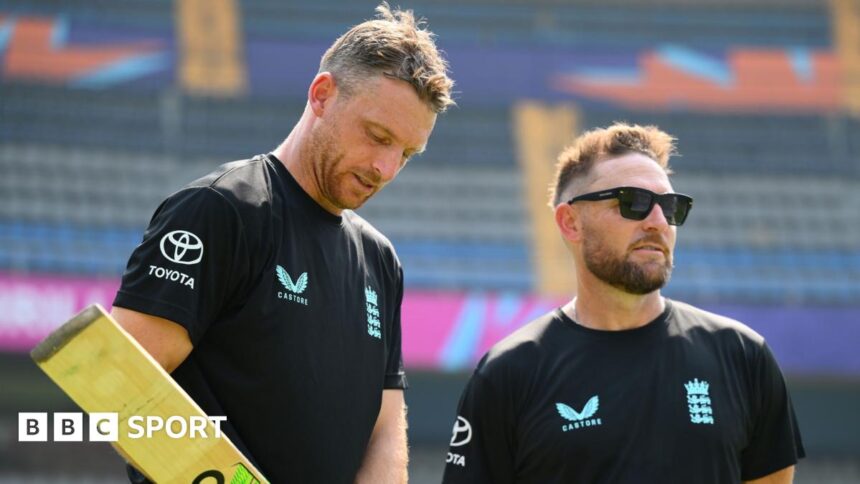
For England, the journey to this precipice has been fraught. Their title defence, stuttering and unconvincing at times, now faces its ultimate examination: an Indian juggernaut on home soil, in a cauldron of blue, under the glare of a billion expectations. At the centre of this storm stands their captain, Jos Buttler, a man whose personal form has dipped into a concerning trough at the worst possible moment. As Mumbai transitions from the kaleidoscope of Holi to the stark, competitive colours of international sport, England stands at a crossroads. One path leads to an improbable, glorious defence; the other to a crushing end of an era.
The Captain’s Conundrum: Buttler’s Silent Bat
The most pressing alarm bell for England is the profound silence of their leader’s willow. Jos Buttler, the destroyer of bowling attacks, the architect of England’s white-ball revolution, has registered single-digit scores in each of his past five T20I innings. This isn’t a minor slump; it’s a full-blown crisis of confidence at the pinnacle of the sport. For a team built on the bedrock of explosive starts, the captain’s inability to fire has crippled their powerplay momentum.
Analysts point to a tentative footwork, a slight delay in his famed hand-speed, and an uncharacteristic string of dismissals to both pace and spin. The psychological weight of leading the defence, combined with the relentless pressure of a World Cup, appears to be stifling his natural, instinctive game. The question for England is no longer if Buttler will fire, but how they can insulate the team if he doesn’t. Does this force a reshuffle at the top, or does management back their champion to rediscover his genius on the grandest stage? His battle against the metronomic Bhuvneshwar Kumar and the fiery Arshdeep Singh in the first few overs will be a micro-match within the war.
Wankhede: The Iconic Theatre of Dreams
Thursday’s battle will be staged at the Wankhede Stadium, an arena steeped in history and atmosphere. Nestled in the bustling heart of South Mumbai, its stands have witnessed World Cup finals, legendary innings, and the emotional farewell of the nation’s greatest son, Sachin Tendulkar. The pitch here is typically a batter’s paradise, true of bounce and begging to be hit. Short, straight boundaries promise a run-fest, a fact that should, in theory, play into England’s hands.
- High-Scoring Haven: Teams batting first have regularly posted and chased 200+ scores here. England’s power-hitters must relish this.
- Sea Breeze Factor: The famous Wankhede breeze, blowing across the ground, turns the bowling ends into a tactical nightmare. Captains must master its flow.
- Spin in the Middle: While pace-off may be punished, the large square boundaries offer a glimmer of hope for spinners like Adil Rashid and the crafty Indian duo of Kuldeep Yadav and Axar Patel.
However, the intangible factor is the crowd. A sea of blue will engulf the stadium, creating a wall of sound for every Indian boundary and a cavernous silence for every English one. How England’s relatively inexperienced players handle this visceral pressure will be crucial.
India’s Juggernaut vs. England’s Gambit
Standing in England’s path is a machine fine-tuned for this moment. India has been imperious, blending explosive batting with a multifaceted, clinical bowling attack. Virat Kohli’s return to transcendent form, combined with the fearless aggression of Suryakumar Yadav and the anchoring prowess of KL Rahul, presents a nightmare for any bowling attack. Their bowling, led by the peerless Jasprit Bumrah, possesses both firepower and guile.
England’s strategy, therefore, must be a high-risk gambit. They cannot out-steady India. Their only path to victory is to out-*brave* them.
Key Tactical Battles:
- England’s Powerplay vs. Bumrah & Co.: Can Salt, Hales, or a promoted Livingstone take down the new ball, negating Bumrah’s threat?
- Adil Rashid’s Middle-Overs Siege: Rashid must strangle Kohli and Suryakumar. His four overs could be the most valuable of the match.
- The Death Over Calculus: India has Bumrah and Harshal Patel. England has Sam Curran and Chris Jordan. Who blinks first?
England must embrace chaos. They may need to target India’s fifth bowler mercilessly, use innovative fields, and promote hitters like Livingstone or Moeen Ali to match-ups they favour. It is a strategy fraught with peril, but the only one that offers a light against this formidable opponent.
Prediction: A Festival of Fireworks or a Funeral for Champions?
Predicting this semi-final is a fool’s errand, yet the contours of destiny seem to lean heavily towards the host nation. India is playing with a potent mix of skill, confidence, and the overwhelming force of national will. They are the complete team in their own conditions.
For England to win, almost everything must go right. Jos Buttler needs a score. Their top three must win the powerplay. Adil Rashid must produce a spell for the ages. And they must hold every half-chance in the field. It is a monumental ask.
The more likely scenario sees India’s batting depth and bowling precision overwhelming an England side that has looked a half-step behind all tournament. The Wankhede crowd will become a roaring, celebrating entity, transforming the stadium from a theatre of dreams for England into an arena of stark reality. India’s journey feels ordained; England’s feels like a desperate, final stand.
Predicted Winner: India. Their balance, form, and the sheer weight of occasion should see them through to the final. Expect a high-scoring thriller where India’s bowling proves the decisive, championship-calibre difference in the final five overs.
Conclusion: The End of Winter, or the End of an Era?
Mumbai’s Holi festival celebrated the end of winter and the vibrant beginning of spring. On Thursday, at the Wankhede, another cycle may reach its conclusion. This semi-final represents a potential terminus for England’s white-ball dynasty that began in 2015. A victory would be their most spectacular triumph, a resurrection against all odds. A defeat, especially a comprehensive one, will prompt a painful period of introspection and likely regeneration.
For India, it is the next, inevitable step towards a coronation they have craved for over a decade. The city has shed its colours of celebration for the intense, focused blue of the national cricket team. The music of Holi has been replaced by the anticipatory roar of a nation expecting glory. England, at their crossroads, must find a performance not just of skill, but of spirit, to quiet that roar and forge a new path. If they cannot, the Wankhede will witness not just a cricket match, but the definitive passing of the torch.
Source: Based on news from BBC Sport.