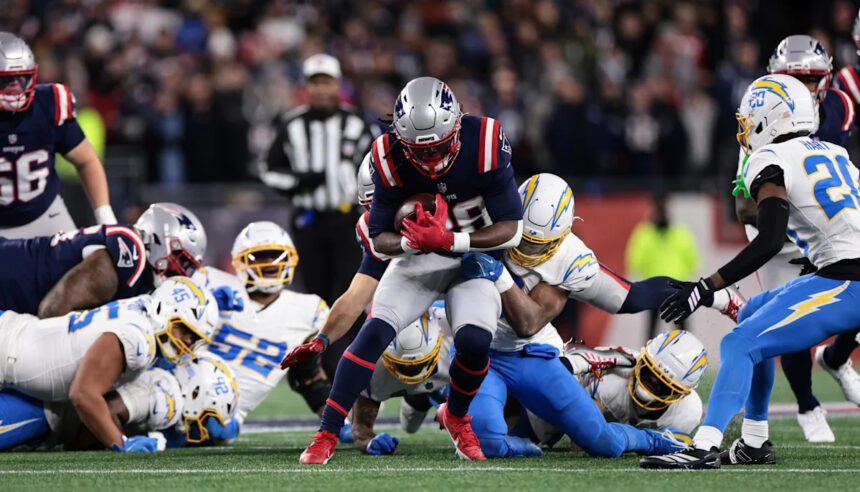
What We Learned from Patriots vs. Chargers: A Blueprint for January Survival
In the glitzy, offense-driven spectacle of the modern NFL, Sunday night’s Wild Card clash between the New England Patriots and Los Angeles Chargers was a stark, beautiful throwback. It was a game won not by a quarterback’s heroics or a highlight-reel catch, but in the trenches, through sheer defensive will. The Patriots’ 20-6 victory, the largest margin of the weekend, was less a football game and more a masterclass in playoff survival. While the scoreboard might suggest a straightforward affair, the contest revealed profound truths about both franchises, offering a clear blueprint for January success and a cautionary tale for those who neglect it. This was a game where philosophy clashed with personnel, and the result provided definitive lessons for the road ahead.
The Unbreakable Wall: Patriots’ Defense Imposes Its Will
Forget the final score for a moment. The entire narrative of this game was written on a single, critical sequence in the first quarter. Rookie quarterback Drake Maye, making his postseason debut, made a rookie mistake, throwing a costly interception deep in his own territory. The Chargers, with one of the league’s most efficient offenses, took over at the New England 10-yard line. The stage was set for an early, potentially demoralizing score.
What followed was a defensive manifesto. The Patriots’ unit, facing a short field and immense pressure, didn’t just bend; it solidified into an impenetrable wall. They stonewalled the Chargers, forcing a turnover on downs and taking over possession at their own 2-yard line. The game remained 0-0, but the psychological victory was monumental.
This stop wasn’t just a play; it was the game’s turning point. It announced that points would be a precious commodity. From that moment, the Patriots’ defense unleashed a relentless, suffocating performance:
- Dominant Pass Rush: They harassed Justin Herbert all night, racking up six sacks and countless pressures, disrupting the timing of the Chargers’ entire offense.
- Third Down Domination: The Chargers, who led the NFL in third-down conversion rate during the regular season, were rendered impotent, going a staggering 1-for-10 on the night. This statistic alone crippled Los Angeles’s ability to sustain drives.
- Forced Turnovers: Adding two forced fumbles to the critical fourth-down stop, the defense consistently created opportunities and erased Chargers’ momentum.
This performance underscored a timeless playoff truth: while offenses can win games, elite, disciplined defenses win championships. The Patriots proved they still possess that DNA.
Offensive Efficiency Trumps Explosiveness in Playoff Crucible
Let’s be clear: the Patriots’ offense was far from perfect. Drake Maye showed his youth with some erratic throws, and the unit settled for field goals too often in the red zone. However, in the context of this defensive struggle, they executed the only offensive philosophy that could win: mistake-averse, field-position football.
After the monumental goal-line stand, the offense embarked on a 98-yard drive. It didn’t end in a touchdown, but it consumed clock, flipped the field, and resulted in three points. This was the pattern all night. The offense understood its role as the supportive partner to a dominant defense.
Key to this was the running game and situational awareness. They avoided catastrophic mistakes after the early interception, managed the clock effectively in the second half, and, most importantly, never gave the Chargers a short field to work with. In a game where every yard was a battle, the Patriots’ offense won the hidden yardage war. They didn’t need to be spectacular; they needed to be smart and secure. This “complementary football” is a hallmark of Bill Belichick’s teams and remains a devastatingly effective formula in single-elimination football, where one turnover can end your season.
Chargers’ Fatal Flaws Exposed Under Playoff Lights
For the Los Angeles Chargers, this game was a painful re-run of a franchise horror film. A season of promise, yet again, dissolved into a playoff performance that highlighted their core weaknesses. The issues were systemic and glaring.
First, the much-maligned offensive line was exposed. Justin Herbert, one of the game’s most talented passers, spent the night under duress, rendering his arm talent moot. A quarterback cannot carry a team when he is constantly running for his life.
Second, the team’s lack of physical identity was fatal. When their finesse-based offense met the Patriots’ physicality, they had no counter-punch. They became one-dimensional and predictable. The failure on third down—their bread-and-butter during the season—showed an inability to win the tough, physical battles that define January.
Finally, the moment seemed too big for the Chargers’ structure. Contrast the Patriots’ calm, next-play mentality after Maye’s interception with the Chargers’ palpable frustration as the game wore on. This game served as a stark reminder that talent alone is insufficient. It must be coupled with toughness, schematic adaptability, and a mindset built for grind-it-out warfare. The Chargers, for all their stars, still lack that foundational grit.
Looking Ahead: Divergent Paths in the AFC Landscape
So, what does this mean for both teams moving forward? The paths couldn’t be more different.
For the New England Patriots, this victory validates their model. They have a championship-caliber defense that can travel and dominate any opponent. The questions now shift to Drake Maye and the offense. Can he develop quickly enough to provide more consistent scoring as they face stiffer competition? This win buys him invaluable experience and confidence. The Patriots have proven they can win a playoff game with a game-managing offense. The next step is evolving into a team that can win because of its quarterback. They are a dangerous, disciplined opponent that no one will want to face.
For the Los Angeles Chargers, the offseason questions are existential. This loss feels like a culmination, not an aberration. It will likely spur significant changes, potentially at head coach and along the offensive line. The mission is clear: they must build a team that can protect Herbert and develop a physical, resilient mentality to match his extraordinary talent. Until they do, they will remain a regular-season marvel and a postseason mystery.
Conclusion: The January Blueprint
The Patriots’ victory over the Chargers was more than just an advance to the Divisional Round. It was a 60-minute tutorial on playoff football. In an era obsessed with offensive innovation, New England delivered a powerful reminder that defensive dominance, situational mastery, and mental toughness are the non-negotiable currencies of January.
The Chargers, with their glittering roster, were out-schemed, out-hit, and out-willed. The Patriots, with their rookie quarterback and relentless defense, followed a time-tested blueprint to survive and advance. In the end, the lesson was clear: in the playoff crucible, where margins are razor-thin and pressure is immense, the team that can impose its physical will and execute under duress is the team that moves on. The New England Patriots authored that lesson on Sunday night, and the rest of the AFC has been put on notice.
Source: Based on news from Yahoo Sports.