World Snooker Dismisses Masters Table Concerns Amidst Legendary Criticism
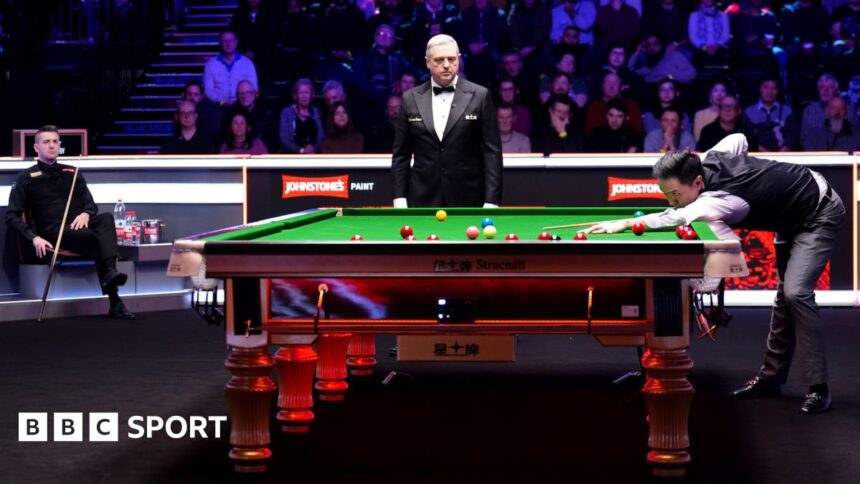
The hallowed green baize of Alexandra Palace, home to snooker’s prestigious Masters, is meant to be a stage of pure sporting theatre. Yet, as the second Triple Crown event of the season unfolded, a familiar spectre re-emerged: intense scrutiny over the playing surface itself. Following first-round exits for marquee names Shaun Murphy and Mark Selby, the conversation swiftly pivoted from stunning upsets to suspected table ailments. In a firm rebuttal, World Snooker has stated it found “no” issues with the standard of the table, setting the stage for a classic clash between player experience and administrative assurance.
A Palace of Upsets and Unease
The Masters began with a bang, or perhaps more accurately, a series of unexpected thuds as the defending champion and the reigning UK title holder were sent packing. Shaun Murphy fell 6-5 to China’s Wu Yize, while Mark Selby suffered a 6-1 defeat to compatriot Xiao Guodong. While the rise of Chinese snooker is a compelling narrative, the nature of the matches drew a more technical eye. Observers noted peculiarities in ball roll, a theme that has surfaced at several tournaments this season. The table conditions became an immediate talking point, overshadowing the victors’ achievements and pointing to a potential variable influencing the sport’s highest level.
This is not an isolated incident. Throughout the current campaign, whispers and sometimes outright complaints about cloth speed, cushion response, and ball reaction have peppered the circuit. The Masters, however, with its concentrated field of elite stars and immense pressure, magnifies every nuance. When legends of the game begin to voice concerns, the snooker world sits up and takes notice.
The Voices of Experience: Hendry and Davis Weigh In
The criticism levelled at the Alexandra Palace table did not come from disgruntled losers, but from two of the sport’s most revered figures: Stephen Hendry and Steve Davis. With thirteen world championships between them, their understanding of table mechanics is unparalleled.
- Stephen Hendry, commentating for the BBC, pinpointed specific issues. He suggested balls were drifting off line unnaturally and, more notably, that they were “clinging” to cushions before eventually dropping into corner pockets. This kind of behavior indicates potential inconsistencies in the cushion rubber or the nap of the cloth.
- Steve Davis, the six-time world champion, echoed these sentiments. He expressed frustration that the focus was shifting from player skill to equipment uncertainty, stating that when professionals at this level are questioning the table’s reliability, it undermines the contest.
Their analysis moves the discussion beyond mere speculation. For them, the evidence was visible in the shot outcomes and the body language of the players, who were often left looking perplexed at the table’s response. This expert testimony carries significant weight and frames the governing body’s dismissal as a direct contradiction of lived, expert observation.
World Snooker’s Firm Stance and the Underlying Tension
In response to the growing chatter, World Snooker issued a definitive statement. A spokesperson said, “We have checked the table and there are no issues. The conditions are the same for both players.” This stance is rooted in the fundamental principle of sporting fairness: a level playing field, literally in this case. The organization’s position is that their technical officials have inspected the equipment and found it to be within the rigorous standards required for a Triple Crown event.
This creates a fascinating tension. On one side, you have the empirical, instrument-tested assurance from the sanctioning body. On the other, you have the collective, nuanced experience of the players and former champions who trust their eyes and decades of instinct. The core of the dispute lies in interpretation. What World Snooker may deem an acceptable parameter within manufacturing tolerances, a player like Hendry might interpret as a flaw that materially affects play. This season’s repeated scrutiny of table conditions suggests a growing sensitivity and perhaps a need for clearer communication or even revised standards to satisfy the modern game’s precision demands.
Predictions: Impact on the Tournament and Beyond
How will this controversy shape the remainder of the Masters and the season ahead?
First, adaptation becomes the ultimate test. The players left in the field must now block out the noise and adapt to the table as it is. The mental fortitude to accept bad bounces or unusual rolls could be as important as potting skill. Those who can divorce themselves from the debate and simply play the conditions presented to them will hold a distinct advantage.
Second, expect heightened vigilance. Every missed pot, every strange kiss will be analyzed through the lens of this confirmed suspicion. Broadcasters will likely have microphones tuned for any player comments, and the pressure on table technicians will be immense. The Masters at Alexandra Palace will now be remembered not just for its winner, but for this underlying narrative of trust in the equipment.
Finally, a reckoning on standards is likely. The persistent nature of these complaints this season indicates this is more than a one-off. Post-tournament, we can expect the World Professional Billiards and Snooker Association (WPBSA) to engage in deeper dialogue with players and legends. The goal will be to align perceived quality with measurable benchmarks, ensuring that the only talk at future events is about breathtaking breaks and tactical genius, not uncertain conditions.
Conclusion: The Baize Must Be Beyond Reproach
The drama at the Masters extends far beyond the scorelines. While World Snooker has officially dismissed concerns, the authoritative criticism from figures like Hendry and Davis cannot be so easily brushed aside. It highlights a critical vulnerability in a sport where millimeter precision is paramount. For snooker to maintain its integrity and its captivating appeal, the sanctity of the table must be absolute. The standard of the table is not merely a piece of equipment; it is the canvas upon which the sport’s artistry is painted. When the masters of the craft question the quality of that canvas, the governing body must do more than simply declare it fit for purpose. It must prove it, through transparency, collaboration, and an unwavering commitment to perfection. The rest of this Masters tournament will be played out under a microscope, with every roll of the ball scrutinized, serving as a potent reminder that in a game of such fine margins, confidence in the stage is just as crucial as talent upon it.
Source: Based on news from BBC Sport.