Agyemang’s Arsenal Return: Navigating the Cruelty and Cruciality of the ACL Pathway
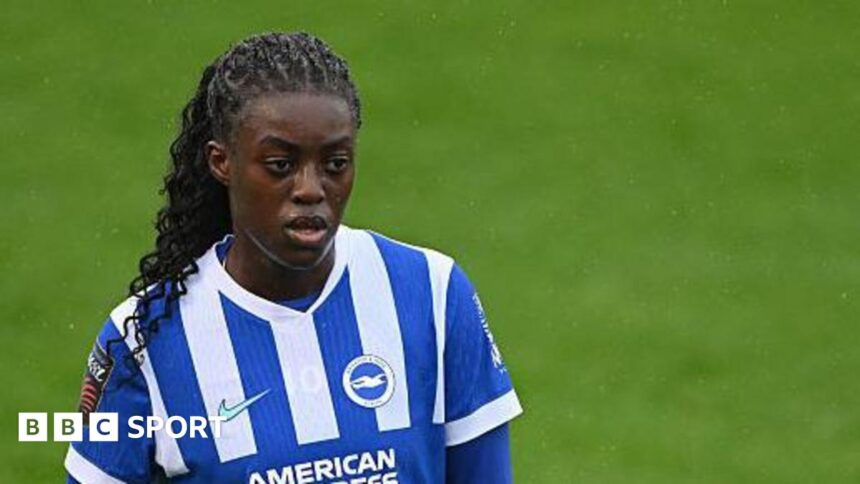
The journey of a young footballer is rarely a straight line. For the brightest prospects, it is often mapped with exhilarating ascents, challenging detours, and, sometimes, devastating roadblocks. For Michelle Agyemang, a striker whose name has been whispered with reverence in England’s youth setups for years, her path has taken a painfully familiar, yet profoundly personal, turn. The 19-year-old has returned to her parent club, Arsenal, not in triumph, but in recovery, after a ruptured anterior cruciate ligament (ACL) abruptly halted her promising loan spell at Brighton & Hove Albion. This isn’t just a club transfer story; it’s a pivotal chapter in a young athlete’s career, a test of resilience, and a stark reminder of the physical toll at the highest level of the women’s game.
A Promise Interrupted: Agyemang’s Rise and the Sudden Fall
Michelle Agyemang’s trajectory had been one of steady, impressive progression. Bursting onto the scene with Arsenal’s academy, her powerful frame, technical grace, and natural eye for goal marked her as a future cornerstone for both club and country. A successful loan to Brighton in the 2022/23 season paved the way for a highly anticipated return to the Seagulls for the current campaign. This time, she was not just a prospect but a key starting figure for manager Melissa Phillips.
The statistics, though limited by the cruel timing of her injury, tell a story of integration and impact. Starting in five of Brighton’s six WSL games before October, Agyemang was becoming a consistent threat in one of the world’s most demanding leagues. Her single goal in eight total appearances only scratches the surface of her contribution, which included hold-up play, intelligent movement, and a physicality that belied her age. Then, while representing England at the youth level—the very stage meant to showcase her burgeoning talent—the non-contact twist, the sudden collapse, and the dreaded diagnosis followed: a ruptured ACL, ruling her out for the season.
This narrative is heartbreakingly common. Yet, for Agyemang, the context adds layers. She was in the crucial phase of proving she could be a week-in, week-out starter in the WSL, a platform essential for her senior England ambitions. The injury halted not just her season, but her momentum, her rhythm, and her visible path to the pinnacle of the game.
The Significance of the Arsenal Homecoming
Brighton could have facilitated her rehabilitation. So why the formal return to North London? This decision is layered with strategic, medical, and psychological importance.
- World-Class Medical Infrastructure: Arsenal Women operate within the elite ecosystem of a top men’s Premier League club. This grants Agyemang access to some of the finest sports medicine professionals, rehabilitation facilities, and cutting-edge recovery technology available in football. The consistency of care from a club deeply invested in her long-term future is invaluable.
- A Familiar Support System: Rehabilitation from an ACL injury is as much a mental battle as a physical one. Being at Arsenal means being surrounded by familiar faces: long-term coaches, long-time teammates like Lotte Wubben-Moy and Lia Wälti (who have navigated their own serious injuries), and a support staff who have known her since her academy days. This environment can provide crucial emotional stability during the isolating grind of recovery.
- Contractual and Developmental Oversight: As her parent club, Arsenal ultimately hold the reins on her long-term development. Overseeing this critical rehabilitation phase allows them to manage every detail, ensuring her return to play aligns perfectly with their plans for her future, whether that involves reintegration into the first-team squad or another carefully chosen loan move.
This move is a clear statement: Arsenal view Michelle Agyemang as a significant part of their future, and they are investing their top-tier resources to ensure she returns stronger.
Expert Analysis: The ACL Epidemic and the Road Ahead
To understand Agyemang’s challenge, one must acknowledge the broader context. ACL injuries in women’s football are not an anomaly; they are an epidemic. Studies suggest female athletes are at a 2-8 times higher risk of ACL rupture than their male counterparts, due to a complex interplay of anatomical, hormonal, and biomechanical factors. The demanding, year-round calendar of modern football, with minimal off-season breaks, exacerbates this risk.
For a player of Agyemang’s profile—a dynamic, powerful striker reliant on explosive changes of direction and jumping—the rehabilitation protocol will be meticulous. It will progress from initial rest and surgery, through painstaking strength and mobility work, to non-contact ball work, and eventually, integrated team training. The final and most psychological hurdle is regaining the confidence to make those same explosive movements without fear.
Historical precedent offers both caution and hope. Arsenal’s own Vivianne Miedema and Beth Mead have returned from ACL tears to the highest level, though their journeys back to peak sharpness were measured in years, not months. The key for Agyemang will be patience—a virtue in short supply for a teenager eager to make her mark. The club will likely target a full pre-season for her return, ruling out any late-season appearances and focusing on a clean slate for the 2024/25 campaign.
Predictions: What Does the Future Hold for Agyemang?
Projecting the career of a 19-year-old after a major injury requires cautious optimism. The raw talent that made her a England youth international and a WSL starter at 18 does not vanish with a torn ligament. However, her immediate future will be reshaped.
Firstly, her next playing destination is a fascinating question. While a return to Brighton, where she has established rapport and understanding, seems logical, Arsenal’s own striker needs will be reassessed. With Stina Blackstenius and Miedema leading the line, another loan to a WSL side where she can guarantee starting minutes post-recovery is the most likely scenario. The goal will be to pick up where she left off: as a regular starter proving her worth.
Secondly, her style may evolve. Many players return from ACL injuries with a heightened football intelligence, having studied the game intensely from the sidelines. Agyemang may develop a more nuanced positional sense, relying less on pure physicality and more on tactical anticipation. This could, in the long run, make her a more complete forward.
Most importantly, this experience, as harrowing as it is, could forge a mental resilience that defines her career. The discipline required to navigate a 9-12 month rehabilitation is unparalleled. If she channels this focus into her game, Arsenal and England may not just get back the promising striker they lost, but a battle-hardened, determined, and even more formidable version.
Conclusion: A Detour, Not a Dead End
Michelle Agyemang’s return to Arsenal is a story of setback, but it is fundamentally a story of protection and investment. In recalling her, Arsenal have thrown a protective arm around one of their most prized assets during her most vulnerable period. The road from the treatment table back to the Emirates Stadium pitch will be long, lonely, and fraught with frustration. Yet, it is a road well-trodden by warriors of the women’s game who have come back to reach their highest peaks.
For fans and observers, Agyemang’s journey now becomes one of patience and support. The goals, the dazzling runs, and the headlines will come in time. For now, the most important work happens away from the cameras, in the gyms and on the training pitches of London Colney. This injury is a cruel detour on Michelle Agyemang’s path, but with the right support system now firmly around her, it is far from a dead end. Her story, perhaps, is only just beginning to reveal the depth of her character.
Source: Based on news from BBC Sport.