What Now for Rahm, DeChambeau and LIV Golf’s Biggest Names?
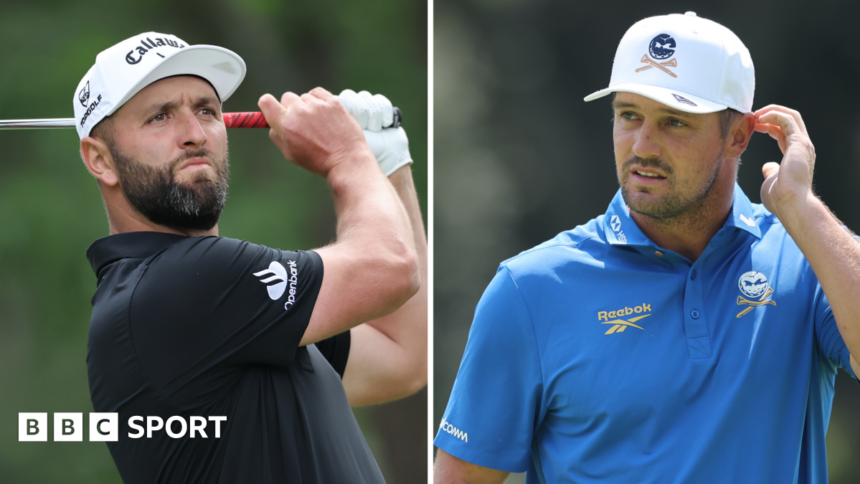
The champagne has gone flat. The pyrotechnics have fizzled. For nearly five years, LIV Golf was the disruptor, the billionaire’s playground that tore the professional game apart. Backed by the seemingly limitless coffers of the Saudi Arabian Public Investment Fund (PIF), it lured some of the biggest names in the sport with contracts that defied belief. Jon Rahm, the stoic Spaniard, took a reported £450m deal. Bryson DeChambeau, the mad scientist of the fairways, signed for a reported £125m. They were the faces of the revolution.
- The Unraveling of the Saudi-Backed Promise
- Jon Rahm: The Reluctant Revolutionary Facing a Dead End
- Bryson DeChambeau: The Scientist Who Found His Lab
- The Ripple Effect: Brooks, Phil, and the Middle Class of LIV
- Expert Analysis: The Only Three Outcomes for LIV Golf
- Conclusion: The Golden Handcuffs Are Tightening
But now, as the PIF claims it “forever changed the game of golf,” a stark reality is setting in. The future of LIV Golf has never been less certain. The merger framework agreement between the PGA Tour, DP World Tour, and PIF has stalled. Political winds have shifted. The legal battles are over, but the strategic uncertainty is deafening. For Rahm, DeChambeau, Brooks Koepka, and the entire LIV roster, the question is no longer about winning the money. It is about winning the future. What happens to a league that was built on guaranteed cash when the well of investment runs dry?
The Unraveling of the Saudi-Backed Promise
Let’s be blunt: LIV Golf succeeded in one specific, devastating mission. It exposed the fragility of the PGA Tour’s monopoly. PIF’s £3.8 billion investment over nearly half a decade didn’t just buy players; it bought leverage. It turned the pro game upside down, forcing the PGA Tour to scramble for its own £2.5 billion war chest from Strategic Sports Group (SSG) just to stem the bleeding.
However, the narrative has shifted. The original “golf but louder” model—54-hole no-cut events with team shotgun starts—has failed to capture the mainstream audience it craved. Television ratings remain a fraction of PGA Tour events. The sponsorship ecosystem is thin. And most critically, the PIF is now engaged in complex negotiations to merge its golf assets with the very establishment it sought to destroy.
The key fact that every player in the LIV locker room knows is this: the PIF does not need LIV Golf to exist to achieve its goals. The Saudi fund wants a seat at the global golf table, access to major championships for its players, and the legitimacy that comes with a unified sport. If a merger or investment into the PGA Tour gives them that, what is the point of continuing to burn £500m a year on a standalone league that bleeds money?
This is the existential crisis. The players who cashed the massive signing bonuses are safe. But the league itself? The structure? The promise of a 14-event global schedule? It is all hanging by a thread.
Jon Rahm: The Reluctant Revolutionary Facing a Dead End
Jon Rahm’s move to LIV was the most seismic shift in the sport’s history. He was the reigning Masters champion, the world number three, and a man who publicly stated he played for legacy, not money. When he took the reported £450m deal, it felt like the final nail in the PGA Tour’s coffin. But now, Rahm looks like a man trapped between two worlds.
Rahm is a competitor. He wants to win majors. He wants to be ranked number one. Yet, since joining LIV, his Official World Golf Ranking (OWGR) has plummeted. He is no longer earning points at LIV events, which means securing spots in future majors—outside of his lifetime exemption for the Masters—becomes a mathematical nightmare. He cannot play the DP World Tour regularly without facing sanctions. He cannot play the PGA Tour unless the merger is finalized.
What happens next for Rahm? The most likely scenario is that he becomes the poster boy for a “re-integration” deal. If the PIF and PGA Tour strike a deal, Rahm will be the first player granted a pathway back. The Tour needs his star power. He needs the OWGR points. I predict we will see a “Rahm Rule” created—a special exemption that allows a select number of LIV players to compete in 10-12 PGA Tour events per year without being full members.
But if the merger collapses? Rahm is stuck. He is the highest-paid athlete in the world who cannot play his way into the US Open without a qualifying tournament. His legacy is being written in a vacuum. The man who was supposed to be the next Seve is now the most expensive pawn in a geopolitical chess game.
Bryson DeChambeau: The Scientist Who Found His Lab
Bryson DeChambeau’s journey is perhaps the most ironic. He was the villain of the PGA Tour—slow, arrogant, obsessed with physics. He left for LIV to escape the hate and the rules. And strangely, LIV saved his career. He has won on the circuit. He has become a fan favorite on the YouTube and streaming side of the sport. His 2024 US Open victory was a masterclass in grit, proving he still has the major-championship chops.
But Bryson’s value to LIV was always about entertainment. He brings the “bomb and gouge” style that the 54-hole format loves. He is the perfect soldier for a league that wants to be more like the NFL—fast, loud, and team-oriented.
The big question for DeChambeau is the format. If LIV folds, does Bryson go back to the PGA Tour? He burned that bridge spectacularly. He sued the Tour. He called its commissioner a liar. A return would require a massive PR campaign and a humble pie the size of a golf cart. More likely, DeChambeau becomes the face of a “LIV 2.0”—a smaller, niche tour that focuses on content creation, exhibition matches, and the Riyadh-based events. He is the only LIV star who has successfully monetized his personal brand outside of the league (his YouTube channel is massive).
Prediction: DeChambeau will be the last man standing for LIV. If the league shrinks to four or five events a year, he will be the captain of the Crushers GC, playing a hybrid schedule of majors, The Match, and LIV events. He doesn’t need the league to survive. He needs the platform to stay relevant.
The Ripple Effect: Brooks, Phil, and the Middle Class of LIV
Beyond the superstars, LIV has a roster of players who took the money but now face a terrifying cliff. Brooks Koepka is a five-time major champion, but his body is breaking down. He has won on LIV, but his competitive fire seems dimmed. He will likely retire if the league collapses, content with his millions and his legacy.
Then there are the “middle class” of LIV: players like Patrick Reed, Talor Gooch, and Ian Poulter. These are men who were top-50 players who took the cash. They are now unranked, unable to play the majors, and have no pathway back. For them, the end of LIV is a disaster. They have no leverage. The PGA Tour will not welcome them back without severe penalties. They are the true victims of this saga.
Consider the bullet points of their reality:
- No OWGR points: They are invisible to the ranking system.
- No major exemptions: Unless they win a major, they are locked out.
- No DP World Tour access: They resigned their memberships.
- No guaranteed contracts: If the PIF pulls the plug, the multi-year deals become worthless.
This is the human cost of the disruption. The PIF claimed it “forever changed the game.” It did. It made a handful of men incredibly wealthy. But it also created a lost generation of players who are now professional nomads.
Expert Analysis: The Only Three Outcomes for LIV Golf
After years of covering this saga, I see three distinct paths forward. None of them are good for the status quo.
1. The Full Merger (30% Probability): The PIF buys a stake in the PGA Tour Enterprises. LIV Golf is dissolved. Rahm, DeChambeau, and Koepka are allowed back to the PGA Tour under a “re-entry” program with fines and suspensions. The team concept is folded into a handful of PGA Tour events. This is the cleanest outcome, but it requires the PGA Tour to swallow its pride and the US Justice Department to approve the deal.
2. The Hybrid Model (50% Probability): LIV Golf continues as a “premier league” of 8-10 events, mostly in the Middle East and Asia. The PIF funds it, but at a reduced level. The biggest stars play both LIV and a limited PGA Tour schedule via special exemptions. This is messy, confusing for fans, and creates a two-tier system of golf that will never be truly unified.
3. The Collapse (20% Probability): The PIF walks away. The league folds. Rahm, DeChambeau, and others are left with their signing bonuses but no competitive outlet. They become “exhibition golfers,” playing in The Match series and the Saudi International. The PGA Tour wins the war, but the sport is permanently fractured. This is the nightmare scenario for everyone except the lawyers.
Conclusion: The Golden Handcuffs Are Tightening
The era of unlimited money in golf is ending. The PIF’s £3.8bn investment was a shock and awe campaign, not a sustainable business model. The players who cashed in—Rahm, DeChambeau, Koepka—will be fine financially. But they are now facing a career-defining crossroads. Do they fight to save a league that is bleeding relevance? Or do they beg for forgiveness and return to the establishment they tried to destroy?
The answer is clear: the biggest names on LIV will be the ones who adapt. Rahm will find his way back to the PGA Tour, because the Tour needs him. DeChambeau will carve out a niche as golf’s ultimate showman. The rest? They will be forgotten, a footnote in the history of a sport that was forever changed by billions of dollars and a whole lot of ego.
For now, the waiting game continues. The silence from the PIF is deafening. And for the men in the black and green LIV polos, that silence is the loudest sound of all. The party is over. The hangover is just beginning.
Source: Based on news from BBC Sport.