Why the Seahawks Pulled Sam Darnold: A Calculated Move in a Historic Rout
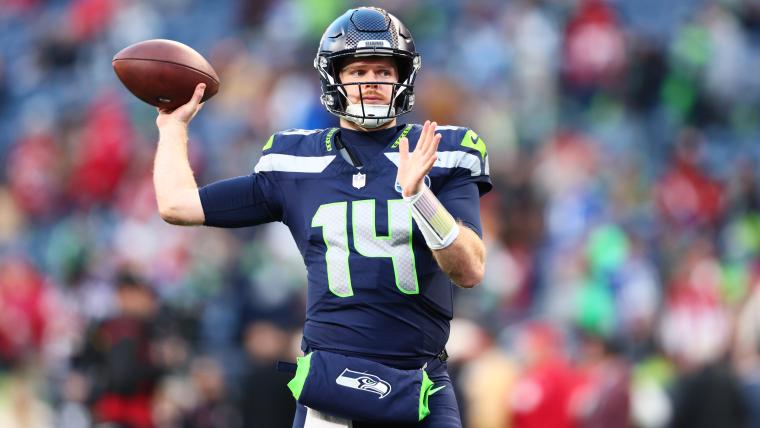
The image was one of the most surreal in recent NFL playoff memory: With just over ten minutes remaining in the fourth quarter of a Divisional Round game, Seattle Seahawks quarterback Sam Darnold, having just orchestrated a dominant offensive performance, was summoned to the sideline. He wasn’t injured. He wasn’t struggling. He was being relieved with his team holding a staggering 41-6 lead over the arch-rival San Francisco 49ers. In a vacuum, the move to pull a starting QB in a playoff game seems unorthodox, even risky. But in the context of Seattle’s commanding performance and their long-term vision, the decision to insert backup Drew Lock was a masterclass in pragmatic, forward-thinking coaching. This wasn’t a benching; it was a strategic withdrawal signaling a new era of Seahawks football.
The Anatomy of a Playoff Blowout
To understand the “why,” one must first appreciate the “how.” The Seahawks entered Levi’s Stadium as underdogs, a narrative that was dismantled piece by piece from the opening kickoff. The Seattle defense, often maligned during the regular season, transformed into a relentless, turnover-forcing machine. They harassed 49ers quarterback Brock Purdy into three first-half interceptions, setting the offense up with short fields and an avalanche of momentum.
In this environment, Sam Darnold wasn’t asked to be a hero; he was tasked with being a flawless game manager. And he executed perfectly. He completed 12 of 17 passes for 124 yards and a touchdown, operating the offense with a calm efficiency that has sometimes eluded him in his career. His lone touchdown pass, a 12-yard strike to tight end Noah Fant, was a punctuation mark on a half of near-flawless football. By the time the fourth quarter rolled around, the outcome was beyond doubt. The scoreboard told a story of sheer dominance, and with it, the calculus for head coach Pete Carroll and his staff changed entirely.
The Multifaceted Rationale Behind the Decision
Pulling a quarterback in such a scenario is never about one single factor. It is a layered decision rooted in risk management, psychology, and roster stewardship. For the Seahawks, several key considerations converged to make the call an obvious one.
- Injury Prevention is Paramount: This is the foremost, non-negotiable reason. With a 35-point lead, every additional snap Darnold took was an unnecessary exposure to injury. A freak hit, a rolled ankle in the pocket—any such incident would have been catastrophic for a team now eyeing a conference championship. Protecting your most important asset is Coaching 101 in a secured victory.
- The Message of Respect: Yanking a starter in a blowout can sometimes be seen as punitive. In this case, it was the opposite. It was a reward. Carroll’s move was a clear acknowledgment: “You’ve done your job, and done it brilliantly. Now, rest.” This builds immense trust and morale, showing the team that the coaching staff values their health and contributions over meaningless stat-padding.
- Playoff Experience for the Backup: Inserting Drew Lock into a playoff atmosphere, even in garbage time, is invaluable. He gets live reps, manages the clock, and gains the feel of a postseason game. Should an emergency arise in the next round, Lock now has recent, relevant experience under his belt, a small but potentially critical advantage.
- Shifting to Clock-Killing Mode: With a lead that large, the offensive philosophy shifts entirely to consuming time. Often, this means a heavier reliance on the run game and safer, high-percentage throws. Lock, a capable veteran, is more than equipped to hand the ball off and make simple reads, allowing the offensive starters to begin their physical and mental recovery.
Expert Analysis: A Testament to Team Identity
This decision is a signature Pete Carroll move, but it also speaks volumes about the evolution of this Seahawks team. For years, Seattle’s identity was tethered to the brilliance of a former franchise quarterback. Now, their identity is forged in the trenches and through collective defensive fury. Darnold’s efficient performance was a product of that environment, not the cause of it.
“What we saw Saturday was a team winning a playoff game, not a quarterback winning it,” remarked a veteran NFC scout. “The Seahawks proved they are a complete, physical roster that can dominate in all three phases. Pulling Darnold was the ultimate sign of confidence—not in the backup, but in the team they’ve built around the quarterback position. They know their path forward isn’t reliant on one player having a superhuman day; it’s about the machine operating as one.”
Furthermore, the move protects the Seahawks’ quarterback dynamic. Darnold, revitalized in Seattle, has earned the unwavering trust of the locker room. Subjecting him to further punishment after a job well-done could subtly undermine that. Instead, Carroll’s decision reinforces Darnold’s status as the clear, protected leader heading into the NFC Championship Game.
Looking Ahead: Implications for the NFC Championship
So, what does this mean for Seattle as they prepare for the next stage? The benefits are tangible and psychological.
First, Sam Darnold will enter the conference championship week with a body that has played roughly a quarter less of high-intensity football. In the grueling NFL playoffs, that extra freshness is a tangible asset. Second, the entire starting offense avoids the wear-and-tear of a full four-quarter battle, a significant advantage.
Perhaps most importantly, the team’s confidence is at a zenith. They didn’t just beat the 49ers; they humiliated them in a way that will resonate across the league. The strategic withdrawal of Darnold was the final, confident stroke in that masterpiece. It sends a message to their next opponent that Seattle is not only powerful but savvy, managing their resources with the cold efficiency of a champion.
Conclusion: A Decision That Defines More Than a Game
The Seattle Seahawks’ choice to pull Sam Darnold from their divisional round demolition of the San Francisco 49ers will be a footnote in the box score. But for those analyzing the championship mettle of this team, it was a defining moment. It was a decision that prioritized the future over ego, the team over the individual, and wisdom over convention.
In the high-stakes poker game of the NFL playoffs, Pete Carroll showed his hand: he is playing for the long haul, with a deep and disciplined roster he trusts implicitly. By safeguarding his quarterback in the midst of a historic victory, Carroll didn’t just protect a player; he protected a dream. The Seahawks are marching forward, healthy, confident, and unified—a direct result of a call that was as calculated as it was correct.
Source: Based on news from Yahoo Sports.