More Money, Bigger Say: Are Tennis’s Top Stars Justified in Their Demands?
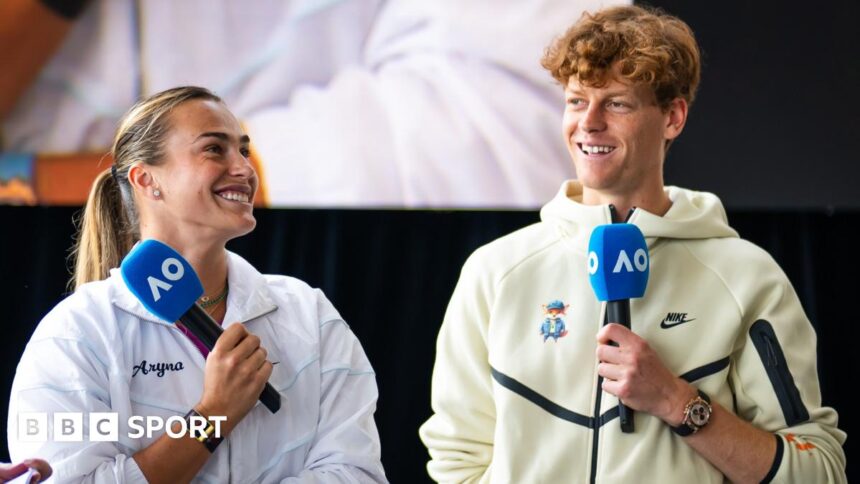
As the first serves of the Australian Open fly, a different, more persistent rally echoes behind the scenes. It’s the sound of tennis’s elite—the world number ones and Grand Slam champions—volleying demands for a greater share of the sport’s soaring revenue and a more influential seat at the table where its future is decided. With record prize money figures announced, the casual observer might assume all is well. Yet, a chorus led by stars like Aryna Sabalenka and Jannik Sinner insists the game’s economics and governance are fundamentally flawed. Are these multimillionaire athletes being reasonable, or are they simply out of touch? The answer lies in the complex, often fractured, ecosystem of professional tennis.
The Grand Slam Disparity: A Lucrative Yet Isolated Kingdom
The core of the dispute isn’t about poverty; it’s about proportion. The four Grand Slams operate as independent, immensely profitable entities, separate from the day-to-day tours (ATP and WTA) that sustain the sport for the other 48 weeks of the year. This creates a staggering financial chasm.
Consider the numbers: Last year’s US Open distributed a total of $90 million in player compensation, a figure that dwarfs the rewards at combined ATP/WTA events. This prize pool was over four and a half times larger than that of Indian Wells, the celebrated “fifth major.” While a 16% prize money increase at this year’s Australian Open is welcome, players argue it’s a concession, not a collaboration.
The issue is structural. The tours manage player rankings, logistics, and the bulk of the calendar, but the Slams, with their unique history and media rights, capture the lion’s share of global attention and revenue. Players feel like tenants in someone else’s castle—essential to the spectacle but with little say over the rules of the house.
Beyond the Winner’s Check: The Hidden Costs of Stardom
When a top player demands “more money,” the narrative often simplifies it to greed. But their demands are typically more nuanced, focusing on systemic support and career sustainability. Their key grievances often include:
- Player Welfare and Pension Contributions: Unlike many team sports, tennis players are independent contractors responsible for their own team, travel, medical, and insurance costs. A deeper contribution from event revenues to player pension plans and health benefits is a major point of contention.
- The Scheduling Squeeze: Top players have repeatedly voiced frustration over late-night finishes, especially at the US Open, and grueling schedules that compromise recovery and performance. They seek a greater say in scheduling to protect their health and the quality of the product.
- Revenue Share Model: There is a growing belief that players should receive a fixed percentage of a tournament’s revenue, similar to models in North American team sports. This would formally recognize their role as the primary content creators.
- Grassroots Investment: Some, like Sinner, have argued that increased compensation for top players trickles down, allowing them to invest more in their teams, academies, and nations, ultimately growing the sport.
As Sabalenka and others have hinted, it’s not just about buying another luxury car; it’s about securing the long-term financial and physical health of the professional player ecosystem, from number one to number one hundred.
The Power Play: Can a Fractured Player Voice Unite?
The historical weakness of player advocacy in tennis has been fragmentation. The ATP (men) and WTA (women) are separate entities, and player unions or associations have often struggled to maintain unity across rankings and genders. The Grand Slams have expertly navigated this disunity, negotiating with tours and players individually.
However, the recent wave of top-10 players giving coordinated interviews late last year signals a potential shift. When stars of both tours echo identical messages about money, welfare, and voice, it carries unprecedented weight. They are leveraging their platform—their social media reach and star power—to apply public pressure where private negotiation has stalled.
The question is whether this unity will survive beyond a news cycle. Can a player ranked 80th, for whom a first-round Slam loss is a financial lifeline, fully align with a multi-Slam champion’s demands? The top stars must frame their campaign as one for the sport’s overall health, not just its pinnacle, to gain broad-based support.
Predictions: A Clash of Titans or a New Partnership?
The coming years will likely see this cold war heat up. We predict several potential outcomes:
- Increased, But Incremental, Concessions: The Slams will continue to raise prize money annually as a peace offering, while resisting fundamental changes to revenue sharing or governance. The 16% Australian Open increase is a textbook example of this tactic.
- The Threat of Collective Action: The nuclear option for players remains a boycott threat or a unified withdrawal from a non-Slam event. This is high-risk and historically unlikely, but a more unified player council could make it a credible bluff.
- A True “Tennis Premier League” Emerges: The most dramatic shift would be if top players, backed by private capital, form their own premium tour, forcing the Slams and traditional tours to the negotiating table. This model has disrupted golf and looms as a distant but possible scenario.
- Structural Reform: The most optimistic outcome is a formal realignment where the Slams, ATP, and WTA create a joint commercial entity with a clear revenue-sharing model and player representation. This “One Tennis” vision is often discussed but has been mired in politics for decades.
Conclusion: A Reasonable Request for a Modern Sport
Are Aryna Sabalenka, Jannik Sinner, and their peers being reasonable? The evidence suggests they are. Their demands extend beyond personal enrichment to address the archaic structure of their profession. Tennis generates billions, yet its athletes bear unusual financial risk and have minimal governance power compared to peers in other global sports.
The record prize money figures are not a rebuttal to their claims; they are proof of the sport’s massive commercial success, a success the players feel entitled to share more equitably and help steward. This isn’t merely a squabble over dollars. It is a fundamental push for recognition—a demand that the stars who fill stadiums and drive television deals are treated as true partners in the business they fuel. As this Grand Slam season unfolds, the most compelling drama may not be on the court, but in the boardrooms where the future of the game is being served, volleyed, and contested.
Source: Based on news from BBC Sport.