Premier League Leads Global Charge for Temporary Concussion Subs in Football
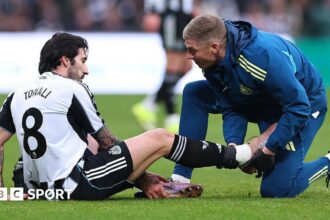
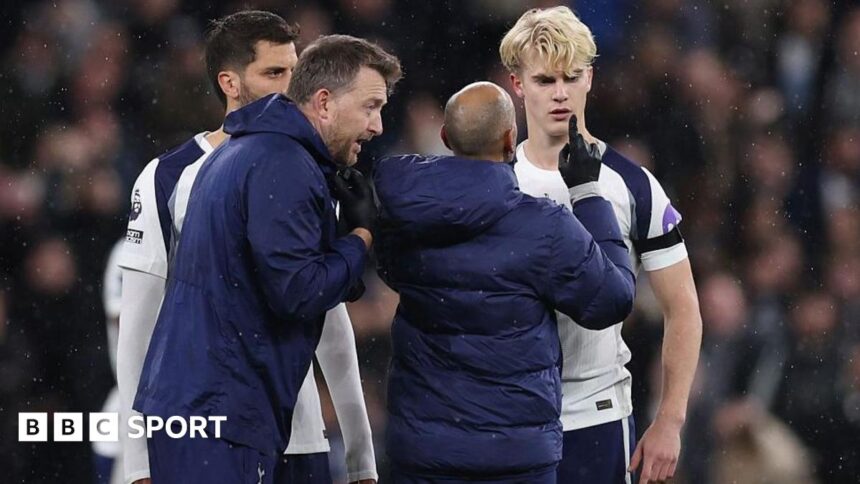
The image was stark and all too familiar. In a pre-season friendly, Tottenham Hotspur’s promising young midfielder, Lucas Bergvall, lay on the turf after a heavy collision. Medical staff rushed on, their focused concern visible. After a lengthy assessment, the decision was made: Bergvall could not continue. He was substituted, a victim of another concussion in a sport that continues to grapple with how best to protect its players from head injuries. This routine scene, however, masks a fierce and ongoing battle behind the scenes—a battle that has now reached a critical new phase.
In a powerful and unified move, the Premier League has spearheaded a renewed global call for football’s lawmakers to finally approve trials of temporary concussion substitutes. This isn’t a solitary plea. The English top flight has been joined by a formidable coalition of 28 major leagues and player unions worldwide, creating the most significant pressure yet on the International Football Association Board (Ifab) to change its stance. The question at the heart of this struggle is simple: in the high-stakes, time-pressured environment of a match, are permanent substitutions truly enough to safeguard player brain health?
The Stubborn Stalemate: Ifab’s Resistance Meets Growing Fury
For years, the debate over concussion management in football has been polarized. On one side, a growing consensus among medical professionals, leagues, and players advocates for temporary substitutes. This protocol would allow a potentially concussed player to be removed immediately for a proper, off-pitch assessment—lasting 10 or 15 minutes—without forcing their team to play a man down or burn a permanent substitution. A temporary replacement would fill the gap. If the player passes the assessment, they can return; if not, the change becomes permanent.
On the other side stands Ifab, the guardian of football’s laws. They have repeatedly rejected this model, instead implementing and sticking with a protocol for permanent concussion substitutions. Their argument hinges on the fear that a temporary sub system could be abused for tactical gain, and a belief that their current rules—which allow for additional permanent subs specifically for concussion—ensure the player does not return.
However, critics see fatal flaws in the permanent-only model. “The current system puts immense pressure on team doctors, who must make a critical diagnosis in just three minutes, under the glare of thousands of fans, with the competitive fate of their team hanging in the balance,” explains Dr. Michael Turner, a leading sports neurologist. “It creates a clear conflict of interest. The temporary model removes that pressure, prioritizing the player’s health above all else by granting the time for a confidential and thorough evaluation.”
The list of co-signatories on the new Premier League motion reveals the breadth of discontent: Fifpro (the global players’ union), Serie A, France’s Professional Football League, Major League Soccer, the Premier Soccer League in South Africa, the European Leagues and the World Leagues Association. This is no longer a niche demand; it is a mainstream mandate from the very bodies that run and populate the sport.
Why Now? The Tipping Point for Player Safety
The coalition’s timing is not accidental. Several converging factors have created a tipping point:
- Mounting Medical Evidence: Studies continue to reveal the long-term dangers of traumatic brain injury in contact sports, including Chronic Traumatic Encephalopathy (CTE). Each high-profile incident on the pitch amplifies calls for action.
- High-Profile Incidents: Cases like Bergvall’s, or the worrying scenes involving players like Arsenal’s David Luiz and Wolverhampton’s Raúl Jiménez in recent years, are broadcast globally. They serve as public, visceral reminders of the risks.
- Player Advocacy: Unions like Fifpro have become increasingly vocal, representing players who are more educated and concerned about their long-term health than any previous generation.
- Legal and Liability Pressures: As knowledge evolves, leagues and clubs face growing potential liability for failing to implement the best possible protective measures. Adopting the “gold standard” of care is becoming a legal, as well as moral, imperative.
“We are dealing with an invisible injury that can have visible, devastating consequences decades later,” says a Fifpro representative. “The players are the game’s greatest asset. Protecting them with a protocol used successfully in sports like rugby is a logical, necessary step.”
Predictions: A Battle of Wills with the World Cup in Sight
The path forward is fraught with political friction, but the momentum has undeniably shifted. Here’s what to expect in the coming months:
1. Intense Ifab Lobbying: The Premier League-led coalition will use this unified front to lobby Ifab members (The FA, Scottish FA, FA of Wales, Irish FA, and FIFA) directly. The focus will be on framing temporary subs as a necessary player welfare evolution, not a tactical loophole.
2. The Potential for a Pilot: The most likely compromise may be a tightly controlled trial in select competitions. Ifab may finally relent to a pilot program, perhaps in a league that has been a vocal advocate, to gather “real-world” data. This would be a major victory for the reformers.
3. FIFA’s Pivotal Role: With FIFA holding four of the eight votes on Ifab, their stance is decisive. FIFA President Gianni Infantino has historically been cautious. However, with the 2026 World Cup on the horizon and player safety a dominant theme, FIFA may calculate that supporting a trial is in its best interest to avoid controversy and align with modern sports science.
4. No Immediate Change for 2024/25: Any formal law change happens at Ifab’s Annual General Meeting, typically in March. Therefore, a widespread implementation for the upcoming season is unlikely. However, this powerful statement sets the stage for a landmark decision in early 2025.
The Unavoidable Conclusion: Safety Must Trump Tradition
The concussion substitute debate transcends protocol; it strikes at the heart of football’s identity. It is a conflict between tradition and progress, between the game’s historical resistance to change and the non-negotiable demands of modern medical science.
The permanent substitution model, however well-intentioned, is fundamentally reactive. It operates on the assumption that a definitive diagnosis can be made in an impossibly fraught environment. The temporary model is proactive. It assumes the worst to ensure the best care, eliminating the conflict of interest and granting the one thing crucial to diagnosing brain injury: time.
The coalition led by the Premier League has drawn a line in the sand. The names of Bergvall, Jiménez, and countless others are the human cost of inaction. Football now stands at a crossroads. It can continue to be guided by a cautious, outdated conservatism, or it can follow the lead of its own leagues and players by embracing a change that prioritizes human health over archaic suspicion of tactical manipulation.
The world is watching. The players are speaking. The science is clear. It is time for Ifab to listen and allow football to take this vital step toward becoming a safer sport for everyone who plays it. The final whistle on this issue has not yet blown, but the pressure for change has never been louder.
Source: Based on news from BBC Sport.