Tottenham’s Ben Davies Faces Surgery and World Cup Heartbreak After Ankle Fracture
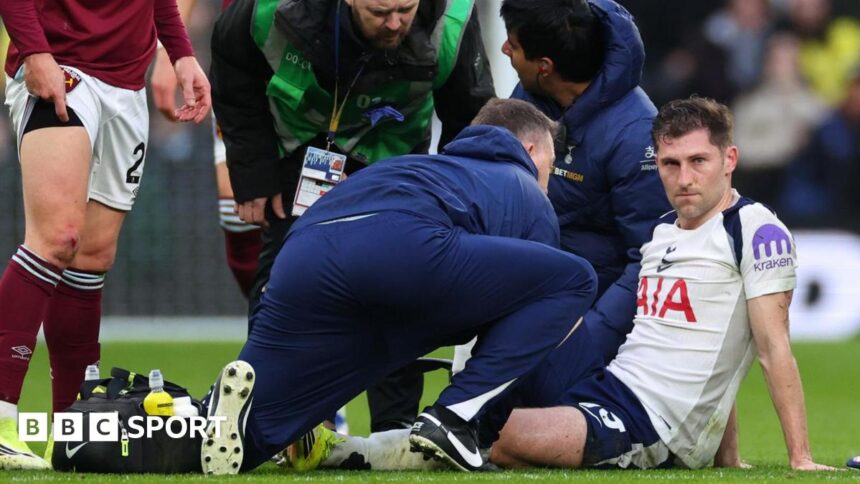
The atmosphere at the Tottenham Hotspur Stadium shifted from hopeful anticipation to palpable concern in a single, gut-wrenching moment. Just 19 minutes into Saturday’s Premier League clash with West Ham, defender Ben Davies, a model of consistency for Spurs, went down under minimal contact. The subsequent sight of the Welsh captain receiving oxygen and being stretchered off painted a grim picture. That picture has now developed into a sobering reality for both club and country. Tottenham Hotspur have confirmed that Ben Davies will undergo surgery for a fractured left ankle, an injury that not only rocks their defensive plans but also threatens to cruelly rob the player of a World Cup dream.
A Cruel Blow: The Incident and Immediate Fallout
The injury occurred with Davies engaged in a seemingly innocuous challenge. The immediate reaction from players, staff, and the crowd signaled its severity. Replaced by Djed Spence, Davies’s exit was a pivotal moment in a match that ultimately slipped away from Tottenham in a 2-1 defeat. The club’s official statement was succinct but heavy with implication: “We can confirm that Ben Davies will undergo surgery today for a fracture of his left ankle.” Notably absent was any timeline for recovery, a silence that speaks volumes about the complexity of the injury.
For manager Antonio Conte, this is a significant setback. Davies had become an integral tactical component in Conte’s system, often operating as the left-sided center-back in a back three. His role demanded a unique blend of defensive solidity, intelligent distribution, and underlapping runs. His absence creates an immediate void that lacks a like-for-like replacement within the squad.
- Versatility Lost: Davies’s ability to play as a center-back, wing-back, and even in midfield provided Conte with crucial tactical flexibility.
- Leadership Void: As a senior, experienced professional, his steadying influence on the pitch will be missed in a relatively young defensive unit.
- Fixture Congestion: With the Champions League group stage reaching its climax and the Premier League schedule relentless, squad depth is being tested immediately.
Navigating the Tactical Maze: How Spurs Cope Without Davies
Antonio Conte now faces a critical puzzle. The direct replacement on Saturday, Djed Spence, is a natural wing-back, not a left-sided center-back. This suggests Conte may need to reconfigure his entire defensive structure or place faith in other options. The most straightforward solution would see Clement Lenglet, on loan from Barcelona, slot into the left center-back role. While proficient on the ball, questions remain about his adaptation to the physical demands of the Premier League and Conte’s specific defensive rigors.
Another possibility is a shift to a back four, utilizing the full-back pairing of Ryan Sessegnon and Emerson Royal, with Cristian Romero and Eric Dier centrally. This would be a major systemic change for a manager famously wedded to his three-at-the-back philosophy. Alternatively, Conte could look to the promising 19-year-old academy product, Malachi Fagan-Walcott, for depth, though thrusting him into high-stakes matches represents a considerable risk.
The injury also inadvertently raises the stock of players like Japhet Tanganga and could accelerate the integration of summer signing Destiny Udogie, who is on loan at Udinese. The long-term planning for the defensive line has been abruptly forced into short-term crisis management.
Beyond North London: A Devastating Setback for Wales
While Tottenham’s concerns are substantial, the human cost of this injury is most keenly felt by Ben Davies himself. As the captain of Wales, he was on the cusp of leading his nation in their first World Cup appearance since 1958. Wales face a monumental single-leg play-off against either Scotland or Ukraine in June, a match that defines a generation of Welsh football. An ankle fracture requiring surgery at this juncture makes his participation highly unlikely.
This is a brutal twist of fate for a player who has been a stalwart for his country, embodying the relentless spirit of the Dragons throughout their historic rise. Manager Rob Page must now plan for a potential playoff and a possible World Cup finals without his skipper and most experienced defender. The emotional lift of having a fit and leading Davies cannot be overstated, and its loss is a psychological blow as much as a tactical one for the Welsh squad.
The timeline is the enemy. Even a best-case recovery scenario from such a fracture and operation would involve a race against time to regain match fitness and sharpness for a high-stakes international fixture. The priority for Davies and all medical staff will be his long-term health, casting a significant shadow over his World Cup ambitions.
Expert Analysis: Recovery Timelines and What Comes Next
Without official details on the exact nature of the fracture, medical experts suggest a broad recovery window. A standard, uncomplicated ankle fracture can take a minimum of 8-12 weeks for the bone to heal, with several more weeks of intensive rehabilitation to regain strength, mobility, and proprioception. For a professional athlete requiring explosive movement and sharp turns, this process is often longer.
Given that surgery is required, it typically indicates the break was displaced or unstable, necessitating internal fixation (plates and screws) to ensure proper alignment and healing. This solid fixation can actually aid the rehab process, but the overall timeline remains extensive.
- Early Phase (6-8 weeks): Immobilization, non-weight bearing, managing swelling and pain.
- Mid Phase (8-12 weeks): Gradual weight-bearing, restoring range of motion, beginning physiotherapy.
- Late Phase (3-6 months): Sport-specific training, building strength and endurance, overcoming psychological hurdles.
This rough outline places a return to first-team training, in an optimistic scenario, in the New Year. The World Cup playoff, on June 5th, sits just over six months away. It will be a tight, arduous journey, and the decision will ultimately rest on a combination of medical advice and Davies’s own physical response.
Conclusion: A Test of Resilience for All Involved
The fracture of Ben Davies’s ankle is more than a simple injury update; it is a narrative-altering event with concentric rings of impact. For Tottenham, it is a stern test of squad depth and Conte’s tactical adaptability during a crucial phase of the season. The coming weeks will reveal whether this setback derails their progress or galvanizes the squad to find new solutions.
For Wales, it is a heartbreaking development that adds a layer of difficulty to their historic quest. The nation will hope against hope for a miraculous recovery, but must also begin to forge a plan B without their defensive leader.
Most importantly, for Ben Davies, it is a profound personal and professional challenge. A model professional known for his dedication and resilience, the coming months will demand every ounce of that character. His journey from the surgery table back to the pitch will be watched with sympathy and support from fans in N17 and across Wales, all hoping that this cruel twist in the tale still has a triumphant chapter to come.
Source: Based on news from BBC Sport.