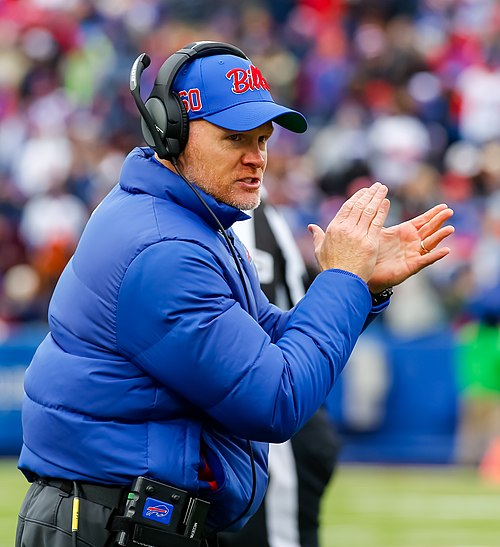
An Era of Excellence, An Era of Agony: Bills Fire Sean McDermott After Latest Playoff Heartbreak
The Buffalo Bills, an organization defined by a generation of near-misses and a fanbase wearily familiar with heartbreak, have made a seismic decision. On Monday, the team fired head coach Sean McDermott, closing the book on a nine-year tenure that was simultaneously the most successful and most frustrating period in recent franchise history. The move comes just 48 hours after a soul-crushing 33-30 overtime loss to the Denver Broncos in the divisional round, a game that perfectly encapsulated the McDermott era: brilliant flashes of potential, a late-game lead, and a final, fatal collapse. In Buffalo, the relentless pursuit of a Super Bowl has claimed its most significant casualty yet.
For nearly a decade, McDermott was the steady hand that rebuilt a moribund franchise into an AFC powerhouse. He instilled a culture of accountability and effort, turning the Bills into perennial contenders. Yet, the ultimate prize remained perpetually out of reach, obscured by a pattern of playoff failures that grew too consistent, and too painful, to ignore. The divorce between coach and team is not about a lack of success, but about the specific, recurring nature of the failure. It’s a story of “almost,” and in the NFL, “almost” eventually has a expiration date.
The McDermott Paradox: Regular Season Architect, Playoff Enigma
To understand the weight of this decision, one must first acknowledge the scale of Sean McDermott’s accomplishments. Taking over a team in the midst of a 17-year playoff drought—the longest in North American professional sports at the time—McDermott engineered a stunning turnaround.
His resume in Buffalo is undeniably impressive:
- Regular Season Record: 98-50 (.662 winning percentage)
- Playoff Appearances: 7 in 9 seasons
- Consecutive AFC East Titles: 4 (2020-2023)
- Playoff Wins: 8
He drafted and developed Josh Allen, building an offensive system that unleashed one of the most dynamic players the league has ever seen. He oversaw a defensive-minded identity that, for years, was among the league’s most feared. The Bills’ regular season dominance under McDermott was a given; they were a machine from September through December. However, the calendar’s turn to January revealed a troubling fissure. The playoff record of 8-8 tells only part of the story. The manner of the losses—particularly in recent years—created an inescapable narrative of championship-stage fragility.
The Anatomy of a Heartbreak: A Pattern of Late Collapses
Saturday’s loss in Denver was not an anomaly; it was a horrifyingly familiar sequel. The Bills, led by a heroic Josh Allen, held a 27-24 lead with under two minutes to play. The defense, McDermott’s pride and joy, needed one stop to advance. They couldn’t get it. The game went to overtime, and the Broncos won the coin toss and scored a touchdown, ending Buffalo’s season. This script has been run before, too many times for a championship-aspiring franchise to tolerate.
This was the fourth playoff loss since the 2022 season where the Bills lost despite holding a lead in the fourth quarter. The most infamous, the “13 Seconds” loss to Kansas City in the 2021 divisional round, falls squarely on defensive coaching decisions. The 2022 loss to Cincinnati was a comprehensive beatdown. Last year’s divisional loss to the Chiefs again featured a late lead slipping away. The common thread in these soul-crushing exits? A defense, curated and coached by McDermott, that could not deliver a season-saving stop when it mattered most. While Josh Allen consistently performed playoff heroics, the other side of the ball repeatedly failed to match that clutch gene. In the end, the head coach, who called the defensive plays, bore the responsibility for that fatal disconnect.
Josh Allen’s Unenviable Legacy and the Franchise Crossroads
The firing of McDermott casts a stark light on the career of quarterback Josh Allen. Allen is a transcendent talent, a physical marvel who has delivered some of the most breathtaking playoff performances of his generation. Yet, the statistics surrounding him are now a haunting testament to this era’s unfulfilled promise.
Josh Allen holds the NFL record for the most career playoff wins (8) and starts (15) by any quarterback who has never started a Super Bowl. He is, by any objective measure, the greatest quarterback to never reach the sport’s biggest game. The Bills organization has now signaled that they believe the window for Allen, who turns 28 this offseason, remains wide open, but that a new architectural vision is required to get him through it. The mission for General Manager Brandon Beane is now clear: find a head coach who can maximize Allen’s prime, design an offensive system that reduces his physical toll, and—critically—build a defense that can complement, not undermine, his greatness in January.
The next coaching hire is the most critical in Buffalo since the selection of Allen himself. The core of a championship roster—Allen, wide receiver Stefon Diggs (though his future will be scrutinized), defensive anchor Ed Oliver—is still in place. But the salary cap is tightening, and the AFC remains a gauntlet. The margin for error has vanished.
What’s Next for the Buffalo Bills?
The search for Buffalo’s next head coach will be dominated by two philosophical paths: the offensive innovator or the established leader. The allure of pairing Josh Allen with a brilliant offensive mind like a Ben Johnson (Detroit Lions OC) or Bobby Slowik (Houston Texans OC) is powerful. The idea is to build an offense so potent it simply out-scores playoff opponents, mitigating defensive concerns. The other path is to seek a proven CEO-type, perhaps a Jim Harbaugh or a Mike Vrabel, who can command the entire locker room and instill a new, tougher, late-game mentality.
Prediction: The Bills will aggressively pursue a top offensive coordinator. The organization has seen the peak of the “defense-first” model under McDermott. To finally break through, they will likely bet on maximizing the one undeniable, elite asset they have: Josh Allen’s otherworldly talent. The new head coach’s first and most important task will be to design a system that protects Allen from himself while unleashing his full potential, and to hire a defensive coordinator who can modernize a unit that has grown stale at the worst possible moments.
For Sean McDermott, he leaves with his head held high, the coach who ended The Drought and restored pride to Western New York. He will undoubtedly receive another head coaching opportunity, likely with a rebuilding team that craves the culture he excels at building. His legacy in Buffalo is one of profound respect and immense gratitude, but also of a ceiling that the franchise felt compelled to shatter.
Conclusion: The End of “Almost”
The firing of Sean McDermott is a sober acknowledgment that in the NFL, sustained excellence is not enough. The Buffalo Bills were not a failing organization; they were a tormented one. They conquered the regular season and their division for years, only to find a mysterious barrier in the playoff crucible. The pattern of late-game defensive collapses, the inability to win a close, season-defining game against a fellow contender, became this era’s signature.
This decision is a painful but necessary gamble. It is the franchise telling its superstar quarterback and its long-suffering fans that the goal was never just to be competitive, but to be champions. The Sean McDermott era raised the floor in Buffalo to incredible heights. Now, the search begins for the coach who can finally raise the ceiling. The message from One Bills Drive is clear: the era of “almost” is over. What comes next will define the legacy of Josh Allen and the future of a franchise that has stared at the summit for too long.
Source: Based on news from Deadspin.
Image: CC licensed via commons.wikimedia.org