Naomi Osaka’s Grand Entrance: A Fashion Statement That Transcended Tennis at the Australian Open
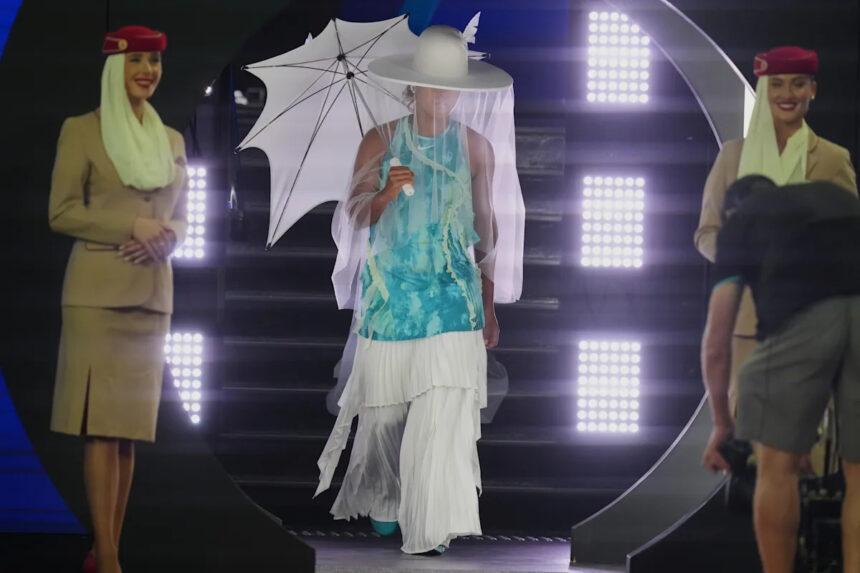
MELBOURNE, Australia — The Australian Open is no stranger to drama, but on Tuesday evening, it arrived not with a thunderous ace, but with a whisper of elegance and intention. As the sun set on Day 3, all eyes on Rod Laver Arena turned not to the baseline, but to the tunnel. Emerging was Naomi Osaka, the four-time Grand Slam champion, crafting a moment that instantly became the tournament’s most iconic image. Donning a sleek, wide-brimmed hat, a delicate veil, and holding a pristine white umbrella, Osaka’s entrance was a powerful fusion of high fashion and personal sanctuary, signaling her return to the sport’s biggest stages is on her own, thoughtfully curated terms.
More Than an Outfit: Decoding the Symbolism of Osaka’s Arrival
In the often rigidly traditional world of tennis, where pre-match routines are sacred and uniforms are largely standardized, Osaka’s choice was a deliberate narrative. This was not merely a fashion choice; it was a grand entrance loaded with subtext. The ensemble, reminiscent of classic Hollywood glamour and modern runway shows, served multiple purposes.
- A Personal Shield: The wide brim and veil acted as a literal and figurative barrier, creating a zone of privacy and focus amidst the overwhelming glare of a Grand Slam spotlight. For an athlete who has been candid about her mental health and the pressures of media scrutiny, this was a tool of empowerment.
- A Statement of Identity: Osaka has consistently used her platform to express her multifaceted identity—as a tennis phenom, a fashion icon, a businesswoman, and a mother. This entrance reaffirmed that she brings her whole self to the court, refusing to be boxed into a single dimension.
- Commanding the Narrative: By controlling the first visual of her comeback campaign at a major where she is a two-time champion, Osaka seized the story. The conversation was immediately about her poise, her confidence, and her artistry, setting the tone before a single ball was struck.
The imagery was potent: a champion returning not with a battle cry, but with a composed, enigmatic grace. It was a reminder that for Osaka, the game exists within the larger context of her life and well-being.
From Champion to Mother: The Evolution of a Superstar
Osaka’s first-round match against Croatia’s Antonia Ruzic was her first at the Australian Open since 2022. The intervening years have been transformative. She stepped away, gave birth to her daughter, Shai, and embarked on a journey back to the tour with a renewed perspective. The weight of her past achievements here—hoisting the Daphne Akhurst Memorial Cup in 2019 and 2021—now coexists with the lightness of a new chapter.
This evolution was evident in her game. While the powerful, flat groundstrokes and explosive serve remain her weapons, there is a palpable sense of patience. The comeback trail is a marathon, not a sprint, and Osaka displayed strategic maturity in her 6-3, 6-1 victory over Ruzic. She worked points, trusted her movement, and gradually imposed her will. The victory was straightforward, but its significance was profound. It wasn’t just about advancing to the second round; it was about proving to herself that she can compete at the highest level while embracing the person she has become.
“Everything gives me more purpose,” Osaka has said about motherhood. That purpose seems to have crystallized into a calm determination, one that allows for both fierce competition and personal expression—symbolized perfectly by that unforgettable walk onto the court.
Expert Analysis: What This Means for Osaka’s 2024 Campaign
From a tennis analyst’s perspective, Osaka’s Melbourne opener offered several key takeaways. Physically, she appears in formidable shape, her movement and power generation looking close to the level that made her the most dominant hard-court player in the world. Mentally, the focused, almost serene demeanor behind the veil suggests a player who has compartmentalized external noise effectively.
Her draw at the Australian Open presents a fascinating challenge. Early rounds allow her to build rhythm and match sharpness. However, the real tests will come in the second week, where potential clashes with other top seeds await. The question is no longer *if* she can regain her Grand Slam-winning form, but *how quickly*.
Key factors for a deep run will include:
- Serve Consistency: Her serve is her ultimate weapon. Maintaining a high first-serve percentage and free-point count will shorten points and preserve energy.
- Return Game: Aggressively attacking second serves will be crucial against higher-ranked opponents who will test her return position.
- Emotional Equilibrium: Can the focused calm she exhibited in Round 1 hold under the escalating pressure of a quarterfinal or semifinal? Her new perspective may be her greatest asset here.
This tournament is less about demanding a title and more about observing a champion re-tooling her game and mindset. A quarterfinal appearance would be a resounding success, while anything beyond would announce that Naomi Osaka 2.0 is not just a story—she’s a contender.
Predictions and the Road Ahead in Melbourne
Predicting Osaka’s path is tricky, as she remains the ultimate wild card in the women’s draw. Her ceiling is higher than almost anyone else’s; she possesses the game to blow opponents off the court. Her floor, however, is still being established in this comeback phase. The fashion statement was a masterclass in controlling her environment, but on the court, she cannot control every variable.
What we can predict is that all her matches will be must-see events. They will be a study in power tennis and personal narrative. Each victory will be dissected not just for forehand winners, but for what it signifies in her journey back to the summit. The fashion statement on Day 3 was her thesis; the rest of the tournament will be the supporting arguments.
The women’s game is currently defined by its depth and unpredictability. In this landscape, a motivated, in-form Osaka is the single most disruptive force. If she continues to build momentum, she has the proven capacity to slice through a draw, as she has done twice before in Melbourne Park.
Conclusion: A Statement Heard Around the Tennis World
Naomi Osaka’s victory over Antonia Ruzic was recorded in straight sets, but her true win was registered the moment she appeared under the Rod Laver Arena lights. Her grand entrance was a multifaceted triumph: a moment of high fashion, a declaration of personal agency, and a strategic recalibration of the athlete-fan-media dynamic. It communicated that she is here not just to play, but to participate fully as the complex individual she is.
As the Australian Open progresses, the hat and umbrella may be set aside, but the message they conveyed will linger. Naomi Osaka has re-entered the Grand Slam arena with a refreshed game, a profound sense of purpose, and an unwavering commitment to defining her own space. She reminded everyone that champions are not manufactured on practice courts alone; they are forged in life’s experiences and expressed through every choice they make—from the clothes they wear to the way they wield their racket. Her journey in Melbourne is the most compelling story in tennis, and it began with a walk that was, unmistakably, pure Osaka.
Source: Based on news from Yahoo Sports.